


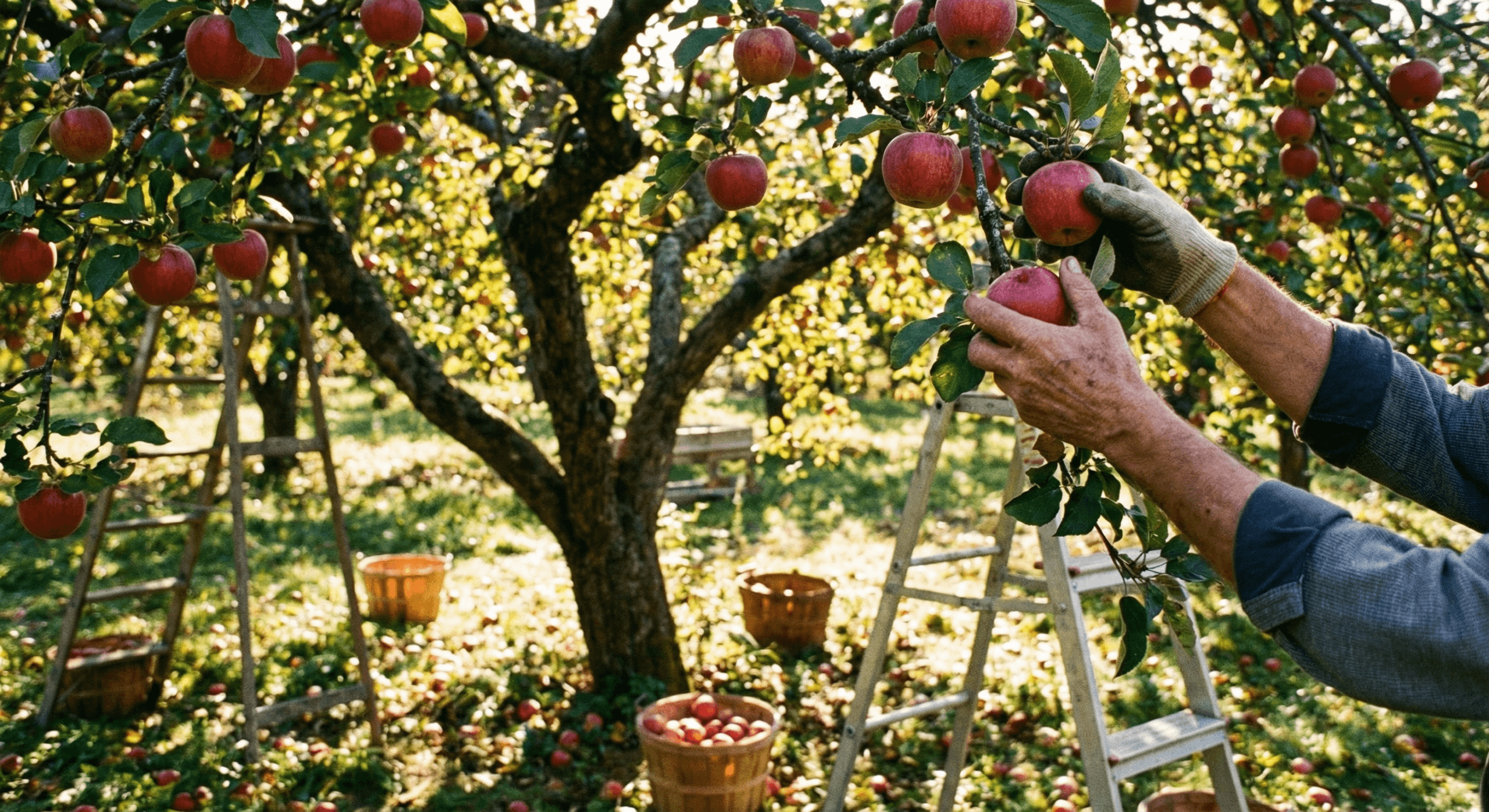
Imagine stepping outside in late summer to pick a sun-ripened peach, or baking an apple pie from fruit you grew yourself.Fruit trees bring that kind of magic to your garden — but they also require patience, planning, and a bit of know-how. RHS fruit growing guide has detailed guidance on this topic. Here’s everything you need to grow fruit trees successfully.
Shop Related Products: Watering Can
For more on essential mulching: single, see our guide.
For more on proven first-year vegetable, see our guide.
Related: Garden Planning 101: Mapping Out Your Garden Space Natural Pest Deterrents: Plants That Repel Pests
Looking for quality gardening tools and supplies? Browse our recommended garden products — hand-picked by the GardenWizz team.
Choosing the Right Fruit Tree
Not sure where to start? These are the most reliable and beginner-friendly fruit trees:
– Apples: Widely adapted, many varieties. Need cross-pollination (two varieties).
– Pears: Easier than apples — fewer pest problems, RHS pest and disease guide has detailed guidance on this topic. more forgiving of wet soil. RHS soil testing guide has detailed guidance on this topic. The RHS soil testing guide provides detailed advice on understanding your soil type… Also need two varieties.
– Plums: Productive and adaptable. European plums are self-pollinating; Japanese plums usually need a partner.
– Cherries: Sweet cherries need a partner and are challenging in humid climates. Sour/pie cherries are more adaptable.
– Peaches: Warm-climate fruit (zones 6-9). One of the fastest-producing fruit trees — often fruits in year 2-3.
Bare Root vs. Potted Trees
Bare root trees are dug from fields in dormancy, shipped without soil. Less expensive, have stronger roots, available by mail-order in late winter/early spring.
Potted trees can be planted spring through fall. Easier to handle but cost more and can become root-bound.
Planting Your Fruit Tree
When: Late winter to early spring, before growth begins. Bare root trees MUST be planted while dormant.
Site selection: Full sun (6-8 hours minimum). Good air circulation reduces disease. Avoid low spots where cold air settles. Well-drained soil is essential.
The planting hole: Dig it TWICE as wide as the root spread, and only as deep as the root system. The most common mistake is planting too deeply.
Planting steps:
1. Remove any damaged or circling roots. Gently spread roots in the hole.
2. Backfill with native soil.The RHS watering guidelines cover efficient watering techniques for gardens of all sizes. RHS watering guidelines has detailed guidance on this topic..
3. Make sure the graft union is 2-4 inches ABOVE the soil line.
4. Water deeply to settle soil and eliminate air pockets.
5. Apply 2-3 inches of garden mulch sheets around the base, keeping it away from the trunk (keep mulch 6 inches from the trunk).
The First Year: Critical Establishment Care
– Water deeply once a week during dry spells
– Do NOT fertilize the first year — you want root growth
– Remove all fruit that forms in the first year
– Stake only if necessary
Pruning: The Most Important Annual Task — use sharp garden secateurs and a pruning saw
The Central Leader System (apples, pears): One main upright trunk with tiered scaffold branches spaced 18-24 inches apart.
The Open Center/Vase System (peaches, plums): A bowl shape with an open center and 3-5 main scaffold branches.
When to prune: Late winter, just before growth begins.
Thinning: Do Not Skip This Step!
Fruit trees often set more fruit than they can successfully mature. Thin in early summer:
– Apples: 4-6 inches between fruits
– Peaches: 6-8 inches between fruits
– Pears: 1 fruit per cluster, 6 inches apart
Pest and Disease Management
– Apple scab: Choose resistant varieties, rake fallen leaves.
– Codling moth: Pheromone traps, bagging fruit.
– Fire blight: Prune 6 inches below infected tissue, sterilizing pruners.
– Brown rot: Remove and discard infected fruit immediately.
– Aphids: Spray off with water or apply insecticidal soap.
Fertilizing
Established fruit trees benefit from one spring feeding of compost. According to Gardeners’ World,
is one of the most rewarding skills a gardener can develop… The
process is explained in detail by the RHS composting guide, which covers everything from starting your bin to troubleshooting common problems… Avoid high-nitrogen fertilizers after mid-summer.
Patience Pays Off
Fruit trees are a long-term investment. A peach may fruit in year 2-3, but an apple often takes 4-6 years to come into full bearing. Four years from today, you’ll have fruit — or you won’t, if you don’t plant. The time will pass either way. Make it count!
Frequently Asked Questions
When is the best time to plan your garden?
Start planning in late winter (January-February) for the coming season.
Do I need any special equipment?
Graph paper, measuring tape, and our garden planning worksheet.
Can beginners do this?
Absolutely – even a simple sketch helps enormously.
How long does it take?
A basic plan takes an afternoon. Detailed designs may take longer.
