


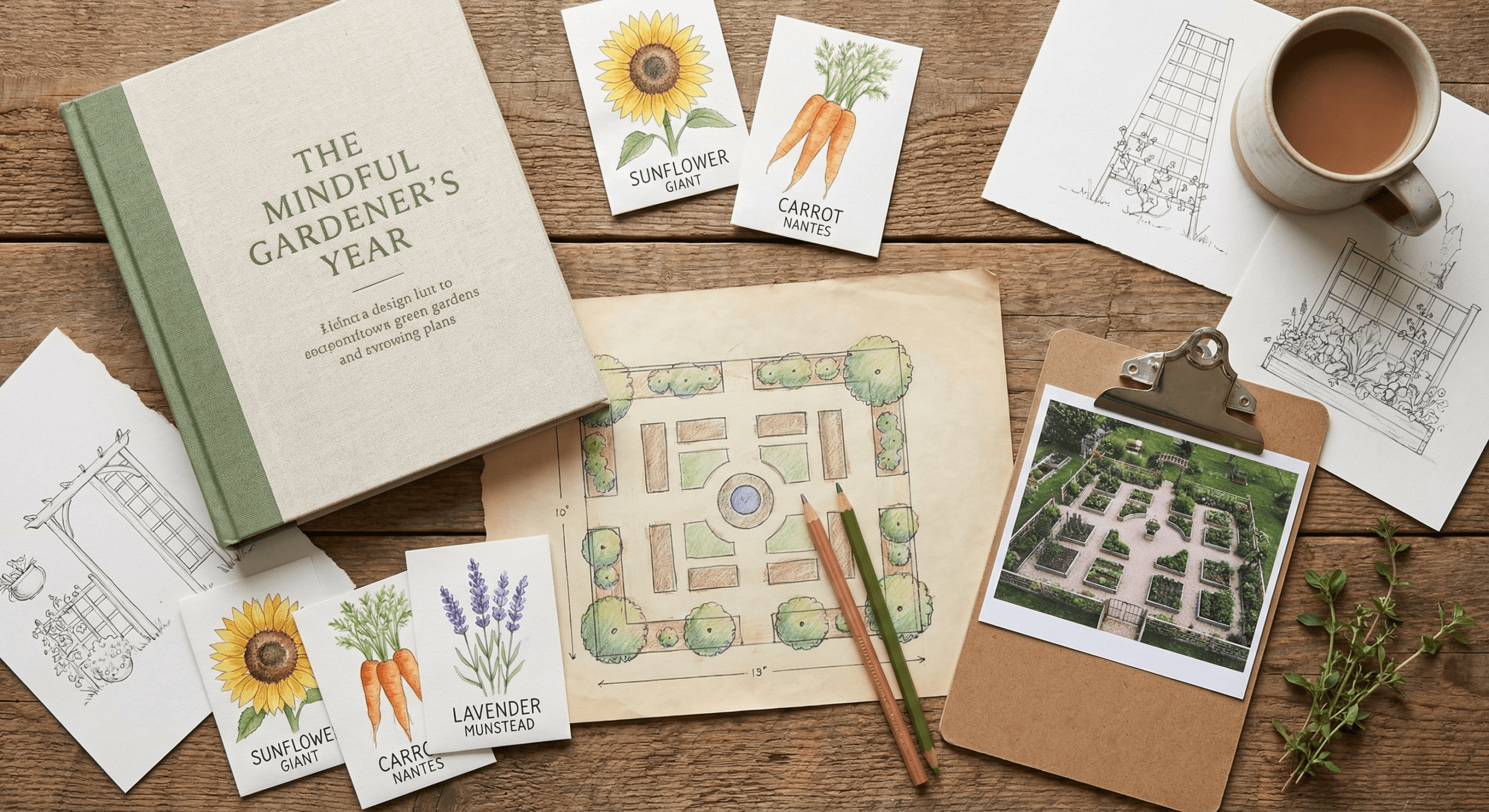
Every beautiful, productive garden starts with a plan.Garden design isn’t just for professional landscapers — any gardener can learn the basics and create a garden that works beautifully. RHS garden design guide has detailed guidance on this topic. Whether you’re designing a complete new garden from scratch or reimagining an existing space, here’s how to think through it thoughtfully. In this comprehensive proven guide, we’ll cover everything you need to know.
Shop Related Products: Watering Can
For more on essential mulching: single, see our guide.
For more on proven first-year vegetable, see our guide.
Related: Garden Planning 101: Mapping Out Your Garden Space Natural Pest Deterrents: Plants That Repel Pests
Looking for quality gardening tools and supplies? Browse our recommended garden products — hand-picked by the GardenWizz team.
Proven: Garden: Start with Your Why
Before drawing a single line, ask yourself: what do I want from this garden?
– A productive vegetable garden to feed my family?
– A low-maintenance landscape that’s beautiful year-round?
– A pollinator paradise that buzzes with life? Buglife pollinator resources has detailed guidance on this topic.
– A private, relaxing outdoor room?
– A combination of several of these?
Your goals drive every decision that follows.
Understanding Your Site
Observe before you design: Spend time in your garden space across a full day and in different weather conditions. Note:
– Sunlight: Where does the sun hit? Most vegetables need 6-8 hours of full sun. Flowering plants have varying needs. Watch for trees and structures that cast shade.
– Soil: RHS soil testing guide has detailed guidance on this topic.What’s it like? Clay, sandy, or loamy? Does it drain well after rain, RHS watering guidelines has detailed guidance on this topic. or does water sit? A simple jar test (shake soil in water, let it settle — sand settles first, clay last) tells you your soil type. The RHS watering guidelines cover efficient watering techniques for gardens of all sizes… The RHS soil testing guide provides detailed advice on understanding your soil type…
– Drainage: Dig a hole 12 inches deep, fill it with water, and time how long it takes to drain. Well-drained soil empties in 1-2 hours. Slow drainage means clay or compacted soil.
– Slope and contours: Low spots collect water; slopes shed it. Work with natural contours rather than against them.
– Existing features: Note what’s already there — mature trees to work around, structures, fences, drainage ditches.
– Climate and microclimates: Know your USDA Hardiness Zone. Also note microclimates — south-facing walls absorb and radiate heat; low spots are colder; sheltered corners may be warmer.
Design Principles That Work
Start with structure: A great garden has good bones. Before planting, establish:
– Defined garden beds and borders
– Paths for easy access
– Focal points (a specimen tree, a favorite seating area, a water feature)
– A sense of enclosure or openness as appropriate
Think in layers: Good garden design uses plants of varying heights. Place tall plants at the back of borders (or the center of island beds), medium plants in the middle, and low growers at the front. This creates depth and visual interest.
Repetition creates unity: Repeat key plants, colors, or textures throughout the garden to create visual cohesion. A garden where every plant is different looks chaotic.
Contrast adds drama: Juxtapose contrasting elements — fine-textured foliage against bold, round leaves, dark foliage against silver, vertical grasses against horizontal hosta leaves.
Consider year-round interest: Plan for each season. Include early spring bulbs, summer-flowering perennials, fall foliage or berries, and winter structure (ornamental grasses, evergreens, interesting bark).
Choosing Plants for Your Conditions
Right plant, right place is the single most important design rule.
Choose plants that naturally thrive in your conditions rather than fighting to grow plants that struggle. If you have shade, embrace shade-loving plants. If you have dry soil, choose drought-tolerant ones. Your future self will thank you for the reduced maintenance.
When selecting plants, consider:
– Mature size (this is the 1 planting mistake — plants are bought small but grow large)
– Sun and water requirements
– Soil preferences
– Cold hardiness for your zone
– Maintenance needs
The Design Process: Step by Step
Step 1: Measure and map. Measure your garden space accurately. Draw it to scale on paper (graph paper helps). Include existing structures, paths, trees, views, and the direction of north.
Step 2: Define zones and functions. Mark areas for different uses — dining, entertaining, vegetable growing, play, storage.
Step 3: Add paths and structure. Paths connect areas and make the garden navigable. Even in a small garden, a well-placed path makes everything more accessible.
Step 4: Place focal points. A bench, a bird bath, a specimen tree, an arbor over a path. These give the eye a place to rest and the garden a sense of intention.
Step 5: Select and place plants. Using your site analysis and plant knowledge, choose plants for each area. Group them by water and sun needs.
Step 6: Start small. This is critical. A small, well-maintained garden is infinitely better than a large, overwhelmed one. Plant in phases as budget and time allow.
The Importance of Paths
Paths are often overlooked but they’re one of the most important elements of garden design:
– They define how the garden is experienced
– They provide access for maintenance
– They prevent soil compaction in planted areas
– They create structure even in winter when plants are dormant
Use materials that match your home’s style and your bu. For more on mulching, the RHS mulching advice covers when and how to apply mulch for best results… Gardeners’ World has an excellent mulching guide that covers materials and techniques..dget. Mulched paths work for casual gardens; flagstone or pavers for more formal spaces.
Starting from Scratch? Start Small.
The biggest mistake new gardeners make is designing and planting more than they can maintain. A 4×8 raised bed, well-tended, will produce more food than a 20×20 garden that’s overwhelmed by weeds.
Start with one area. Do it well. Expand when you’ve mastered it.
Budget Realistically
Garden design doesn’t have to break the bank. Prioritize:
– Structural elements (paths, raised bed garden kit create defined planting areas and improve soil conditions, walls) — expensive to change later
– Key focal point plants
– Mass plantings of fewer varieties, rather than one of many
– Perennials over annuals for long-term ROI
Plants can be started from seed, divided from friends’ gardens, or purchased gradually. Some of the best gardens took years to build — and that’s perfectly fine.
Garden design is a skill that develops over time. Start now, learn as you go, and remember — the best gardens are never really finished. They’re always evolving.
Frequently Asked Questions
When is the best time to do this in the UK?
The ideal timing depends on your location and the specific task. Spring (March-May) is generally the busiest gardening season in the UK, though autumn is perfect for planting and soil improvement.
Do I need expensive equipment to get started?
No. A few quality basic tools — a trowel, hand fork, watering can, and gloves — will see you through most beginner gardening tasks.
Is this suitable for small spaces or containers?
Most gardening tasks can be adapted for small spaces. Containers, grow bags, and raised beds all work well on patios, balconies, and even windowsills.
Can beginners do this successfully?
Absolutely. UK gardens are full of challenging conditions — clay soil, shade, slugs — but beginners achieve great results every year by starting small and learning as they grow.
