


Soil pH is one of the most important — and most overlooked — factors in gardening. The RHS soil testing guide provides detailed advice on understanding your soil type.The RHS watering guidelines cover efficient watering techniques for gardens of all sizes. RHS watering guidelines has detailed guidance on this topic.. .. Get it right, and your plants willthrive. Get it wrong, and no amount of watering, feeding, or care will fully compensate. The good news: testing your soil pH is simple — a soil test kit gives quick results, and adjusting it is straightforward too. In this comprehensive understanding guide, we’ll cover everything you need to know. In this comprehensive best guide, we’ll cover everything you need to know.
Shop Related Products: Watering Can
For more on essential summer gardening:, see our guide.
For more on proven first-year vegetable, see our guide.
Related: Garden Planning 101: Mapping Out Your Garden Space Natural Pest Deterrents: Plants That Repel Pests
Looking for quality gardening tools and supplies? Browse our recommended garden products — hand-picked by the GardenWizz team.
Understanding Soil Means: Best: Understanding: What Is Soil pH?
Soil pH is a measure of how acidic or alkaline your soil is, on a scale from 0 to 14. A pH of 7.0 is neutral — below 7 is acidic, above 7 is alkaline.
Most garden plants prefer slightly acidic to neutral soil (pH 6.0-7.0), but there are important exceptions. Knowing your soil’s pH tells you which plants will thrive and which will struggle.
pH scale quick guide:
– 4.5-5.5: Strongly acidic (ericaceous) — good for rhododendrons, azaleas, blueberries
– 5.5-6.0: Moderately acidic — ideal for most vegetables and flowers
– 6.0-7.0: Slightly acidic to neutral — the sweet spot for most plants
– 7.0-7.5: Slightly alkaline — preferred by many shrubs including lilac and ceanothus
– 7.5-8.5: Moderately alkaline — challenging for many plants
Why Does pH Matter?
Soil pH affects how plants absorb nutrients. This is called nutrient availability — even if your soil contains all the nutrients your plants need, they are locked out if the pH is wrong.
In very acidic soils (pH below 5.5), aluminium and manganese can become so available they reach toxic levels, while phosphorus becomes less accessible.
In alkaline soils (pH above 7.5), iron, manganese, and phosphorus become less available, leading to the yellowing leaves and poor growth characteristic of lime-induced chlorosis.
How to Test Your Soil pH
Home Testing Kits
Basic soil testing kits are inexpensive and give a reasonable indication of your pH. Follow the instructions carefully — typically you mix a soil sample with distilled water and add a testing solution or use a pH strip.
Digital pH Meters
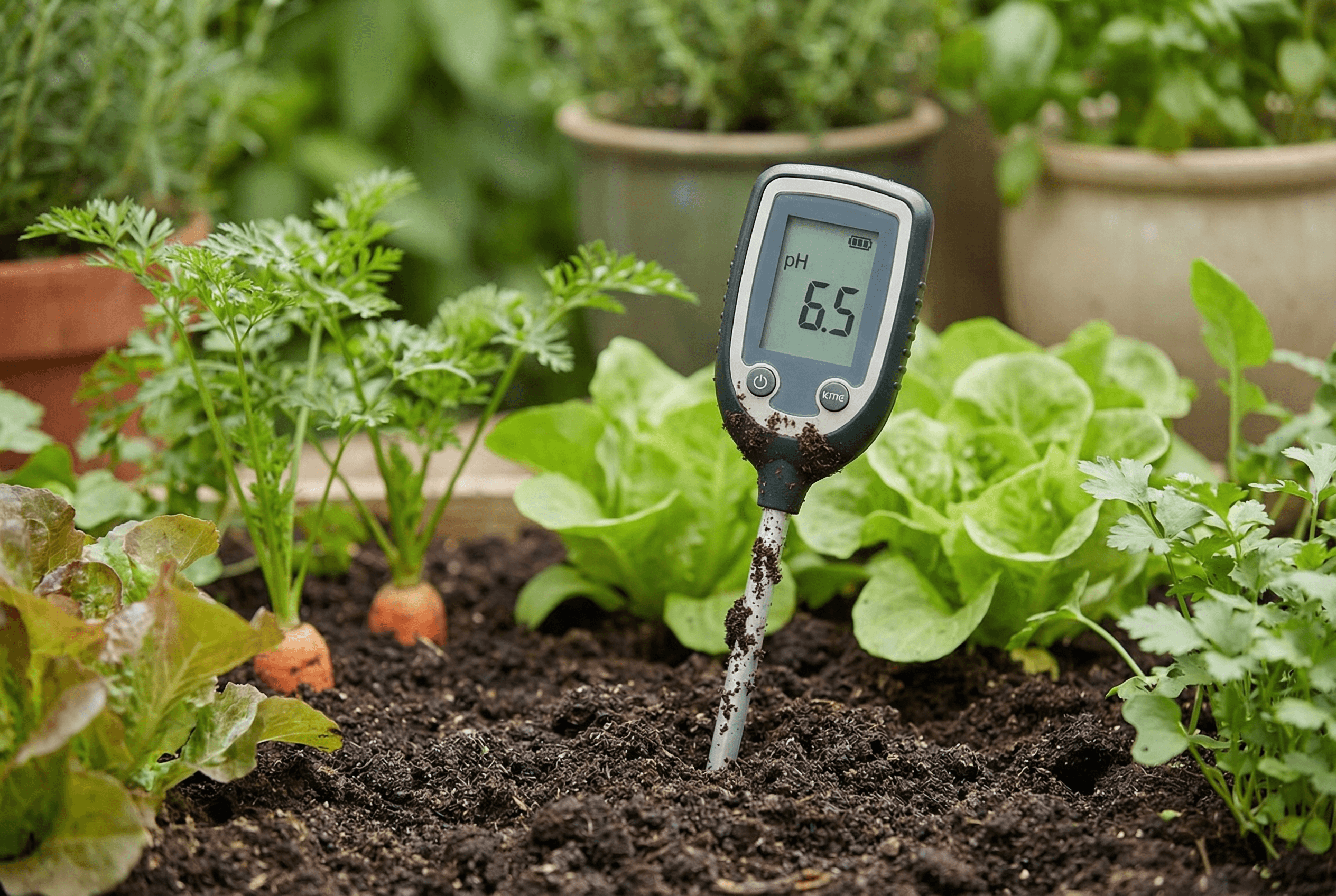
A digital soil pH meter gives more precise readings and is a worthwhile investment for serious gardeners. Simply insert the probe into moist soil and read the display. Make sure the soil is damp — dry soil gives unreliable readings.
Professional Soil Analysis
For a comprehensive soil report (including nutrient levels, organic matter content, and pH), send a sample to a professional laboratory. Many agricultural colleges and gardening services offer this. A full analysis costs around 20-50 pounds and is invaluable for serious gardeners.
Common UK Soil pH Patterns
Acidic Soils
Common in areas with high rainfall, heathland, and woodland.Areas of Scotland, Wales, Cornwall, and sandy/heathland soils in England tend to be acidic. RHS soil testing guide has detailed guidance on this topic.
If you have acidic soil and want to grow vegetables or plants that prefer neutral/alkaline conditions, you will need to apply garden lime regularly.
Alkaline Soils
Common in areas with chalk or limestone geology — much of the south and east of England. These soils can be challenging for many plants, particularly ericaceous (acid-loving) species.
The solution is to choose plants adapted to alkaline conditions, or to grow ericaceous plants in containers with ericaceous compost. According to Gardeners’ World,
is one of the most rewarding skills a gardener can develop… The
process is explained in detail by the RHS composting guide, which covers everything from starting your bin to troubleshooting common problems…
Adjusting Your Soil pH
Making Acidic Soil More Alkaline
Apply garden lime (ground limestone):
– Clay soils: Up to 500g per square metre
– Sandy soils: Up to 250g per square metre
– Work in during autumn or winter for best results
The exact amount depends on your current pH and the crop you are targeting. Lime takes several months to fully affect soil pH — garden lime for spring planting.
Making Alkaline Soil More Acidic
This is harder and less permanent. Options include:
– Sulphur: Apply garden sulphur at around 50-100g per square metre to gradually lower pH
– Ericaceous compost: RHS composting guide has detailed guidance on this topic.Use in containers and as a mulch for acid-loving plants
– Raised beds: Fill with ericaceous compost to grow blueberries, RHS soft fruit guide has detailed guidance on this topic.azaleas, and other acid-lovers
The Reality for Most Gardeners
In practice, most gardeners work with their natural soil type rather than trying to transform it. The better approach is to choose plants suited to your soil pH — there is an enormous range of beautiful plants for both acidic and alkaline conditions.
Choosing Plants by Soil pH
For acidic soils (pH 4.5-6.0):
Blueberries, rhododendrons, azaleas, camellias, pieris, heathers, magnolias, acers (Japanese maples), witch hazel.
For neutral soils (pH 6.0-7.0):
The vast majority of vegetables, herbs, and garden flowers. Roses, clematis, fruit trees, most shrubs.
For alkaline soils (pH 7.0-8.5):
Lilac, ceanothus, hawthorn, mock orange (Philadelphus), many Mediterranean herbs (lavender, rosemary, thyme).
FAQ: Understanding Soil pH
Can I test soil pH without a kit?
Observe which plants thrive and struggle in your garden — this is a surprisingly reliable indicator. Acid-loving plants struggling suggests alkaline soil. Plants turning yellow despite feeding may indicate pH imbalance.
How often should I test my soil pH?
Test every 2-3 years under normal conditions. After applying lime or sulphur, wait 3-4 months before re-testing.
Does compost affect soil pH?
Compost is generally pH neutral and improves soil structure without significantly changing pH. Well-rotted manure can be slightly acidic.
Can container compost pH change?
Yes — peat-free composts in particular can drift towards alkaline over time. Using a pH meter to check container compost is a good idea, especially for ericaceous plants.
What is the best pH for growing vegetables?
Most vegetables prefer slightly acidic to neutral soil (pH 6.0-7.0). Notable exceptions include potatoes (slightly acidic, pH 5.5-6.5) and brassicas (slightly alkaline preferred).
Can I use rainwater to change soil pH?
Rainwater is naturally slightly acidic (around pH 5.6-6.5), but it is not strong enough to meaningfully change soil pH. It is useful for watering ericaceous plants, but not as a pH adjustment tool.
Final Thoughts
Understanding your soil pH is one of the most empowering things you can do as a gardener. It transforms guesswork into knowledge and helps you choose plants that will genuinely thrive rather than merely survive. Test your soil, note the result, and build your planting plans around what your garden naturally offers. Your plants — and your future self — will thank you for it.
For more on understanding and improving your soil, read our guide to Composting 101.
Continue Reading
- 5-Step Essential Garden Tools: What Every UK Gardener Needs
- Complete Guide to Week 12 Spring Garden Jobs: May 17-23
- Complete Guide to Week 11 Spring Garden Jobs: May 10-16
- Complete Guide to Week 10 Spring Garden Jobs: May 3-9
- Complete Guide to Week 9 Spring Garden Jobs: April 26 – May 2
Frequently Asked Questions
When is the best time to do this?
The best time depends on your climate zone and what you are growing, but generally early morning or late afternoon when temperatures are cooler works best for most garden tasks.
How often should I check on my garden?
Regular attention is key — check your garden every few days during the growing season. This helps you catch problems early before they become serious.
Can beginners do this?
Absolutely! Start with a few simple tasks and build up gradually. Most garden jobs are beginner-friendly with the right guidance.
What is the most important thing to remember?
Consistency matters more than perfection. Little and often beats occasional marathon sessions. Even 10-15 minutes of daily attention yields great results.
