


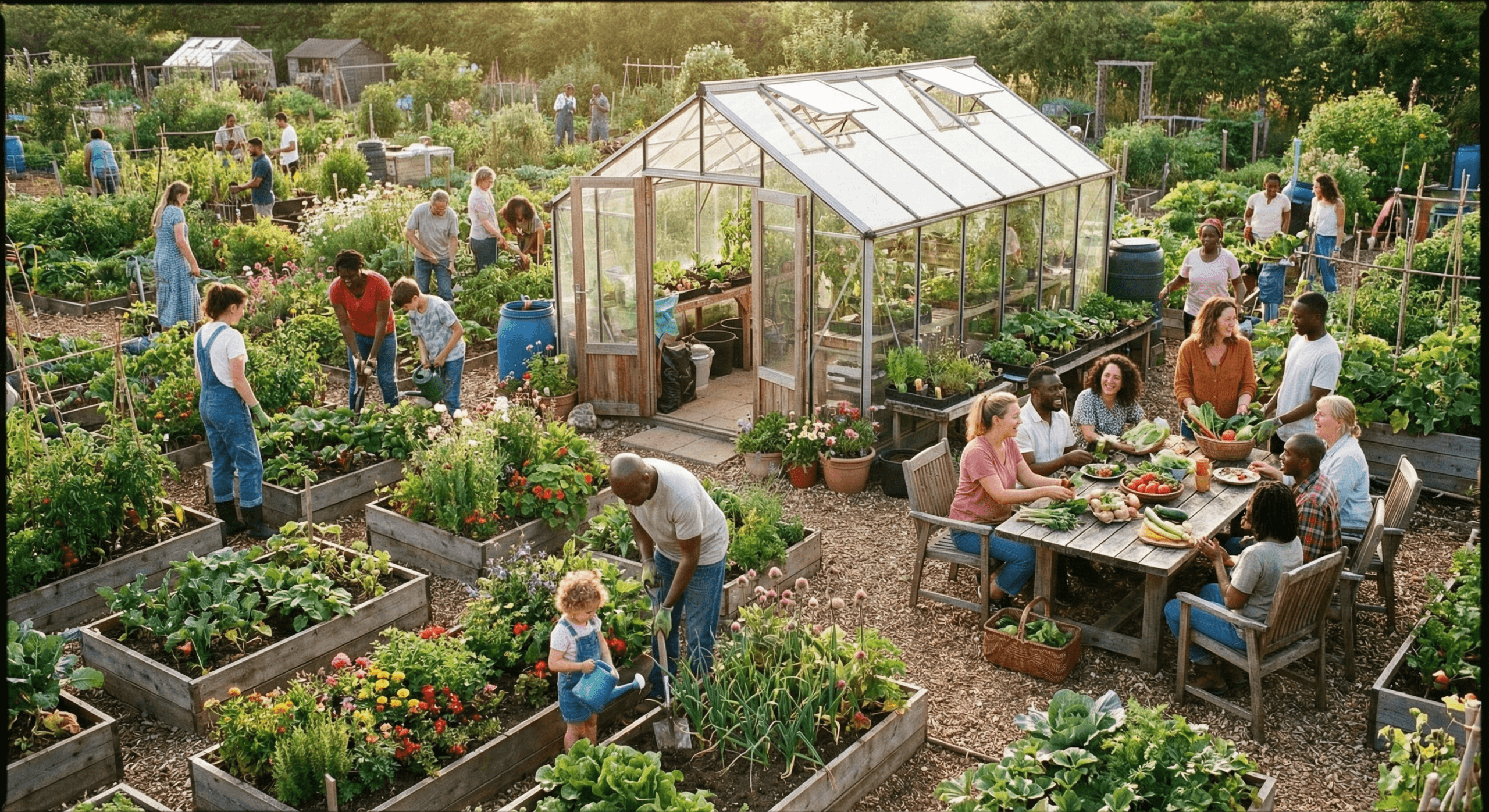
Community gardens are some of the most rewarding spaces in any neighbourhood. They transform unused land into productive, beautiful places where people grow food, make friends, and reconnect with nature. Whether you want to join an existing garden or start one from scratch, this guide will help you get growing. In this comprehensive simple guide, we’ll cover everything you need to know.
Related: Garden Planning 101: Mapping Out Your Garden Space Natural Pest Deterrents: Plants That Repel Pests
For more on essential summer gardening:, see our guide.
For more on essential mulching: single, see our guide.
Looking for quality gardening tools and supplies? Browse our recommended garden products — hand-picked by the GardenWizz team.
Proven Community Guide:: Simple: What Is a Community Garden?
A community garden is a shared space where people grow plants, vegetables, and flowers together.Gardens may be allotments (individual plots allocated to members), RHS allotments guide has detailed guidance on this topic.shared plots (everyone works the whole space together), or a mix of both. Some are organised around specific themes — a wildlife garden, a memory garden, a growing space for refugees and asylum seekers.
What all community gardens share is that they are managed by and for the community, not for profit.
The Benefits of Community Gardening
Physical and mental health: Regular gentle activity in the fresh air, combined with the satisfaction of growing your own food and the social contact with other gardeners, makes community gardening exceptionally good for wellbeing. Research consistently shows that gardeners report lower stress levels and better overall health.
Food security: Growing even a portion of your own vegetables reduces food costs and provides fresher, more nutritious produce than supermarket alternatives.
Community connection: In an age of social isolation, community gardens create genuine relationships between people who might otherwise never meet. Neighbours of different ages, backgrounds, and ethnicities come together around a shared purpose.
Environmental benefits: Community gardens increase urban biodiversity, reduce food miles, improve air quality, and help manage rainwater runoff.
Finding an Existing Community Garden
The first step is to search for one near you:
– The Federation of City Farms and Community Gardens (fieldfare.org.uk) maintains a directory of community gardens across the UK
– Allotment lists: Your local council will have a waiting list for council allotments
– Social media: Facebook groups and local community apps (Nextdoor, etc.) often have information about local growing projects
– Word of mouth: Local churches, community centres, and schools often know about garden projects in the area
What to Expect When Joining
Most community gardens charge a small annual fee to cover costs like water, insurance, and basic tools like a garden trowel and garden fork. Expect to attend an induction session where you will learn the garden’s rules, meet other members, and receive your plot or growing area.
Be prepared to commit time regularly — a plot left untended for months is both frustrating for other gardeners and a wasted opportunity.
Starting a New Community Garden
If there is no garden near you, consider starting one. It is a significant undertaking, but one that creates lasting value for your neighbourhood.
Step 1: Find Your Land
The most common barrier to starting a community garden is finding suitable land. Options include:
– Council-owned land: Many councils have vacant plots they are willing to lease cheaply or for free to community groups
– Private land: A sympathetic landowner might allow temporary use of a patch
– School grounds: Schools often have land that could be used outside school hours
– Church grounds: Many churches have underused grounds suitable for community growing
Step 2: Build a Group
You need a core group of committed people before you approach landowners or councils. Even 3-5 enthusiastic people is enough to get started. Look for initial supporters through:
– Local community groups and Facebook pages
– Neighbourhood networks and noticeboards
– Local environmental groups
– Word of mouth
Step 3: Approach the Landowner
Prepare a clear proposal covering:
– Who will use the garden and how it will benefit the community
– How it will be managed and funded
– What structures and activities are planned
– How you will handle insurance, health and safety, and risk
Step 4: Plan Your Garden
Think about:
– Water access: Essential.The RHS watering guidelines cover efficient watering techniques for gardens of all sizes… Rainwater collection or a tap connection? RHS watering guidelines has detailed guidance on this topic.
– Toilet access: A portable toilet or agreement to use nearby facilities is usually necessary
– Tool storage: A secure shed or lockable container
– Composting: RHS composting guide has detailed guidance on this topic.How will green waste be managed?
– Accessibility: Can people with mobility challenges use the space?
– Sunlight and shelter: Observe the site through the day and year
Step 5: Get Funding
Community gardens typically cost money to set up — raised beds, compost, tools, water connections, signage, and structures all require investment. According to Gardeners’ World, Rainwater is one of the most rewarding skills a gardener can develop… The Rainwater process is explained in detail by the RHS composting guide, which covers everything from starting your bin to troubleshooting common problems… Funding sources include:
– Local council community grants
– Lottery-funded schemes (Awards for All)
– Local businesses and sponsorship
– Membership fees (modest amounts to cover ongoing costs)
– Fundraising events
Step 6: Build and Grow
Start small — a well-managed half plot is more satisfying than an ambitious full plot that overwhelms your volunteers. Establish basic infrastructure first (water, paths, compost), then build raised beds and start growing.
Community Garden Etiquette
– Respect other members’ plots — do not touch or harvest from other people’s growing areas without permission
– Keep paths clear and tidy
– Be mindful of shared resources — tools, water, compost
– Communicate openly if you are having difficulties — most community gardens are supportive of members going through hard times
– Contribute to shared maintenance — do not expect others to maintain the areas you use
FAQ: Community Gardens
What is the difference between an allotment and a community garden?
Allotments typically consist of individual plots rented to individuals or families who manage them independently. Community gardens are usually managed collectively — members may have individual plots or may work the whole space together.
How much does it cost to join a community garden?
Fees vary widely. Most community gardens charge an annual membership fee of around 15-50 pounds to cover water, insurance, and basic maintenance. Some charge more for larger plots. Concessions for low-income members are often available.
Do I need experience to join?
No. Community gardens are some of the best places to learn. Most have experienced members happy to share advice, and some run formal training sessions. You will learn by doing.
Can children use community gardens?
Most community gardens welcome children and many specifically encourage family involvement. Children often love growing food and can learn an enormous amount from the experience. Check individual garden policies regarding children’s participation.
What if I can only garden occasionally?
Be honest about your availability when you join. Some gardens are flexible, but a plot left untended is a problem for everyone. If your availability is limited, look for gardens with shared plots or volunteer on communal tasks rather than taking on an individual plot.
Final Thoughts
Community gardens are about more than growing plants — they are about growing people and connections. Whether you join an existing garden or start a new one, you will find that the garden gives back as much as you put into it. In a world that increasingly separates us, community gardens bring us together around something deeply human: the simple act of growing things.
For more on finding productive growing spaces, read our guide to Small Space Gardening. And for seasonal growing advice, see Seasonal Gardening.
Continue Reading
- 5-Step Essential Garden Tools: What Every UK Gardener Needs
- Complete Guide to Week 12 Spring Garden Jobs: May 17-23
- Complete Guide to Week 11 Spring Garden Jobs: May 10-16
- Complete Guide to Week 10 Spring Garden Jobs: May 3-9
- Complete Guide to Week 9 Spring Garden Jobs: April 26 – May 2
Frequently Asked Questions
When is the best time to do this?
The best time depends on your climate zone and what you are growing, but generally early morning or late afternoon when temperatures are cooler works best for most garden tasks.
How often should I check on my garden?
Regular attention is key — check your garden every few days during the growing season. This helps you catch problems early before they become serious.
Can beginners do this?
Absolutely! Start with a few simple tasks and build up gradually. Most garden jobs are beginner-friendly with the right guidance.
What is the most important thing to remember?
Consistency matters more than perfection. Little and often beats occasional marathon sessions. Even 10-15 minutes of daily attention yields great results.
