


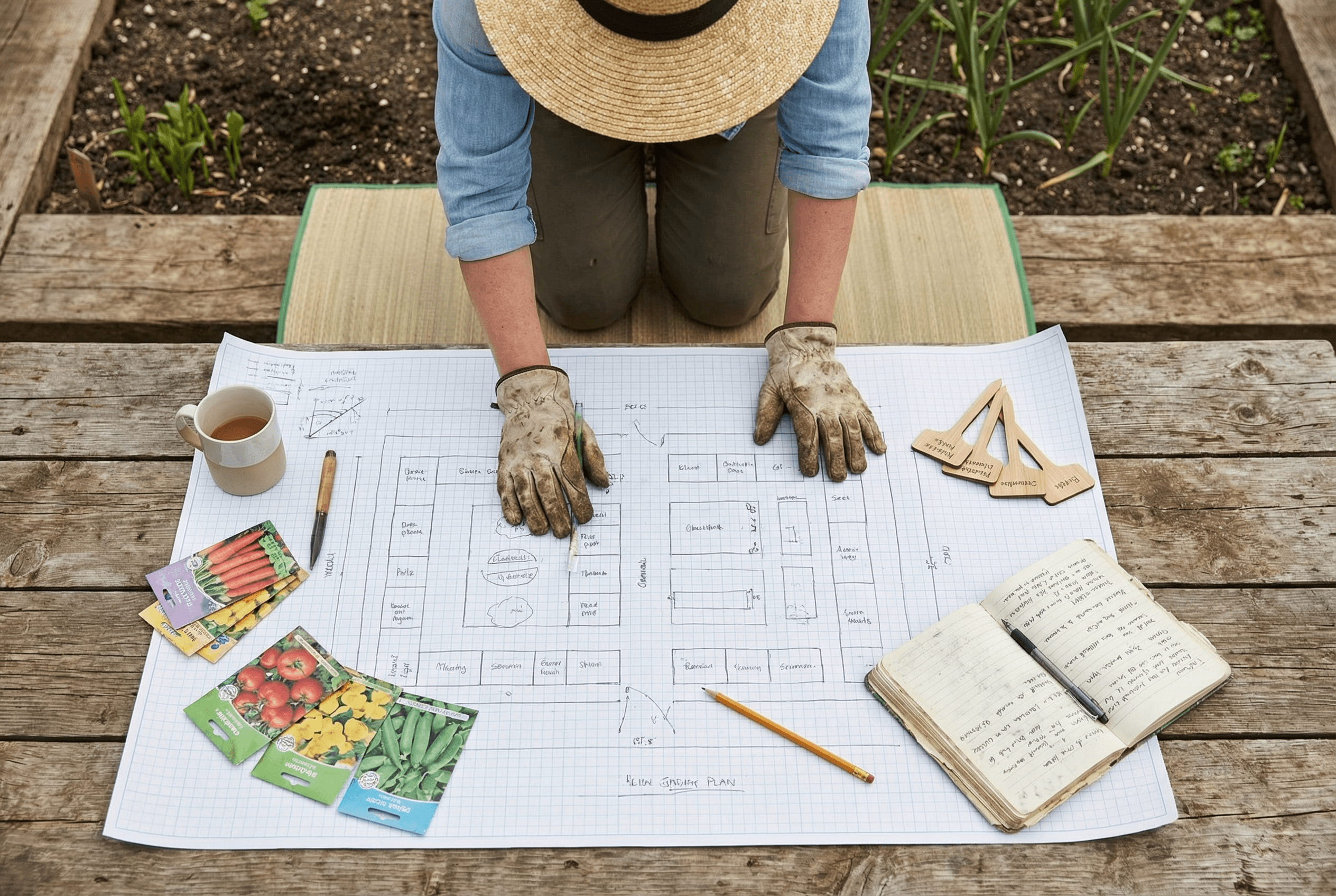
A well-planned garden is one you will enjoy for decades. A garden that evolves without planning is one you spend years correcting. Garden planning is not about drawing perfect pictures — it is about understanding your space, making informed decisions, and avoiding costly mistakes that take years to undo.
Shop Related Products: Watering Can
Related: Natural Pest Deterrents: Plants That Repel Pests Composting Kitchen Waste: Beyond the Basics
The best time to plan a garden was twenty years ago. The second best time is now.
Looking for quality gardening tools and supplies? Browse our recommended garden products — hand-picked by the GardenWizz team.
Proven Planning 101:: Garden: Start With Observation
Before you move a single spade of soil, spend time in your garden through the seasons. The RHS soil testing guide provides detailed advice on understanding your soil type… A site that looks unpromising in winter might be blazing with sun in summer. A shady corner that seems dull might be perfect for a woodland planting.
What to observe:
– Light patterns: Track sunlight through the day and across the seasons.The RHS watering guidelines cover efficient watering techniques for gardens of all sizes. RHS watering guidelines has detailed guidance on this topic.. Note where shadows fall from trees, fences, and buildings.
– Soil: Get a sense of your soil type — is it sandy, clay,or loam? Does it drain well or hold water? Consider a professional soil test kit for a complete picture.
– Wind: Which areas are sheltered? Which are exposed? Windy corners need tough, wind-tolerant plants.
– Levels: Is your garden flat or sloped? Uneven ground can be an opportunity, not a problem — slopes create different microclimates and planting opportunities.
– Views: What do you see from inside your house? From the garden? Are there views you want to frame or hide?
Take Accurate Measurements
You cannot plan effectively without knowing your dimensions. Measure your garden carefully — every wall, fence, gate, tree, and existing feature. Draw a rough plan as you go, with all measurements marked.
Include on your plan:
– All fixed structures (house, shed, greenhouse, RHS greenhouse gardening has detailed guidance on this topic.paths, walls)
– Trees and large shrubs (with approximate canopy spread)
– Boundaries (fences, walls, hedges)
– Tap and drainage locations
– Views in and out
– Light and shade patterns
A simple graph paper plan with 1:50 or 1:100 scale is perfectly adequate for most gardens. Computer garden planning software such as RHS Garden Planner books and Garden Planner software is helpful but not essential.
Define Your Needs and Priorities
Who will use the garden, and how? A garden for a family with young children has very different requirements from a couple who love growing vegetables, or a retired person who wants a low-maintenance retreat.
Questions to ask:
– How much time do you have for garden maintenance?
– Do you want to grow vegetables, RHS vegetables growing guide has detailed guidance on this topic.flowers, or both?
– Do you have children or pets who will use the garden?
– Do you entertain outdoors?
– How important is year-round interest vs. summer spectacular?
– Do you want a formal or informal style?
Be honest about maintenance levels.A wildflower meadow and a immaculate formal parterre are both valid choices — but they require very different amounts of work. Woodland Trust native plants has detailed guidance on this topic. Choose the level you will actually maintain.
Zoning Your Garden
Good garden design divides the garden into distinct zones that serve different purposes. This makes the space feel larger and more purposeful than a single undifferentiated lawn.
Common zones:
– Entertainment zone: Patio or seating area close to the house, where you will actually use it
– Production zone: Vegetable garden, greenhouse, and composting area, ideally in the sunniest spot
– Relaxation zone: A quiet seating area, possibly shaded, possibly hidden from the entertainment zone
– Play zone: For children, potentially away from delicate planting
– Wildlife zone: A pond, log pile, or wild corner that provides habitat for beneficial creatures
Think about the flow between zones. According to Gardeners’ World,
is one of the most rewarding skills a gardener can develop… The
process is explained in detail by the RHS composting guide, which covers everything from starting your bin to troubleshooting common problems… You want entertainment areas accessible from the house, but not necessarily immediately adjacent to the composting area.
Choosing Plants for Your Plan
With a clear plan and defined zones, choosing plants becomes much easier. You are no longer choosing plants you like and finding somewhere to put them — you are matching plants to specific conditions and purposes.
Consider:
– Soil type and pH (from your soil assessment)
– Light levels in each area
– Wind exposure
– Size at maturity — this is where most gardeners go wrong. A tiny sapling planted too close to the house becomes a constant pruning challenge.
– Season of interest — aim for something interesting in every season
– Maintenance requirements — match to your actual available time
A good planting plan has:
– Structural plants (trees and shrubs) as the backbone
– Perennials providing seasonal colour and interest
– Ground cover plants to suppress weeds
– A balance of evergreen and deciduous plants
Avoid Common Planning Mistakes
Underestimating size: Plants are sold when they are small and attractive. A hydrangea sold in a 2-litre pot grows to 2m across over a decade. Always check ultimate dimensions before planting.
Planting too densely: It is tempting to pack plants in when you plant a new garden. Within a few years, everything is overcrowded and competing for space, light, and water. Space plants according to their ultimate size, and accept that a newly planted garden will look sparse. Fill gaps with annuals or ground cover in the meantime.
Ignoring soil conditions: Trying to grow plants unsuited to your soil is a losing battle. Work with your soil rather than against it, or improve specific areas with raised beds and custom compost.
Following fads uncritically: Not every garden suits every trend. A gravel garden looks stunning in a drought-prone, sunny area — it looks bare and lifeless in a shady, wet garden. Choose trends that suit your actual conditions.
Not planning for year two, three, five: Most gardens look their best in year one, when everything is new. By year three, the structural plants are establishing. By year five, the garden begins to mature. Plan for how the garden will look at each stage of its life.
FAQ: Garden Planning
What is the first step in planning a garden?
Observation. Spend at least one full season (ideally) watching your garden before making significant changes. Note sun patterns, wind direction, soil conditions, and existing features.
How do I plan a garden on a budget?
Start with the structural elements that are expensive to change later — paths, boundaries, and major structural plants. Fill in with less expensive perennials and annuals, and propagate your own plants over time. A beautiful garden is built over years, not purchased in a single season.
Should I hire a garden designer?
For large or complex gardens, or if you lack confidence in your design skills, a professional designer is money well spent. For modest gardens, books, online resources, and the confidence to experiment are often enough. Start with what you can manage yourself.
How do I plan for year-round interest?
Aim for at least one feature in each season: spring bulbs, summer flowering perennials, autumn foliage and berries, winter stems and evergreen structure. Pay particular attention to winter — this is the season most neglected by new garden planners.
How do I choose the right plants for my soil?
Get your soil tested for pH and understand your soil type (clay, sand, loam). Then match plants to those conditions. Most garden centres label plants with their soil and light preferences.
What is a keyline garden plan?
A keyline plan shows the key lines of your garden — the main axes, sight lines, and transition points between zones. It is the structural framework that everything else hangs from. Drawing a simple keyline plan before adding detail is an excellent first step.
Final Thoughts
Garden planning is not a one-time activity — it is a process. Your first plan will evolve as your garden grows and your understanding of the space deepens. The key is to start, to observe, and to make decisions that are right for your actual garden, your actual soil, and your actual available time.
For more on garden design principles, read our guide to Garden Design and Planning. And for seasonal growing guidance, see Seasonal Gardening.
Continue Reading
- 5-Step Essential Garden Tools: What Every UK Gardener Needs
- Complete Guide to Week 12 Spring Garden Jobs: May 17-23
- Complete Guide to Week 11 Spring Garden Jobs: May 10-16
- Complete Guide to Week 10 Spring Garden Jobs: May 3-9
- Complete Guide to Week 9 Spring Garden Jobs: April 26 – May 2
Frequently Asked Questions
When is the best time to do this?
The best time depends on your climate zone and what you are growing, but generally early morning or late afternoon when temperatures are cooler works best for most garden tasks.
How often should I check on my garden?
Regular attention is key — check your garden every few days during the growing season. This helps you catch problems early before they become serious.
Can beginners do this?
Absolutely! Start with a few simple tasks and build up gradually. Most garden jobs are beginner-friendly with the right guidance.
What is the most important thing to remember?
Consistency matters more than perfection. Little and often beats occasional marathon sessions. Even 10-15 minutes of daily attention yields great results.
