


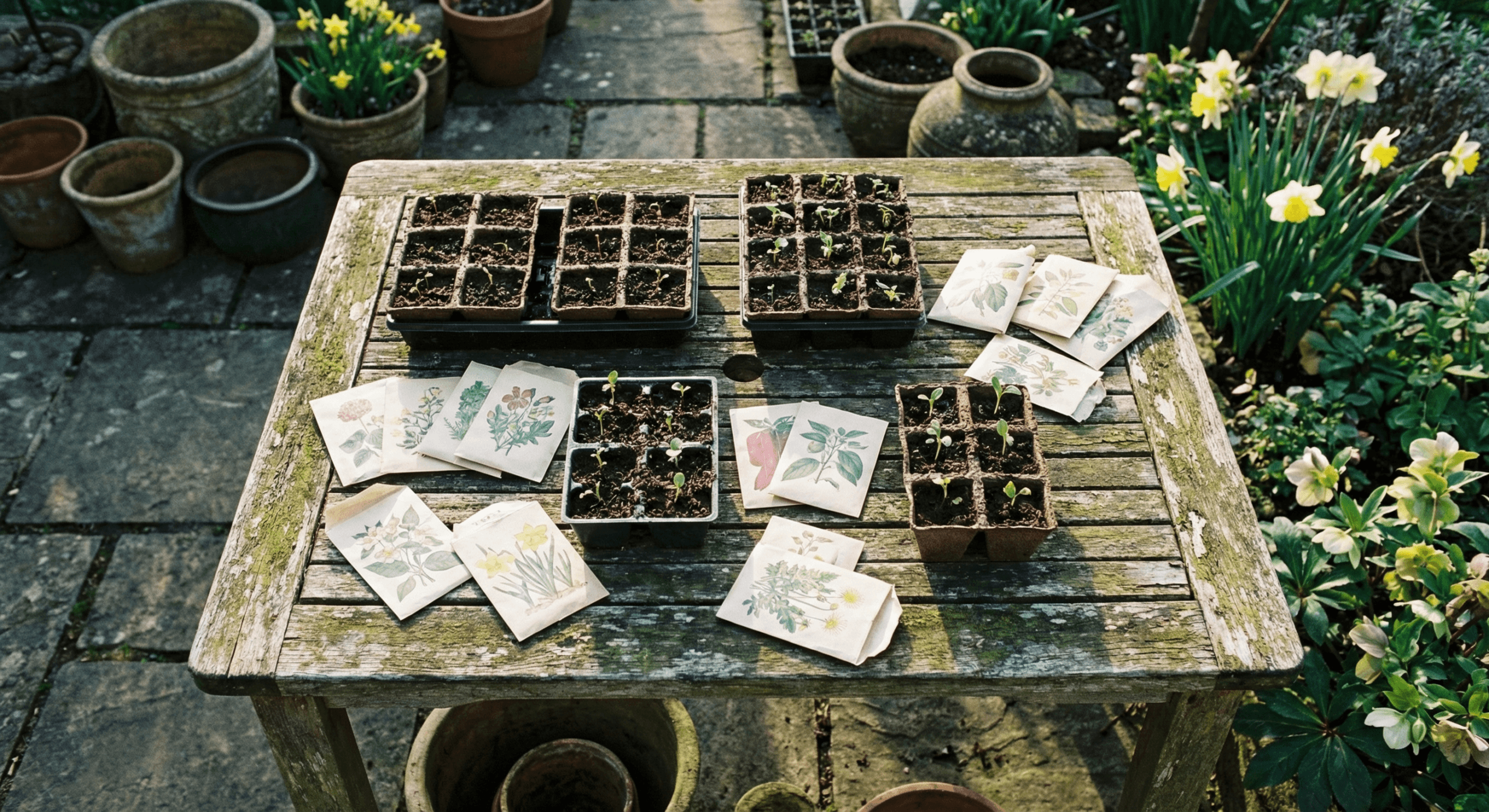
March marks the true start of the gardening year in the UK. As daylight hours increase and soil begins to warm, eager gardeners can finally get their hands dirty again. Whether you’re growing vegetables, herbs, or flowers, knowing what to sow in March is the key to a bountiful summer ahead. This guide covers everything you should be sowing right now, from heat-loving tomatoes to hardy broad beans that laugh at late frosts. What You’ll Need Before you start sowing, make sure you have the right equipment: – Seed Trays and Module Trays – essential for starting seeds indoors with good drainage – Quality Seed Compost – fine, free-draining compost gives seeds the best start – Plant Labels – never forget what you planted where – Garden Trowel – for pot filling and transplanting – Watering Can with Fine Rose – gentle watering without disturbing seeds For more detail, see our garden planning guide.
Looking for quality gardening tools and supplies? Browse our recommended garden products — hand-picked by the GardenWizz team.
March Spring Planting: What to Sow Indoors in March
March is prime time for starting tender crops that need a long growing season. These plants thrive in warmth and will be ready for transplanting once the risk of frost has passed.
- Tomatoes – March is ideal for sowing tomatoes indoors. Varieties like ‘Moneymaker’ and ‘Gardener’s Delight’ reward you with heavy crops through summer. Sow in individual pots or module trays on a sunny windowsill.
- Chillies and Peppers – These heat-loving plants need an early start. Sweet peppers and chilli varieties like ‘Cayenne’ benefit from the long indoor growing period. Keep them warm at 18-21C for best germination.
- Aubergines – Another heat-lover that rewards early sowing. ‘Black Beauty’ and ‘Robin Hood’ are reliable UK varieties. They need consistent warmth to germinate successfully.
For indoor sowing, use a heated propagator or a warm windowsill. Fill your seed trays with seed compost, scatter seeds thinly, and cover with a light layer of vermiculite. Keep moist but not waterlogged.
What to Sow Directly Outdoors in March
Not everything needs coddling. Several hardy crops can go directly into prepared soil when conditions allow.
- Broad Beans – ‘Aquadulce Claudia’ and ‘Masterpiece Green Longpod’ can be sown directly in March. These hardy beans tolerate cold and will establish strong root systems before summer.
- Peas – Direct sow early varieties like ‘Kelvedon Wonder’ or ‘Meteor’. Protect young seedlings from birds with netting. March sowings crop by early summer.
- Spinach – A cut-and-come-again crop that thrives in cool conditions. ‘Medania’ and ‘Apollo’ perform well from March sowings and tolerate partial shade.
- Beetroot – ‘Boltardy’ is the gardeners’ favourite for its reliability and resistance to bolting. Sow thinly in drills and thin seedlings as they grow.
- Carrots – Early varieties like ‘Amsterdam Forcing’ can be sown under cloches in March. Heavy, clay soils are best suited to short, stump-rooted types.
Prepare your soil by raking to a fine tilth and remove any stones. Sowing in raised beds or container gardening setups can improve drainage and warming in cold, wet springs.
Herbs to Start in March
Fresh herbs elevate any dish and many are easy to grow from seed. March sowing brings youharvests by summer.
- Basil – The king of Mediterranean herbs. Sow indoors on a warm windowsill. ‘Genovese’ is perfect for pesto, while ‘Thai Sweet’ adds aniseed flavour to Asian dishes.
- Chives – Hardy and reliable. Direct sow in pots or borders. Once established, chives return year after year and produce attractive purple flowers.
- Parsley – Both curly and flat-leaf varieties thrive from March sowings. Parsley is slow to germinate, so be patient and keep the soil consistently moist.
For more herb growing tips, see our Herb Garden Beginners Guide.
Tips for March Sowing Success
- Check Soil Temperature – Cold soil slows germination dramatically. Use a soil thermometer to check conditions. Most outdoor crops need at least 5-7C, while tender crops prefer 10C+.
- Warm Up Beds Early – Cover prepared beds with fleece or cloches two weeks before sowing. This warms the soil and conserves moisture.
- Chit Potatoes – If you haven’t already, place seed potatoes in egg boxes on a cool, bright windowsill. Chitting encourages strong, short sprouts that grow quickly once planted.
- Protect Seedlings – Slugs and snails adore tender seedlings. Use organic pellets, copper tape, or beer traps to protect vulnerable plants.
- Don’t Sow Too Thickly – Overcrowding leads to weak, leggy seedlings susceptible to disease. Follow packet spacing guidelines carefully.
For building healthy soil that supports strong growth, see our guide to Composting 101.
Frequently Asked Questions
What vegetables can I sow in March in the UK? In March, you can sow broad beans, peas, spinach, beetroot, and carrots directly outdoors. Indoors, start tomatoes, chillies, peppers, and aubergines. Is March too early to sow seeds outside? Not for hardy crops. Broad beans, peas, and some root vegetables can tolerate cool conditions. Wait until late April or May for tender crops like French beans and courgettes. What seeds should I start on a windowsill in March? Tomatoes, peppers, chillies, aubergines, and basil benefit from an early start indoors. These need warmth to germinate and a long season to crop well. How do I protect March seedlings from frost? Use fleece, cloches, or cold frames to protect seedlings. Bring indoor sowings off cold windowsills at night. Harden off plants gradually before transplanting. Can I grow leafy greens in March? Absolutely. Spinach, rocket, and lettuce perform well from March sowings, especially fast-growing varieties. See our Growing Leafy Greens guide for more information.
Get Sowing This March
March is your gateway to a productive garden. By knowing what to sow in March in the UK, you harness the full growing season and set yourself up for abundant harvests through summer and autumn. Start your heat-loving crops indoors, get hardy vegetables directly in the soil, and don’t forget the herbs. With the right preparation and a bit of patience, your garden will reward you handsomely. For more seasonal gardening advice, explore our Seasonal Gardening section. And for external resources, the Royal Horticultural Society and Gardeners’ World offer excellent guidance for UK gardeners. Happy sowing!
Frequently Asked Questions
When is the best time to spring garden preparation?
Start in February-March as days lengthen. Clear, feed, and plan ahead.
Do I need any special equipment?
Seed trays, compost, and basic tools. A cold frame extends the season.
Can beginners do this?
Spring is the perfect time to start – everything is optimistic and new!
How long does it take?
Tasks range from quick 10-minute jobs to full weekend projects.
Continue Reading
- 5-Step Essential Garden Tools: What Every UK Gardener Needs
- Complete Guide to Week 12 Spring Garden Jobs: May 17-23
- Complete Guide to Week 11 Spring Garden Jobs: May 10-16
- Complete Guide to Week 10 Spring Garden Jobs: May 3-9
- Complete Guide to Week 9 Spring Garden Jobs: April 26 – May 2
Frequently Asked Questions
When is the best time to do this?
The best time depends on your climate zone and what you are growing, but generally early morning or late afternoon when temperatures are cooler works best for most garden tasks.
How often should I check on my garden?
Regular attention is key — check your garden every few days during the growing season. This helps you catch problems early before they become serious.
Can beginners do this?
Absolutely! Start with a few simple tasks and build up gradually. Most garden jobs are beginner-friendly with the right guidance.
What is the most important thing to remember?
Consistency matters more than perfection. Little and often beats occasional marathon sessions. Even 10-15 minutes of daily attention yields great results.
