


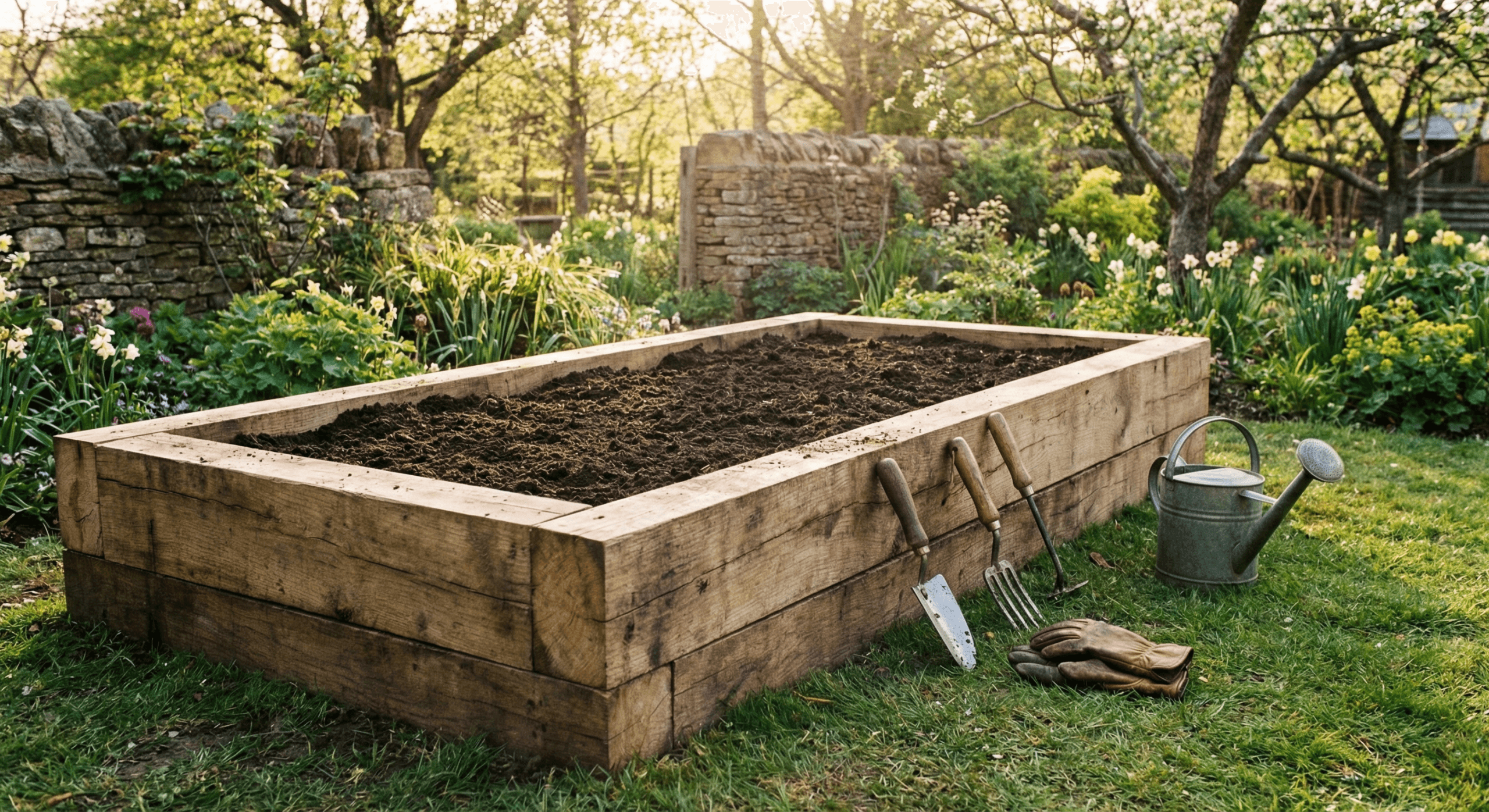
There is something deeply satisfying about building your own raised bed. Perhaps it is the thought of reaching into fresh, crumbly soil without bending your back until it aches. Perhaps it is the promise of a patch of earth that no amount of clay or chalk or builder’s rubble can ruin. Or perhaps, like many UK gardeners, you have simply had enough of fighting your garden’s native soil and want to take control of what goes into your growing space.
Raised beds solve a surprising number of problems. They warm up faster in spring, giving you a head start on the growing season. They drain well in our famously damp British climate while retaining enough moisture to keep roots happy. They keep weeds and pests at bay more easily, and they make the whole business of gardening far more accessible. Whether you are growing vegetables, herbs, or ornamental plants, a well-built raised bed is one of the best investments you can make in your outdoor space.
Build Raised Bed:: What You’ll Need
Before you head to the garden, it helps to have everything to hand. Here are the key items you will need, all available from Amazon UK:
- Timber raised bed kit — the quickest option for beginners, these come with pre-cut boards and everything you need to bolt them together
- Landscape fabric — laid beneath the bed to stop weeds creeping up from below
- Raised bed compost — a quality mix designed for the depth and drainage of raised beds
- Garden screws — galvanised or stainless steel to resist rust and hold your frame solid for years
Materials
The most popular choice for UK gardeners is untreated timber — usually rough-sawn pine or larch — because it is affordable, widely available, and blends naturally into a garden setting. Cedar is a pricier but longer-lasting alternative that contains its own natural preservatives. If you prefer something more industrial, corrugated metal troughs and retaining wall blocks are increasingly popular choices, particularly in contemporary gardens.
For a standard rectangular bed, aim for timber at least 38mm thick so it can withstand the pressure of wet soil without bowing. Boards 15–20cm tall give you a comfortable working depth of around 30–40cm once sunk slightly into the ground. Whatever material you choose, make sure it has not been treated with harmful chemicals if you plan to grow edible crops.
Choosing the Right Spot
Most vegetables and herbs want at least six hours of direct sunlight a day, so observe your garden before you commit. South-facing positions are ideal, but east or west-facing beds can work well too depending on what you intend to grow. Leafy salads and herbs are more tolerant of partial shade, while tomatoes, peppers, and squash need the sunniest spot you can offer.
Think about access too. Raised beds are easier to reach into than ground-level plots, but you still want to be able to get around all four sides comfortably. Leave at least 60cm of path space between beds. If you are planning more than one bed, orient them north to south so that taller crops in one bed do not shade the next.
Building the Bed
Clear the site of any grass, weeds, or debris. If you are using landscape fabric, lay it over the ground and anchor it with stones or staples. This step is not strictly essential, but it will save you years of battling bindweed and couch grass from below.
Assemble your timber frame according to the kit instructions, or if you are building from scratch, screw your boards together at the corners using two screws per joint for stability. Use a spirit level to check that the frame sits level — an uneven bed will cause water to pool at one end and drain poorly. For extra sturdiness on soft soil, you can drive short wooden stakes into the ground at each corner before attaching the frame.
Filling Your Raised Bed
This is where the magic happens. Fill the frame with a mixture of quality raised bed compost and your garden’s native topsoil if you have it — roughly a 50/50 blend works well. The compost provides nutrients and structure while the topsoil adds bulk and helps with moisture retention. If your garden soil is particularly poor, you can fill the base 10–15cm with coarse gravel or broken bricks to improve drainage.
Do not overfill — leave a couple of centimetres below the top of the frame so the soil has room to settle. Water the bed thoroughly after filling and let it rest for a week or two before planting, allowing the compost to settle and the soil biology to start working.
What to Grow
Raised beds are extraordinarily versatile. In spring, sow salads, radishes, carrots, and beetroot directly into the soil. As the season warms, add tomatoes, courgette, beans, and peppers. Herbs such as basil, coriander, and parsley thrive in the free-draining conditions. In autumn and winter, try winter brassicas, kale, and garlic planted before the first frost.
The contained environment also makes raised beds excellent for growing strawberries, which appreciate the good drainage, and for experimenting with cut flowers like sweet peas and zinnias. The only thing to watch is watering — raised beds drain faster than ground soil, so monitor moisture levels during dry spells, especially in summer.
Frequently Asked Questions
How deep should a raised bed be for vegetables?
Most vegetables need at least 30cm of soil depth. Root vegetables like carrots benefit from 40cm or more. Shallow-rooted crops like lettuce and herbs can get by with 20cm.
Do raised beds need a bottom?
No — open bottoms are better for drainage and allow earthworms and beneficial microbes to move freely between the bed and the native soil below. A bottom is only necessary if you are building on concrete or a patio.
How long does untreated timber last?
Untreated pine typically lasts 3–5 years before it starts to rot. Cedar can last 10–15 years or more. You can extend the life of any timber by lining the interior walls with pond liner or breathable membrane before filling with soil.
Can I fill a raised bed with just compost?
You can, but pure compost compresses and shrinks quickly as it decomposes. A mix of compost and topsoil or coarse organic matter is more sustainable long-term and provides better structure for root growth.
Ready to get started? Browse our recommended raised bed kits on Amazon UK and take the first step toward your best-ever growing season. Happy building!
Related Articles
For more help with your garden, check out these related guides:
- How to Build a Raised Bed: Tools, Materials and Step-by-Step
- How to Build a Raised Bed: Tools, Materials and Step-by-Step
- Beginner’s Guide to Sweet Peas
- Best Plants for Pollinators
- Herb Garden Guide
Continue Reading
- 5-Step Essential Garden Tools: What Every UK Gardener Needs
- Complete Guide to Week 12 Spring Garden Jobs: May 17-23
- Complete Guide to Week 11 Spring Garden Jobs: May 10-16
- Complete Guide to Week 10 Spring Garden Jobs: May 3-9
- Complete Guide to Week 9 Spring Garden Jobs: April 26 – May 2
Frequently Asked Questions
When is the best time to do this?
The best time depends on your climate zone and what you are growing, but generally early morning or late afternoon when temperatures are cooler works best for most garden tasks.
How often should I check on my garden?
Regular attention is key — check your garden every few days during the growing season. This helps you catch problems early before they become serious.
Can beginners do this?
Absolutely! Start with a few simple tasks and build up gradually. Most garden jobs are beginner-friendly with the right guidance.
What is the most important thing to remember?
Consistency matters more than perfection. Little and often beats occasional marathon sessions. Even 10-15 minutes of daily attention yields great results.
