


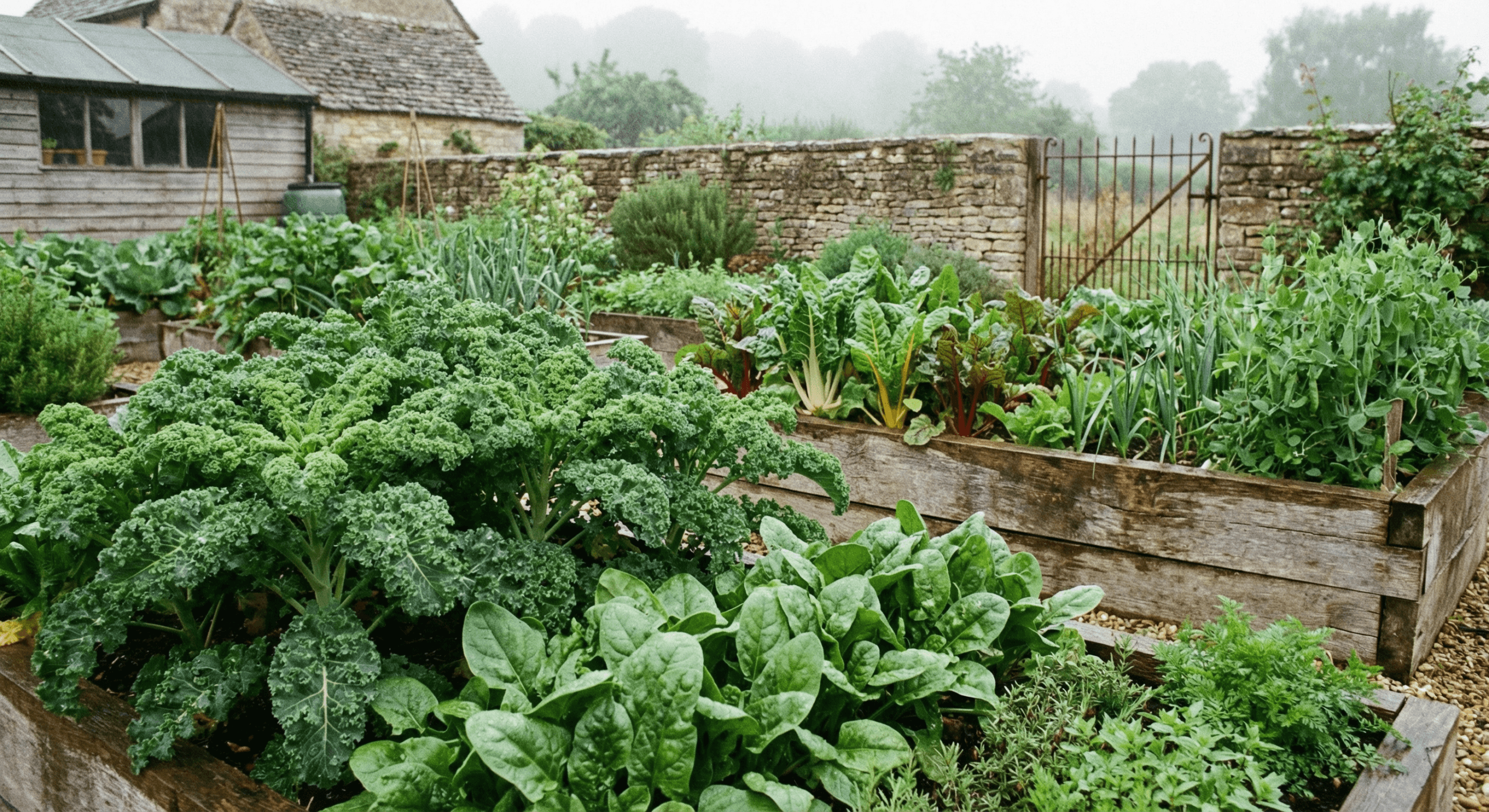
Leafy greens are some of the most rewarding crops a UK gardener can grow. Fast to mature, packed with nutrients, and available in an extraordinary range of flavours and textures, they’re the backbone of any kitchen garden. And the best part? Many can be harvested leaf by leaf over weeks, delivering multiple meals from a single plant.
Grow Leafy Greens:: What You’ll Need
Before you start, gather these essentials:
- Kale seed — Hardy, nutritious kale for year-round harvests
- Spinach seed — Fast-growing spinach for salads and cooking
- Chard seed — Colourful chard for continuous harvests
- Lettuce seed — Mixed lettuce varieties for cut-and-come-again
- Watering can — For consistent watering to prevent bolting
- Plant food — Nitrogen-rich feed for leafy growth
Best UK Leafy Greens
The UK climate is ideally suited to a wide variety of leafy greens. Here are the best to start with:
Spinach
Spinach is the classic versatile green — wonderful raw in salads when young, or cooked like its Mediterranean cousin when more mature. It’s a cool-season crop that bolts quickly in hot, dry weather, making the UK spring and autumn ideal growing conditions. Sow from March to May and again from August to September. Pick young leaves regularly and the plant will keep producing for longer. ‘Medania’ and ‘Bordeaux’ are reliable varieties.
Kale
Kale is the tough, nutritious workhorse of the winter garden. Unlike most vegetables, its flavour actually improves after frost — the cold concentrates sugars and softens cell walls. It’s also one of the most nutritious foods you can eat, packed with vitamins K, A, and C. Sow in spring or late summer for harvests that span autumn through to spring. ‘Nero di Toscana’ (Dinosaur kale) and ‘Redbor’ are particularly beautiful and productive. Pick outer leaves from the bottom up and kale will keep producing for months.
Chard
Chard is basically beetroot’s salad-leaf cousin — but with extraordinary, vibrant stems in red, yellow, and orange. It’s productive, attractive, and more heat-tolerant than spinach, making it a great choice for summer harvests. Rainbow chard is one of the most ornamental vegetables you can grow. Sow from April to August. Both stems and leaves are edible — stems are cooked like asparagus or celery, leaves like spinach.
Lettuce
Lettuce is the staple of any salad garden. There are three main types: crisphead (like Iceberg), cos (romaine), and loose-leaf (cut-and-come-again). For beginners, loose-leaf varieties are the easiest — they’re more heat and bolt-tolerant and can be harvested leaf by leaf over many weeks. Sow little and often from March to September. Lettuce seed needs light to germinate, so press seeds gently into compost rather than burying them deeply.
Rocket
Wild rocket and salad rocket add a peppery kick to salads. Rocket is fast — ready in as little as 4-6 weeks from sowing — and self-seeds readily if you let a few plants flower. It bolts quickly in hot weather, so summer sowings are best in part shade. Wild rocket is slower but more heat-tolerant and perennial. Both are brilliant for filling gaps in the garden.
When to Sow
- Spinach: March-May and August-September
- Kale: March-June (spring crop) or July-August (winter crop)
- Chard: April-August
- Lettuce: March-September, succession sow every 2-3 weeks
- Rocket: April-September
Watering and Care
Leafy greens are mostly water — they need consistent moisture to grow quickly and stay tender. Inconsistent watering causes stress, which leads to bolting, bitter flavour, and tough leaves.
- Water deeply at the base of plants rather than from above — wet foliage encourages fungal diseases
- Mulch around plants to retain moisture and keep roots cool
- Feed with a nitrogen-rich liquid feed (like seaweed or blood meal) every couple of weeks for fast, lush growth
- Thin seedlings carefully — crowded plants grow weakly and bolt faster
Harvesting Cut-and-Come-Again
The cut-and-come-again method is the key to getting maximum harvests from leafy greens. Instead of harvesting the whole plant at once, pick outer leaves regularly, always leaving the central growing point intact. The plant keeps producing new leaves from the centre, extending your harvest by weeks or even months.
With kale, always harvest from the bottom up — remove the lowest, largest leaves first and the plant will keep growing taller. With lettuce and spinach, use scissors to snip leaves 2-3cm above soil level and they’ll regrow for 2-3 more harvests before running to seed.
Common Problems
Bolting: Hot, dry conditions trigger plants to flower prematurely. Choose bolt-resistant varieties, provide shade in summer, and keep soil consistently moist.
Slugs and snails: Young seedlings are particularly vulnerable. Use organic slug pellets, copper tape, or beer traps.
Aphids: Check the undersides of leaves regularly. Hose off with water or use an organic insecticidal soap.
Caterpillars: Cabbage white butterfly caterpillars can strip a plant overnight. Inspect plants daily and pick off caterpillars by hand, or cover with fine netting.
Growing leafy greens is one of the simplest routes to a productive garden. Sow a few seeds, keep them watered, and you’ll be harvesting your own salads and stir-fries within weeks. What could be simpler?
Frequently Asked Questions
When is the best time to grow leafy greens?
Sow from March to September for continuous harvests. Some tolerate light frost.
Do I need any special equipment?
Seed trays, compost, and netting against pigeons.
Can beginners do this?
Very approachable – cut-and-come-again harvesting is forgiving.
How long does it take?
4-8 weeks to first harvest. Keep picking for ongoing crops.
Related Articles
For more help with your garden, check out these related guides:
Continue Reading
- 5-Step Essential Garden Tools: What Every UK Gardener Needs
- Complete Guide to Week 12 Spring Garden Jobs: May 17-23
- Complete Guide to Week 11 Spring Garden Jobs: May 10-16
- Complete Guide to Week 10 Spring Garden Jobs: May 3-9
- Complete Guide to Week 9 Spring Garden Jobs: April 26 – May 2
Frequently Asked Questions
When is the best time to do this?
The best time depends on your climate zone and what you are growing, but generally early morning or late afternoon when temperatures are cooler works best for most garden tasks.
How often should I check on my garden?
Regular attention is key — check your garden every few days during the growing season. This helps you catch problems early before they become serious.
Can beginners do this?
Absolutely! Start with a few simple tasks and build up gradually. Most garden jobs are beginner-friendly with the right guidance.
What is the most important thing to remember?
Consistency matters more than perfection. Little and often beats occasional marathon sessions. Even 10-15 minutes of daily attention yields great results.
