


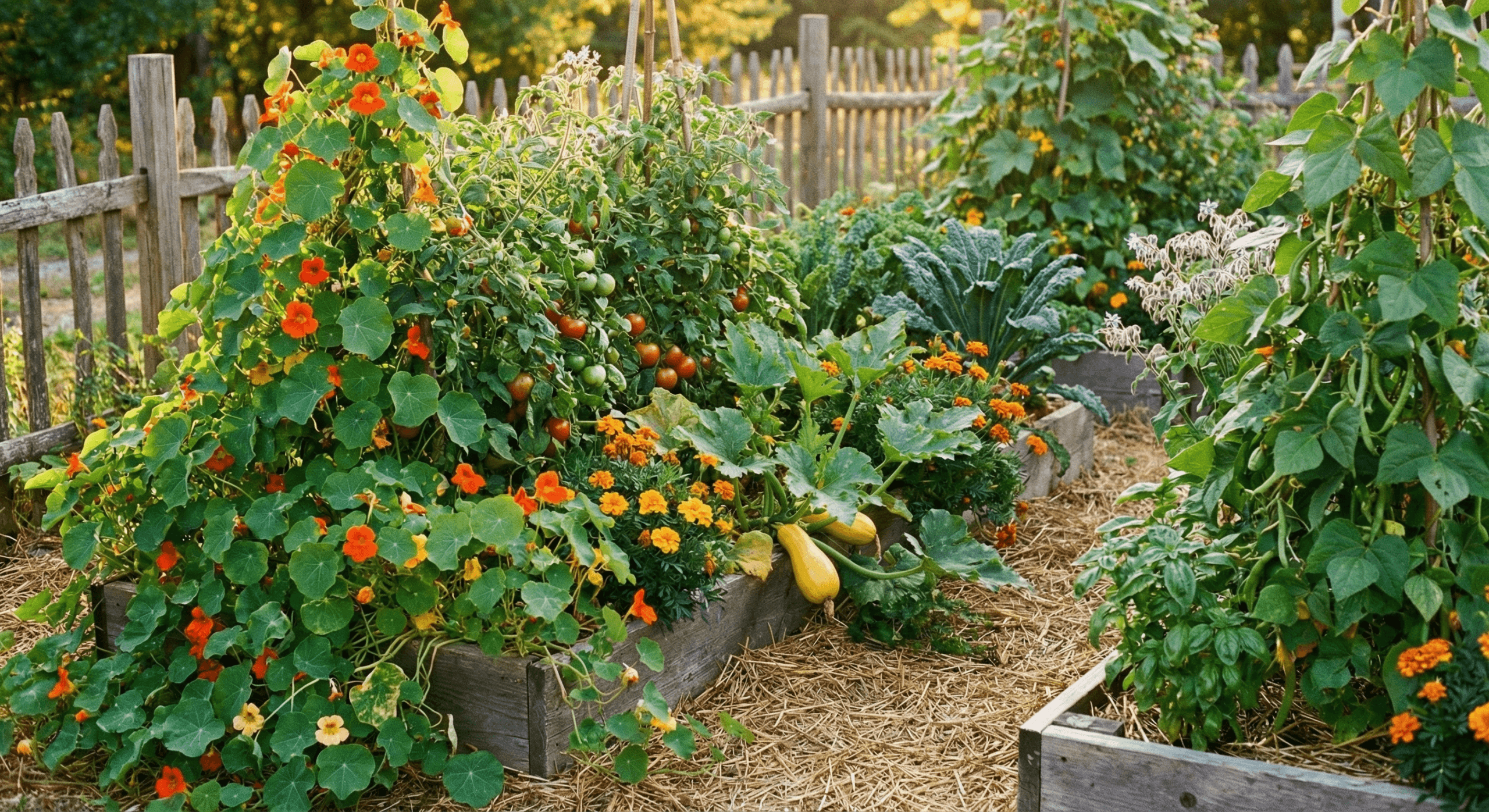
The idea that certain plants grow better together, and that some plants actively protect others from pests, is one of the oldest principles in gardening. Modern research has validated many of these traditional companion planting combinations, revealing the precise mechanisms through which plants deter pests, attract beneficial insects, and improve overall garden health.
5-Step Natural Pest: What You’ll Need
Before you start, gather these essentials:
- Nasturtium seeds — Nasturtium seeds – the classic companion plant for pest control
- Marigold seeds — French marigold seeds for companion planting with vegetables
- Beneficial insects pack — Pack of lacewings and hoverfly larvae for natural pest control
- Nematodes — Nematodes for natural control of slugs and vine weevil
Natural pest control through companion planting is not a magic bullet – it works as part of a broader approach to garden health. But used thoughtfully, companion planting reduces the need for pesticides, supports pollinators, and creates a more resilient, biodiverse garden ecosystem.
How Companion Planting Works
Companion planting works through several distinct mechanisms:
Pest masking: Strong-scented plants like basil, thyme, and rosemary confuse pests searching by smell, making it harder for them to locate their target crops.
Trap cropping: Sacrificial plants attract pests away from valuable crops. Nasturtiums are the classic example – aphids prefer nasturtiums to almost anything else, so plant them at the far end of the garden to draw aphids away from your vegetables.
Predator habitat: Flowers like yarrow, dill, and fennel attract beneficial insects – lacewings, hoverflies, and parasitic wasps – that prey on aphids, caterpillars, and other pests.
Nematode同伴: Some plants, notably French marigolds (Tagetes), release alpha-terthienyl from their roots, which suppresses soil nematodes that attack vegetable roots.
Physical barriers: Tall plants like sweetcorn can act as a windbreak protecting more delicate crops, and dense plantings can physically impede pest movement.
Companion Planting Combinations That Work
Tomatoes + basil + carrots: Basil is believed to improve tomato flavour and definitely repels aphids and whitefly. The three share similar water and sun requirements, making them practical companions in the kitchen garden.
Brassicas + lavender + rosemary: The strong scent of alliums (chives, leeks, garlic) and aromatic herbs like lavender, rosemary, and sage confuses cabbage white butterflies searching for brassicas to lay their eggs on. Interplanting lavender between brassica rows significantly reduces caterpillar damage.
Beans + sweetcorn + squash (The Three Sisters): An ancient Native American combination. The beans fix nitrogen in the soil, benefiting the nitrogen-hungry corn and squash. The squash leaves shade the soil, retaining moisture and suppressing weeds. The corn provides support for climbing beans.
Carrots + alliums: The smell of onions, leeks, and chives confuses carrot fly (Psila rosae), one of the most persistent and damaging pests of carrots. Studies show interplanting carrots with onions reduces carrot fly damage by up to 70%.
Courgettes + flowers: Courgettes and squash are prone to cucumber mosaic virus, spread by aphids. Planting bright flowers (phacelia, calendula, cosmos) nearby attracts aphids away from the crop and draws in predator insects.
Potatoes + horseradish + flax: Traditional companions. Horseradish planted at the corners of a potato bed is said to repel potato bug. Flax (Linum) is believed to have a similar effect.
Plants That Attract Beneficial Insects
One of the most powerful aspects of companion planting is its ability to attract and sustain populations of beneficial insects that provide natural pest control throughout the growing season.
- Yarrow (Achillea): Attracts ladybirds, lacewings, hoverflies, and parasitic wasps
- Phacelia: Exceptional at attracting hoverflies, whose larvae eat vast quantities of aphids
- Calendula: Attracts aphids (acting as a trap crop) and also ladybirds
- Dill and fennel: Both attract beneficial wasps and ladybirds
- Sweet alyssum: Excellent ground cover that attracts predatory ground beetles and hoverflies
The key is to allow some of these plants to flower and set seed, rather than deadheading everything. A garden that always looks too perfectly manicured is actually less effective at pest control than one with some deliberate wildness.
Companion Planting Mistakes to Avoid
Overcrowding: The most common mistake. Companion planting only works when all plants have sufficient space, light, air circulation, and nutrients. Pack them in too tightly and you create disease problems that outweigh any pest benefits.
Fennel: Fennel is allelopathic – it inhibits the growth of many other plants. It is best grown in a pot or isolated spot, not interplanted with vegetables.
Sweet peas with beans: Both are legumes – they fix nitrogen, so they compete for the same benefit if planted together. Sweet peas are also vulnerable to the same aphids that attack beans.
The most effective approach to natural pest control is a diversified garden. The more plant species you grow, the more beneficial insects you support, and the more resilient your garden becomes against pest outbreaks. Companion planting is one powerful tool within a broader philosophy of working with nature rather than against it.
Frequently Asked Questions
When is the best time to do this?
The ideal time depends on your climate and the specific plants involved. Generally, early morning or late afternoon are best to avoid the heat of the day.
How often should I check on this?
Check your garden at least once a week during the growing season to catch any issues early and keep on top of tasks.
Can I do this in a container instead?
Many garden tasks can be adapted for containers. Use a good quality potting compost and ensure containers have adequate drainage holes.
What if I don’t have the right tools?
Start with the basics — a trowel, fork, gloves, and watering can will get you a long way. Add tools as you need them.
Related Articles
For more help with your garden, check out these related guides:
Continue Reading
- 5-Step Essential Garden Tools: What Every UK Gardener Needs
- Complete Guide to Week 12 Spring Garden Jobs: May 17-23
- Complete Guide to Week 11 Spring Garden Jobs: May 10-16
- Complete Guide to Week 10 Spring Garden Jobs: May 3-9
- Complete Guide to Week 9 Spring Garden Jobs: April 26 – May 2
Frequently Asked Questions
When is the best time to do this?
The best time depends on your climate zone and what you are growing, but generally early morning or late afternoon when temperatures are cooler works best for most garden tasks.
How often should I check on my garden?
Regular attention is key — check your garden every few days during the growing season. This helps you catch problems early before they become serious.
Can beginners do this?
Absolutely! Start with a few simple tasks and build up gradually. Most garden jobs are beginner-friendly with the right guidance.
What is the most important thing to remember?
Consistency matters more than perfection. Little and often beats occasional marathon sessions. Even 10-15 minutes of daily attention yields great results.
