


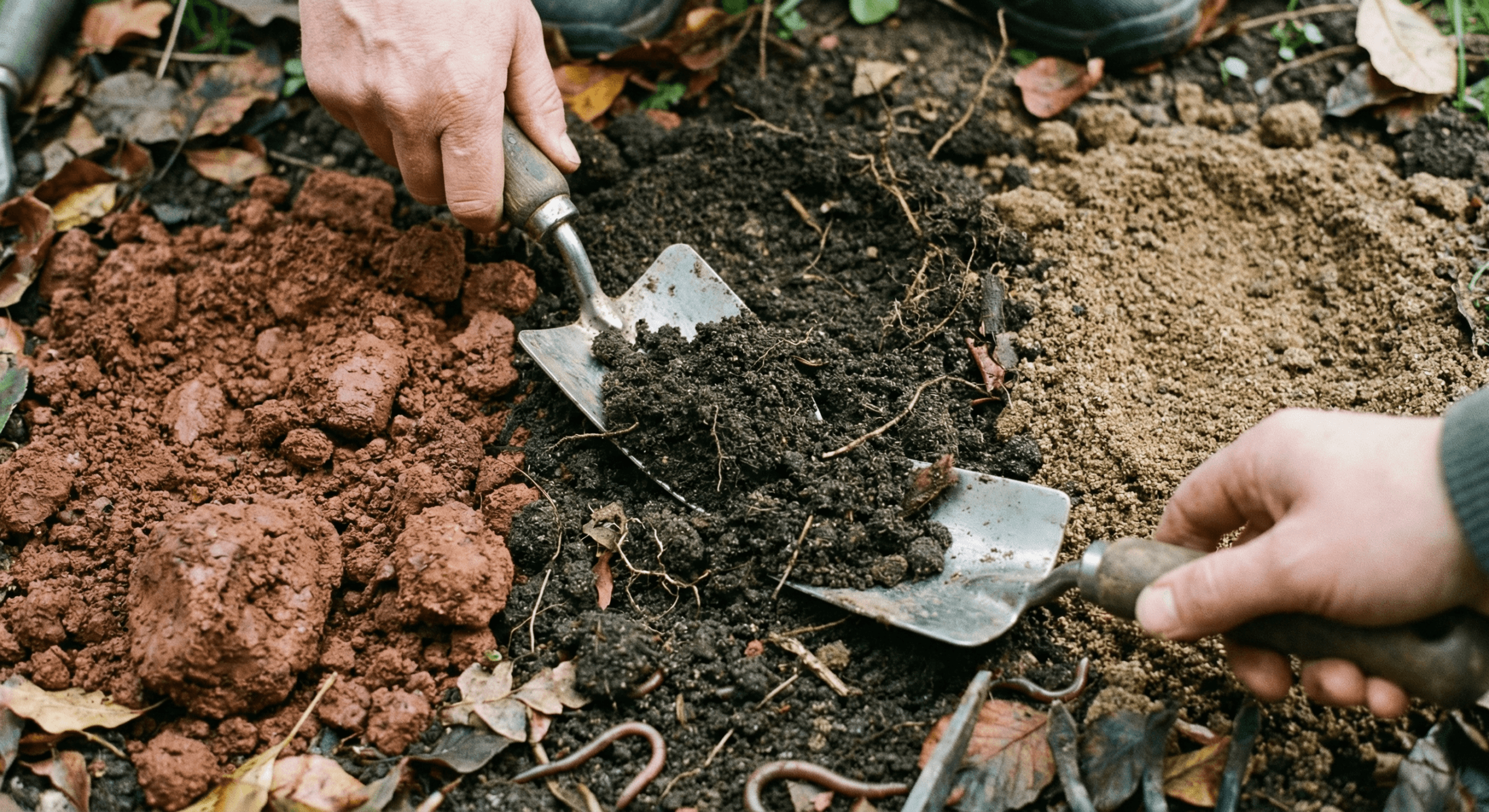
Every garden sits on a foundation of soil, and understanding what that soil is – its type, its texture, its strengths and limitations – is the single most valuable piece of gardening knowledge you can develop. Soil is not just a medium for anchoring roots; it is a living ecosystem that supplies nutrients, water, and air to your plants. Get the soil right, and everything else becomes easier.
Understanding Soil Type:: What You’ll Need
Before you start, gather these essentials:
- Soil testing kit — Complete soil testing kit for pH and nutrient levels
- Garden compost — Quality organic garden compost for soil improvement
- Horticultural grit — Horticultural grit for improving clay soil drainage
- Soil improver — Soil conditioner and improver for clay and sandy soils
The UK encompasses an extraordinary range of soil types within a relatively small area. From the heavy Weald clay of Kent to the free-draining sands of Suffolk, from the chalk downs of Hampshire to the deep, fertile loams of the Midlands, British gardeners face vastly different challenges and advantages depending on where they live.
How to Identify Your Soil Type
The simplest initial test is the feel test. Take a handful of moist soil from your garden and squeeze it in your palm:
- Clay soil: Squeezes into a smooth, sticky ball that holds its shape. Feels smooth and almost greasy when rubbed. Sticks to boots and tools heavily.
- Sandy soil: Feels gritty. Will not hold a ball shape at all, crumbling immediately when released. Drains very quickly and feels light.
- Loam: The ideal soil type. Holds a ball shape but crumbles when poked. Feels slightly gritty but also slightly sticky. The gardener has found the holy grail.
- Chalk soil: Often pale in colour (off-white or grey), contains visible flints and chalk stones. Feels gritty and crumbly. You can often see white chalk pieces in the topsoil.
A more precise test is the jar test. Take a tablespoon of soil, put it in a straight-sided glass jar, fill with water, shake well, and leave to settle for 24 hours. The soil will separate into distinct layers: sand settles first (bottom), then silt, then clay (top). Measure each layer to determine your soil percentage composition.
The pH of your soil is equally important. Most vegetables prefer a pH of 6.0-7.0 (slightly acidic to neutral). Chalk and limestone soils are alkaline (pH 7.0+); peaty soils are acidic (pH below 6.0). A simple pH testing kit from any garden centre will tell you where your soil sits.
Clay Soil: The Challenges and Rewards
Clay is the most common soil type in the UK, and it presents the greatest challenges. It is formed from very fine mineral particles that pack together tightly, leaving little space for air and water. In winter, clay soils are wet, cold, and waterlogged. In summer, they crack and set hard as concrete.
The advantages of clay soil are significant: it is inherently fertile, holding onto nutrients well, and it retains water effectively. Clay soils also tend to be alkaline in lowland England, which suits most vegetables.
Managing clay soil:
- Add copious amounts of organic matter (garden compost, well-rotted manure, leaf mould) every year. This is the single most important thing you can do. Organic matter separates the clay particles, improving drainage and aeration over time.
- Add horticultural grit to improve surface drainage, especially for raised beds.
- Avoid walking on or working clay soil when wet – this destroys its structure and causes compaction.
- Use raised beds to get above the heavy clay and create a better growing environment.
- Mulch heavily in spring to prevent the surface from capping and cracking.
Sandy Soil: Freedom and Frustration
Sandy soils are the opposite of clay. They drain rapidly (sometimes too rapidly), warm up quickly in spring, and are easy to work. But they also dry out fast and flush nutrients away with the drainage water, meaning they are hungry soils that need regular feeding.
Managing sandy soil:
- Add organic matter copiously – again, this is fundamental. Organic matter acts as a sponge, dramatically improving the water-holding capacity of sandy soils.
- Mulch heavily to reduce surface evaporation. Use compost, leaf mould, or bark chips.
- Water little and often rather than occasional heavy soakings – the water will simply drain away otherwise.
- Feed little and often with liquid fertilisers, as nutrients wash through quickly.
- Choose vegetables adapted to free-draining conditions: carrots, parsnips, potatoes, lettuce, and most herbs do well in sandy soils.
Loam: The Gardener’s Dream
Loam is the ideal soil type – a balanced mixture of sand, silt, and clay that gives the best of all worlds. It drains well but retains moisture, is fertile and nutrient-rich, warms up reasonably quickly in spring, and is easy to work.
Even with a loam soil, regular additions of organic matter are beneficial. Continue mulching and composting to maintain the soil biology and structure that makes loam so productive. A well-managed loam is the foundation of a truly excellent kitchen garden.
Chalk Soil
Chalk soils are alkaline and free-draining, formed from chalk and limestone bedrock. They warm up reasonably quickly but dry out fast and are often shallow. The alkalinity can cause deficiencies in some nutrients (particularly iron and manganese) and makes certain plants impossible to grow well – ericaceous plants like blueberries and rhododendrons will struggle or die in chalk soil.
Managing chalk soil:
- Add organic matter to improve water retention and fertility. Well-rotted manure is particularly valuable.
- Mulch to conserve moisture and suppress weeds.
- Choose plants adapted to alkaline conditions: most herbs, brassicas, spinach, beetroot, sweetcorn, and many shrubs and perennials do well.
- Avoid acid-loving plants unless grown in containers with ericaceous compost.
- Apply iron sulphate if chlorosis (yellowing leaves) appears due to alkaline-induced iron deficiency.
Working With Your Soil
The most important principle is: work with your soil, not against it. Rather than fighting to transform a challenging soil into something it is not, choose plants that naturally thrive in your conditions. A clay soil gardener who embraces the plants that love clay (brassicas, asters, roses, squashes) will have far more success than one who battles endlessly to grow carrots that need sand.
Whatever your soil type, the universal prescription is organic matter. Adding well-rotted compost, leaf mould, or farmyard manure every year is the single most effective way to improve any soil type. It improves drainage in clay, increases water retention in sand, buffers pH in chalk, and feeds the soil ecosystem everywhere.
Understand your soil, work with its nature, and your garden will thrive.
Frequently Asked Questions
When is the best time to do this?
The ideal time depends on your climate and the specific plants involved. Generally, early morning or late afternoon are best to avoid the heat of the day.
How often should I check on this?
Check your garden at least once a week during the growing season to catch any issues early and keep on top of tasks.
Can I do this in a container instead?
Many garden tasks can be adapted for containers. Use a good quality potting compost and ensure containers have adequate drainage holes.
What if I don’t have the right tools?
Start with the basics — a trowel, fork, gloves, and watering can will get you a long way. Add tools as you need them.
Related Articles
For more help with your garden, check out these related guides:
- Essential Garden Tools: What Every UK Gardener Needs
- Proven Natural Pest Deterrents: Plants That Repel Pests
- Beginner’s Guide to Sweet Peas
- Best Plants for Pollinators
- Herb Garden Guide
Continue Reading
- 5-Step Essential Garden Tools: What Every UK Gardener Needs
- Complete Guide to Week 12 Spring Garden Jobs: May 17-23
- Complete Guide to Week 11 Spring Garden Jobs: May 10-16
- Complete Guide to Week 10 Spring Garden Jobs: May 3-9
- Complete Guide to Week 9 Spring Garden Jobs: April 26 – May 2
Frequently Asked Questions
When is the best time to do this?
The best time depends on your climate zone and what you are growing, but generally early morning or late afternoon when temperatures are cooler works best for most garden tasks.
How often should I check on my garden?
Regular attention is key — check your garden every few days during the growing season. This helps you catch problems early before they become serious.
Can beginners do this?
Absolutely! Start with a few simple tasks and build up gradually. Most garden jobs are beginner-friendly with the right guidance.
What is the most important thing to remember?
Consistency matters more than perfection. Little and often beats occasional marathon sessions. Even 10-15 minutes of daily attention yields great results.
