


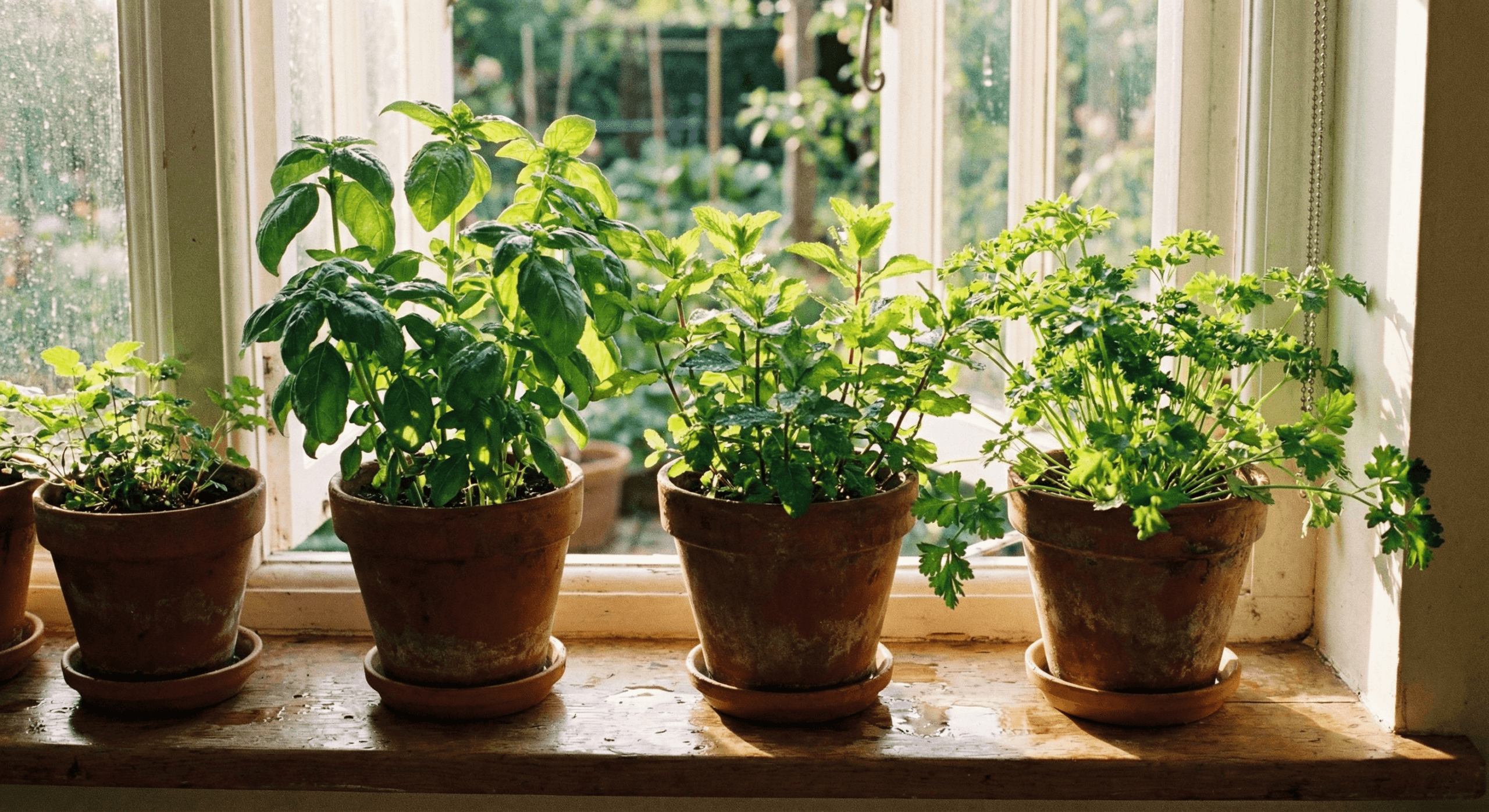
Imagine stepping from your kitchen straight to a fragrant, vibrant windowsill garden and snipping fresh basil, chives, or mint directly into whatever you are cooking. No more wilted supermarket herbs – just fresh, flavoursome herbs within arm’s reach, whatever the weather outside.
5-Step Create Windowsill: What You’ll Need
Before you start, gather these essentials:
- Herb seeds collection — Essential herb seed collection: basil, parsley, chives, coriander
- Terracotta herb pot set — Set of 3 terracotta pots with saucers for windowsill herbs
- Herb snips — Sharp herb snips and scissors for precise harvesting
- Indoor watering can — Long-spout indoor watering can for precision watering
A windowsill herb garden is one of the simplest, most rewarding forms of indoor gardening. You do not need a greenhouse, a big garden, or any particular expertise. A sunny windowsill, a few pots, and the right plants are all it takes.
Choosing the Right Windowsill
The most critical factor in a successful windowsill herb garden is light. Most culinary herbs need at least 6 hours of direct sunlight daily. A south-facing windowsill is ideal – east or west-facing can work with some adjustment.
The perfect spot is a kitchen windowsill that receives good light and is close to where you cook. The warmth from cooking and occasional steam creates a microclimate that herbs love.
The Best Herbs for a Windowsill Garden
Top performers for windowsill growing:
- Basil: The classic kitchen herb. Needs the most light and warmth but rewards you enormously. Pinch out flower buds to keep leaves growing.
- Parsley: Versatile and reliable. Grows well on a windowsill if kept well-watered.
- Chives: Virtually indestructible. Snip leaves with scissors and they will regrow repeatedly.
- Mint: Enormously useful but invasive in the garden – containers are the perfect way to grow it. Keep it in its own pot.
- Coriander: Quick-growing but prone to bolting in heat. A cooler windowsill helps.
- Rosemary and thyme: Mediterranean shrubs that tolerate drier conditions. Need excellent drainage.
- Oregano: Sun, warmth, and well-drained compost. Cascades beautifully from a pot.
Choosing and Preparing Containers
Terracotta pots are traditional and attractive, with porous walls that help drainage and aeration. However, they dry out faster than plastic, so need more frequent watering.
Always use a quality potting compost – not garden soil, which compacts in containers. A mix of multi-purpose compost with 20% perlite or horticultural grit improves drainage.
Planting Your Herb Garden
Growing from seed: Basil, coriander, and parsley are easy to grow from seed on a sunny windowsill. Sow thinly into moist compost and cover lightly. Place in a warm spot (18-21C) until germination, then move to the windowsill. Sow small batches every few weeks for a continuous supply.
Planting established herbs: Most garden centres sell herb plants in small pots. Tip the plant gently from its pot, tease out the roots slightly, and plant into your chosen container with fresh compost.
Watering and Feeding
Overwatering is the most common mistake in indoor herb gardening. Most herbs evolved in dry, well-drained Mediterranean environments – their roots suffer in waterlogged compost.
The watering rule: Check the compost daily in summer, every 2-3 days in winter. Water thoroughly when the top 1-2cm of compost feels dry. Consistent moisture suits basil and parsley; drier conditions suit rosemary, thyme, and oregano.
In summer, feed every 2-3 weeks with a balanced liquid fertiliser. In winter, herbs slow down and need little or no feeding.
Harvesting Your Herbs
The secret to a productive windowsill herb garden is harvesting little and often. Cut just above a pair of leaves or a leaf node – this stimulates new growth. Never remove more than a third of the plant at once.
Troubleshooting Common Problems
Leggy, pale growth: Not enough light. Move to the sunniest windowsill or supplement with a grow light.
Yellowing leaves: Usually overwatering. Let the compost dry out more between waterings.
Bolting: Basil and coriander bolt quickly in warm, dry conditions. Keep well-watered and grow in slightly cooler spots in summer.
A windowsill herb garden brings genuine pleasure and utility to a kitchen. Once established, it requires just a few minutes of attention each day, and rewards you with the freshest possible herbs whenever you cook.
Frequently Asked Questions
When is the best time to do this?
The ideal time depends on your climate and the specific plants involved. Generally, early morning or late afternoon are best to avoid the heat of the day.
How often should I check on this?
Check your garden at least once a week during the growing season to catch any issues early and keep on top of tasks.
Can I do this in a container instead?
Many garden tasks can be adapted for containers. Use a good quality potting compost and ensure containers have adequate drainage holes.
What if I don’t have the right tools?
Start with the basics — a trowel, fork, gloves, and watering can will get you a long way. Add tools as you need them.
Related Articles
For more help with your garden, check out these related guides:
- Succulents 101: Growing and Caring for Succulent Plants
- Beginner’s Guide to Growing Sweet Peas
- Best Plants for Pollinators
- Herb Garden Hub
- How to Build a Raised Bed
Continue Reading
- 5-Step Essential Garden Tools: What Every UK Gardener Needs
- Complete Guide to Week 12 Spring Garden Jobs: May 17-23
- Complete Guide to Week 11 Spring Garden Jobs: May 10-16
- Complete Guide to Week 10 Spring Garden Jobs: May 3-9
- Complete Guide to Week 9 Spring Garden Jobs: April 26 – May 2
Frequently Asked Questions
When is the best time to do this?
The best time depends on your climate zone and what you are growing, but generally early morning or late afternoon when temperatures are cooler works best for most garden tasks.
How often should I check on my garden?
Regular attention is key — check your garden every few days during the growing season. This helps you catch problems early before they become serious.
Can beginners do this?
Absolutely! Start with a few simple tasks and build up gradually. Most garden jobs are beginner-friendly with the right guidance.
What is the most important thing to remember?
Consistency matters more than perfection. Little and often beats occasional marathon sessions. Even 10-15 minutes of daily attention yields great results.
