


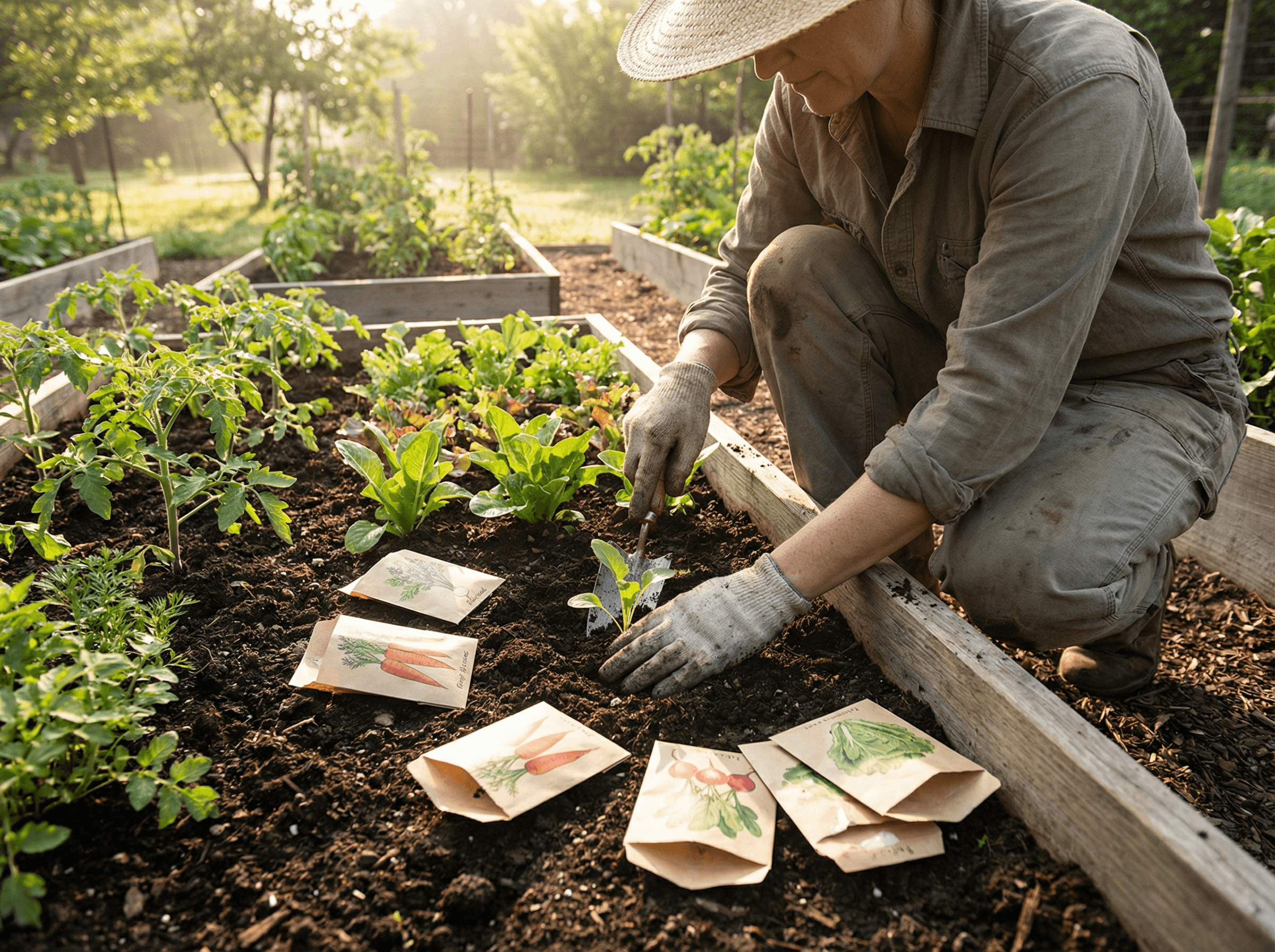
Starting a vegetable garden feels like a big step, but honestly — millions of British households grow their own food every year, and most of them started with nothing more than a patch of lawn and a willingness to learn. You do not need a massive plot or years of experience. You need a few basic tools, some decent soil, and the confidence to get your hands dirty. This guide walks you through every stage, from choosing the right spot to harvesting your first crops, with specific advice for UK conditions.
What You’ll Need
Before you start, gather these essentials:
- Hand trowel — Stainless steel hand trowel for planting and transplanting seedlings
- Garden fork — Quality garden fork for breaking up soil and mixing in compost
- Mixed vegetable seed collection — Beginner seed collection with lettuce, radish, and carrot seeds
- Watering can — 10-litre watering can with detachable rose head for gentle watering
- Organic compost — Multi-purpose organic compost for seed starting and planting
Why Start a Vegetable Garden?
Beyond the obvious reward of eating food you have grown yourself, a vegetable garden connects you to the seasons in a way nothing else does. There is something deeply satisfying about spotting your first proper courgette swell on the plant, or pulling a row of carrots that you remember scattering as tiny seeds only a few months earlier. Financially, a well-stocked small plot can save you real money — a single trench of ‘Charlotte’ potatoes will outproduce what you would spend on seed potatoes several times over. And compared to supermarket produce, home-grown vegetables genuinely taste better. Even children who turn their noses up at Brussels sprouts will happily eat them straight from the plot.
Choosing the Right Spot
Most vegetables need at least six hours of direct sunlight per day. That does not mean blazing midday sun — an east or south-facing site that catches the morning sun is often better, as it warms up quickly and dries off dew that can encourage disease. Watch your garden (or potential garden area) for a full day before choosing where to dig.
Avoid low-lying frost pockets if you can. Cold air sinks, so a spot at the bottom of a slope will frost later in spring and frost earlier in autumn than the rest of your garden. If your only option is a slightly frost-prone spot, save it for hardy crops like kale and Brussels sprouts. Our UK beginner growing guide covers which vegetables tolerate cooler conditions best.
Wind is another factor the UK gardener cannot ignore. A constantly exposed site dries out soil rapidly and can flatten crops like peas and beans before they have a chance to establish. A windbreak of close-knit hedging or even a temporary screen of fleece makes a significant difference.
Planning Your Garden Layout
Sketch out your plot before you start digging. A rectangular bed layout is easiest to manage — you want to be able to reach the centre from either side without standing on the soil. For a single person, a bed no wider than 1.2 metres is practical; for two people working from opposite sides, 2.4 metres is manageable.
Group vegetables by their needs. Put tall crops like climbing beans and sweetcorn where they will not shade shorter ones. Put greedy feeders (tomatoes, courgettes, brassicas) where you can add extra compost without disturbing nearby plants. Leave paths between beds wide enough to push a wheelbarrow — 60 centimetres minimum.
Do not underestimate how much you can fit in a small space. A 2 by 3 metre raised bed in full sun can comfortably grow lettuce, radishes, carrots, dwarf beans, and herbs simultaneously. Container growing techniques work equally well if you only have a patio or balcony.
Preparing Your Soil
Vegetables are hungry plants. They grow fast, produce heavily, and get harvested before the season ends — all of which draws nutrients from the soil. Good preparation makes an enormous difference to your results.
The single best thing you can do is add organic matter. Well-rotted garden compost, farmyard manure, or bagged organic compost all work well. Dig it into the top 20 to 30 centimetres of soil in autumn or early spring. If you are gardening on heavy clay, add grit as well to improve drainage. On sandy soil, organic matter is even more critical as it helps the soil retain moisture.
Getting a soil test done is inexpensive and genuinely useful. It tells you whether your soil is acidic, neutral, or alkaline, which determines which crops will thrive. Most vegetables prefer a pH between 6.0 and 7.0. Building fertility with compost is the most sustainable long-term approach to soil health.
Choosing Your First Vegetables
Start with vegetables that practically grow themselves. These are the most forgiving crops for a first season:
- Radishes: Ready in as little as four weeks from sowing. Scatter them along any spare row. They are almost impossible to get wrong.
- Lettuce: Sow a small amount every two weeks from March to September for a constant supply. ‘Little Gem’ and ‘Salad Bowl’ are reliable varieties for UK gardens.
- Potatoes: Plant ‘first early’ varieties like ‘Swift’ or ‘Accord’ in March for a harvest by early July. Earthing up is simple and satisfying work.
- Carrots: ‘Amsterdam’ and ‘Nantes’ varieties grow reliably in loose, stone-free soil. The main challenge is avoiding carrot root fly — low barriers of fleece work well.
- Peas: ‘Kelvedon Wonder’ and ‘Oregon Sugar Pod’ are excellent first varieties. Sow in March, provide twiggy sticks for support, and harvest in June.
Planting and Spacing Basics
Seed packets tell you exactly how deep to sow and how far apart to space plants. These instructions exist for good reason — overcrowded plants compete for light, water, and nutrients and are far more likely to suffer from disease. Resist the temptation to squeeze in extra rows.
Sow thinly. This sounds obvious but is the most commonly ignored rule. A pinch of seed spread along a row will usually give you exactly the number of plants the row can actually support, with no need to thin out later. Thinning is time-consuming and disturbs the roots of the plants you are keeping.
Watering and Feeding Your Plants
Water deeply and infrequently rather than little and often. This encourages roots to grow down into the soil in search of moisture, making plants far more resilient during dry spells. A thorough watering once a week in dry weather is far better than a daily sprinkle.
The best time to water is early morning, when the soil is cool and evaporation is low, and the foliage has all day to dry off before nightfall. Watering in the evening leaves foliage damp overnight, which encourages fungal diseases like blight and powdery mildew.
Once flowering begins on fruit-bearing crops like tomatoes and beans, a liquid feed high in potassium (such as a seaweed-based fertiliser) every couple of weeks makes a noticeable difference to the quality and quantity of your harvest.
Common Beginner Mistakes to Avoid
Growing too much, too soon. Two or three well-tended beds will teach you more than six neglected ones. Start small, succeed, and expand next year.
Ignoring weeds. Weeds compete with your crops for water and nutrients and can harbour pests. A quick hoe through the rows once a week takes five minutes and keeps problems from building up.
Not reading the seed packet. It tells you when to sow, how deep, spacing, and harvest time. This information is free and specific to UK conditions. Use it.
Harvesting too late. Courgettes the size of marrows, lettuce that has bolted and gone bitter, carrots that have split — beginners often leave crops in the ground too long. Harvesting promptly encourages the plant to produce more.
When to Harvest Your First Crops
Radishes are ready in four to six weeks from sowing. Cut-and-come-again lettuce leaves can be harvested from about six weeks. First early potatoes are ready roughly 10 to 12 weeks after planting, usually in June or early July. Carrots take 10 to 12 weeks from germination. Peas are ready eight to 10 weeks from sowing, depending on variety.
Harvest in the morning when water content is highest for the best texture and flavour. Use a fork to lift root crops rather than pulling them, which can snap the roots.
Frequently Asked Questions
What is the easiest vegetable to grow for a beginner?
Lettuce and radishes are the easiest vegetables for beginners. They grow quickly (ready in four to six weeks), require minimal care, and can be succession planted for continuous harvests throughout the growing season.
When should I start a vegetable garden in the UK?
In the UK, you can start preparing beds in March or April once the soil warms up. Begin seeds indoors in late winter (February to March) for crops like tomatoes and peppers, then transplant after the last frost, typically in May.
Do I need a big garden to grow vegetables?
No, you can grow vegetables in a container on a patio, a raised bed as small as 1 metre by 2 metres, or even in window boxes. Many vegetables thrive in limited spaces with the right care and regular watering.
What vegetables can I grow in the UK climate?
The UK climate suits kale, cabbage, carrots, beetroot, peas, beans, lettuce, potatoes, and onions well. These vegetables tolerate cooler temperatures and shorter growing seasons typical of British summers.
How much sun do vegetables need to grow?
Most vegetables need at least six hours of direct sunlight daily. Leafy greens like lettuce and spinach tolerate some shade, but fruiting vegetables like tomatoes, peppers, and squash need full sun for best results.
