


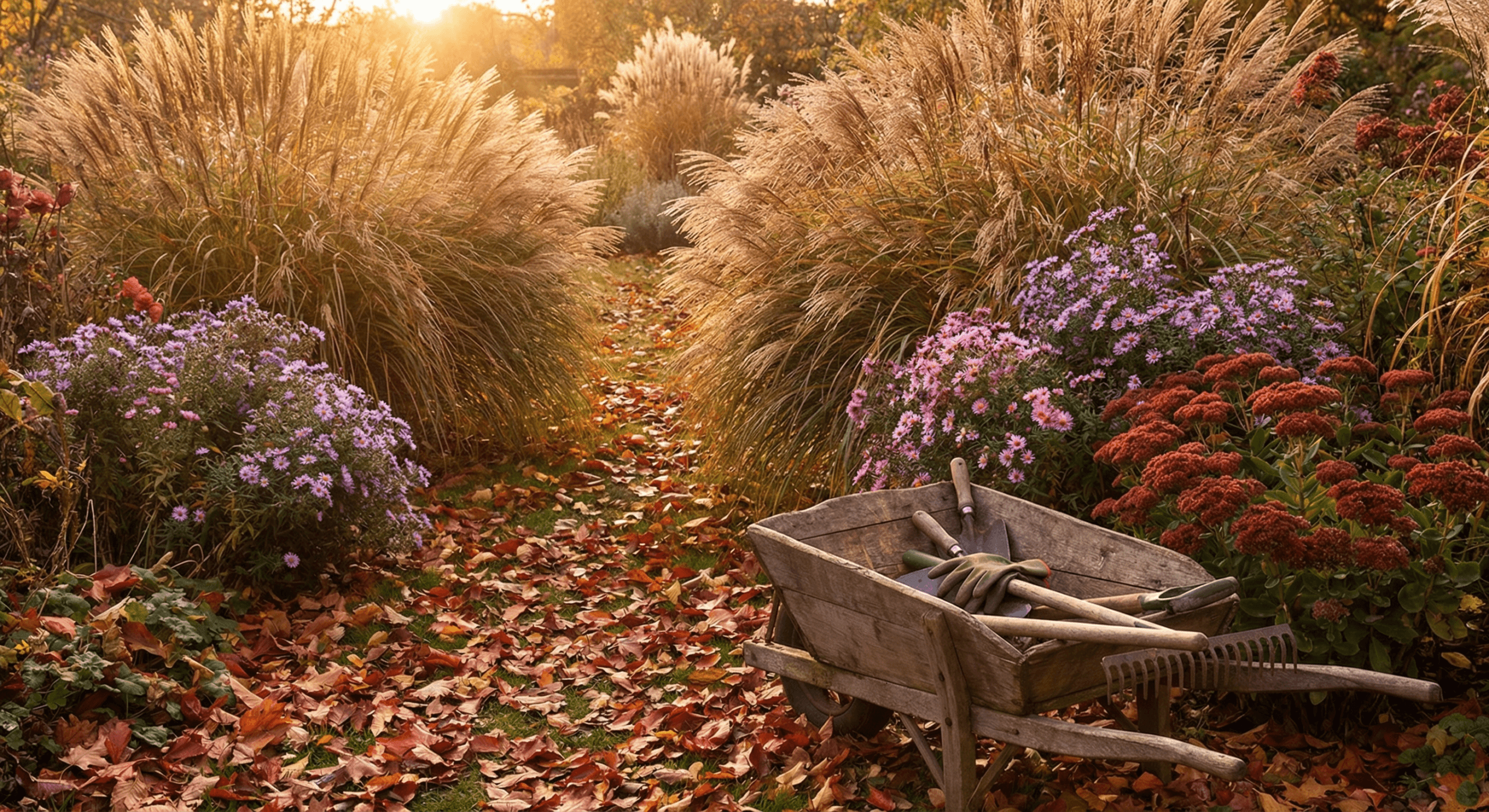
Autumn is the gardener’s reward season — months of hard work paying off with baskets of produce and borders bursting with late-blooming flowers. But don’t pack up those tools just yet! Fall is also one of the best times to plant, prepare, and set yourself up for next year’s garden. Here’s how to make the most of autumn in the garden.
Related: Garden Planning 101: Mapping Out Your Garden Space Natural Pest Deterrents: Plants That Repel Pests
For more on essential mulching: single, see our guide.
For more on proven first-year vegetable, see our guide.
Looking for quality gardening tools and supplies? Browse our recommended garden products — hand-picked by the GardenWizz team.
Autumn: Succession Planting for Fall Harvest
As summer crops finish up, there’s plenty of growing time left. Late summer (August in most areas) is your cue to start fall crops:
– 60 days before first frost: Plant fall lettuce, spinach, arugula, and radishes.
– 90 days before first frost: Get broccoli, cauliflower, Brussels sprouts, and kale in the ground. RHS leafy crops guide has detailed guidance on this topic.
– Fall brassicas: Start seeds indoors in July for transplanting in August — these need a bit of time to establish before cool weather arrives.
Frost-Tolerant Crops for Fall
These plants actually thrive in cool weather and taste better after a light frost:
– Kale, spinach, lettuce, arugula, radishes, beets, carrots, and turnips.Many of these will keep producing well past your first frost date if protected with row covers. RHS season extension guide has detailed guidance on this topic.
Using Row Covers and Cold Frames in Fall
Fall is the perfect time to start using season extension tools:
– Row covers: Drape lightweight fabric over hoops to protect crops from early frosts and extend your harvest by 2-4 weeks.
– Cold frames: Plant cold-hardy greens in a cold frame in late summer/early fall for harvest through November and December.
– Low tunnels: PVC hoops with heavy row cover can protect crops down to about 20°F.
Preparing Raised Beds for Fall and Winter
Before you put beds to bed for the season:
1.Remove spent summer plants and add them to your compost pile. RHS composting guide has detailed guidance on this topic RHS soil testing guide has detailed guidance on this topic.. According to Gardeners’ World, Remove is one of the most rewardin. The RHS soil testing guide provides detailed advice on understanding your soil type..g skills a gardener can develop. Gardeners’ World has an excellent mulching guide that covers materials and techniques.. .. The Remove process is explained in detail by the RHS composting guide, which covers everything from starting your bin to troubleshooting common problems…
2. Work 2-3 inches of compost into the top 6 inches of soil.
3. Plant a cover crop like winter rye or crimson clover to prevent erosion and add organic matter.
4. Or simply mulch heavily with garden mulch sheets with straw or shredded leaves.
Harvesting Root Vegetables
Root vegetables are autumn’s treasure. Lift carrots, potatoes, beets, and turnips before the ground freezes hard. Leave parsnips in the ground — they’ll sweeten up overwinter. In cold climates, apply a thick mulch (6+ inches) over root crops so you can dig them as needed through winter.
Planting Spring-Flowering Bulbs
Fall is bulb-planting season! September through November (depending on your zone) is the time to get tulips, daffodils, crocus, hyacinths, and alliums in the ground. Plant bulbs pointed end up, at a depth roughly 3x the bulb’s height, in well-drained soil. Add a handful of bone meal in the planting hole for extra nutrition.
Composting in Fall
Autumn is the best time to build a big compost pile — there’s an abundance of fallen leaves (which make excellent “brown” material), spent garden plants, and garden debris. Layer leaves with kitchen scraps and a bit of garden soil, keep it moist, and turn regularly. By spring, you’ll have rich, crumbly compost.
Garden Cleanup: What to Keep
Here’s a tip: don’t over-clean in fall. Leave ornamental grasses standing for winter interest and wildlife habitat. Leave sunflower heads for birds. Leave perennial stems — many beneficial insects overwinter in hollow stems. Do remove obviously diseased plant material, but a messy-ish fall garden is actually a healthier one.
Final Autumn Garden Walk
Take a notebook and walk your garden in late October or early November. Note what worked, what didn’t, where you had gaps, what you want more of. This end-of-season assessment is gold for planning next year’s garden.
Autumn gardening is about savoring the last harvests, preparing for what’s coming, and setting the stage for spring success. The garden’s not done — and neither are you!
Frequently Asked Questions
When is the best time to autumn garden tasks?
September to November is the main autumn window for garden prep.
Do I need any special equipment?
Pruning shears, compost bins, and mulch are autumn essentials.
Can beginners do this?
Autumn gardening is very approachable – much of it is tidying and planning.
How long does it take?
Various tasks take from 30 minutes to several hours each.
