


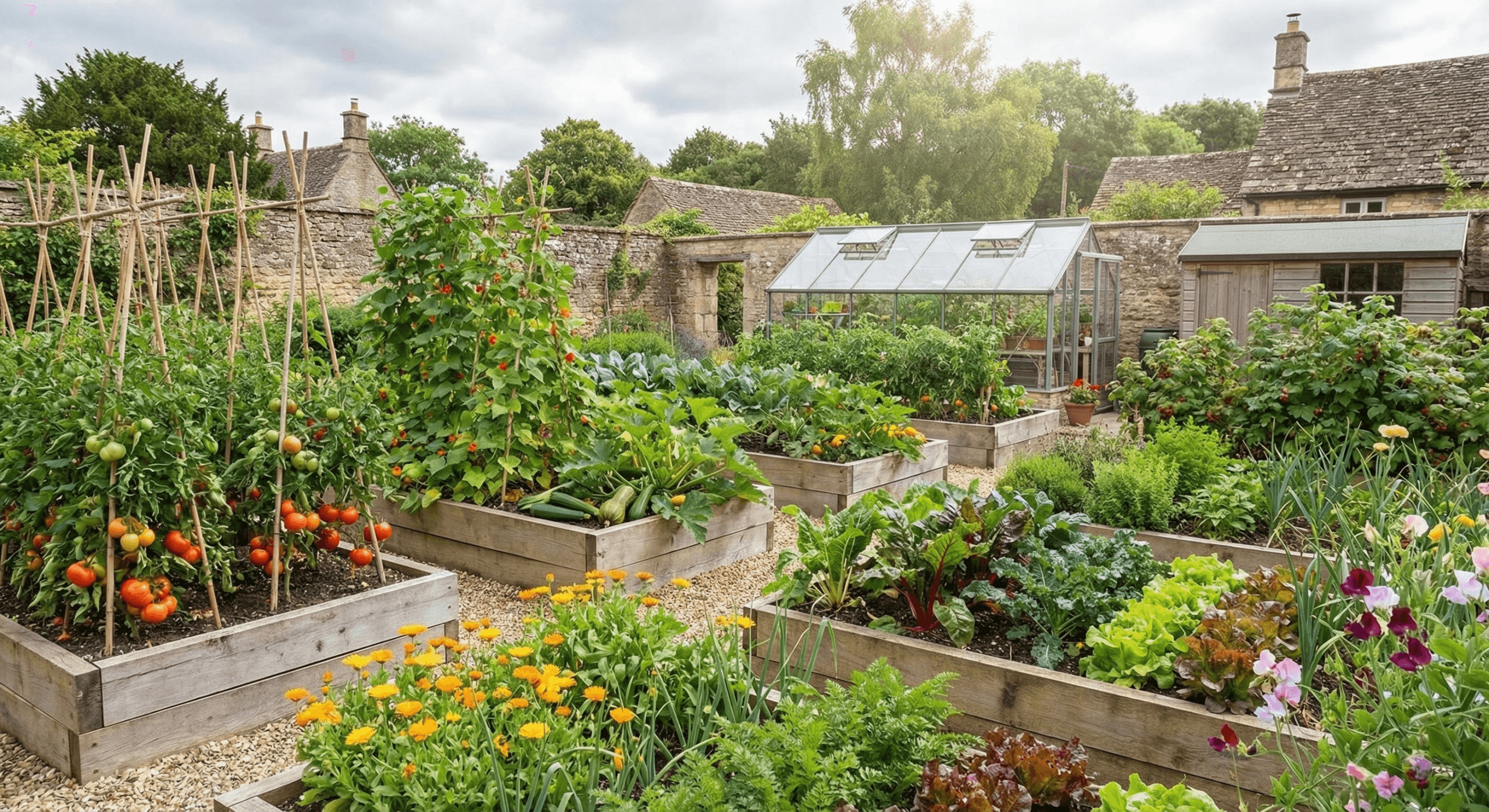
There is something uniquely satisfying about eating a potato you grew yourself — earth-brushed, freshly dug, boiled within hours of harvest. Growing your own vegetables is one of the most rewarding hobbies imaginable, and the UK climate is far more hospitable to home-grown veg than many people realise. With a few basic techniques and the right starting crops, even a modest plot will reward you with impressive harvests. For more detail, see our composting guide.
Beginner’S Vegetables: What You’ll Need
Before you start, gather these essentials:
- Vegetable seed collection — Peas, beans, carrots, lettuce, tomatoes and courgettes — great beginner selection
- Garden fork — Essential for digging, breaking up soil and harvesting root crops
- Compost — Multi-purpose compost for seed sowing and filling raised beds
- Watering can — 2-litre watering can with rose head, perfect for the vegetable patch
Best First Vegetables to Grow
If you are new to vegetable growing, start with crops that are genuinely easy, fast to harvest, and forgiving of beginner mistakes: For more detail, see our understanding soil pH.
- Peas — Kids and adults alike adore the sweet, raw taste of freshly picked peas. Sow in March or April directly into well-drained soil. A support grid of twigs or pea netting helps, but is not essential for shorter varieties. Harvest June to August.
- Beans (French and runner) — Both are productive, reliable, and almost foolproof. French beans are particularly quick — 8 weeks from sowing to harvest. Runner beans need a sunny spot and regular picking to keep them producing.
- Courgettes — One plant will keep a family supplied all summer. They are essentially squash that never gets the chance to grow large. Pick them small (10-15cm) and they keep producing more. A single plant yields 20+ fruits in a good season.
- Potatoes — Possibly the most satisfying vegetable to grow. Plant chitted seed potatoes in March or April, earth up the stems as they grow, and dig up your bounty in summer. Even a large container works well for first earlies.
- Lettuce and salad leaves — Cut-and-come-again salad mixes can be ready in as little as 3 weeks from sowing. Grow in partial shade in summer to prevent bolting. Sow little and often every 2-3 weeks for continuous harvests.
- Tomatoes — Grown in a greenhouse or a warm, sunny spot outdoors, tomatoes are highly rewarding. Start with a cherry variety like Sungold or Gardener’s Delight — both are prolific and forgiving.
- Carrots — Sown directly into well-prepared, stone-free soil, carrots are straightforward. Avoid freshly manured ground or you will get forked roots. A raised bed or deep container is ideal.
Planning Your Vegetable Patch
Where you put your vegetable patch matters. Most vegetables need at least 6 hours of direct sun per day, so north-facing corners are best reserved for shade-tolerant crops like lettuce and spinach.
Start small. The most common beginner mistake is to prepare too large an area and then spend the whole summer playing catch-up with the weeds. A single 1.2m x 3m raised bed can produce a remarkable quantity of food. You can always expand once you have found your rhythm.
Consider crop rotation — moving vegetables around the garden each year prevents the build-up of soil-borne pests and diseases and helps maintain soil fertility. The classic four-group rotation covers: brassicas (cabbages, broccoli), legumes (peas, beans), roots (carrots, parsnips), and onions/others (garlic, leeks).
Soil Preparation
Vegetables are hungry plants. Before planting, dig over the area and incorporate plenty of organic matter — garden compost, well-rotted manure, or spent mushroom compost. This improves drainage in clay soils and water retention in sandy ones.
Do not dig when the soil is very wet — you can tell by picking up a handful and squeezing it. If it forms a muddy ball that does not crumble, wait for drier conditions. Walking on wet soil compacts it, causing long-term damage to soil structure.
Raised beds solve many soil problems and are ideal for beginners. Filled with a mix of compost and topsoil, they warm up faster in spring and drain well. Even a simple frame of railway sleepers or breeze blocks works well.
Sowing and Planting
Direct sowing means planting seeds straight into the garden soil. Suitable for peas, beans, carrots, beetroot, spinach, and most root vegetables. Prepare a seed bed first — rake the soil to a fine, crumbly tilth.
Sowing under cover gives crops a head start. Tomatoes, courgettes, and brassicas benefit from being started indoors in March or April on a sunny windowsill or in a propagator. Transplant outdoors once risk of frost has passed.
Follow the spacing and depth instructions on seed packets — they are there for a reason. Sowing too deep or too close together are the two most common sowing errors.
Harvesting
The best part of vegetable growing. Harvest at peak ripeness for the best flavour. Courgettes, beans, and peas all become less productive if fruits are left to mature on the plant — pick little and often to encourage continued production.
Root vegetables like carrots and potatoes can often be left in the ground until you are ready to eat them, which saves on storage concerns. Lift maincrop potatoes in late summer, dry them in the sun for a few hours, then store in hessian sacks in a cool, dark place.
Common Beginner Problems Solved
Seedlings dying off: Usually caused by overwatering, underwatering, or damping off (a fungal disease that kills young seedlings). Ensure good ventilation, water sparingly, and use clean seed trays.
No fruit on runner beans: Often due to hot, dry weather at the roots. Keep well watered and mulch around plants. A too-shady position also reduces yields.
Courgettes rotting at the end: This is blossom end rot — caused by irregular watering. Water consistently, and make sure fruits can drain. It is cosmetic on the underside and does not affect the rest of the fruit.
Slugs and snails: The universal pest of the vegetable garden. Use nematodes (biological control, applied in spring), copper tape around pots, or organic slug pellets sparingly.
Growing your own vegetables is endlessly rewarding, genuinely good for your health and wellbeing, and far easier than you might expect. Start small, choose forgiving crops, and enjoy the journey. Your first harvest will make it all worthwhile.
Frequently Asked Questions
When is the best time to grow vegetables in the UK?
Start in early spring (March-April) for most crops, with succession planting through summer.
Do I need any special equipment?
Basic tools like a spade, fork, and watering can. Quality seed compost helps too.
Can beginners do this?
Absolutely – start with easy crops like lettuce, radishes, or beans.
How long does it take?
Most vegetables take 8-12 weeks from seed to harvest.
Continue Reading
- 5-Step Essential Garden Tools: What Every UK Gardener Needs
- Complete Guide to Week 12 Spring Garden Jobs: May 17-23
- Complete Guide to Week 11 Spring Garden Jobs: May 10-16
- Complete Guide to Week 10 Spring Garden Jobs: May 3-9
- Complete Guide to Week 9 Spring Garden Jobs: April 26 – May 2
Frequently Asked Questions
When is the best time to do this?
The best time depends on your climate zone and what you are growing, but generally early morning or late afternoon when temperatures are cooler works best for most garden tasks.
How often should I check on my garden?
Regular attention is key — check your garden every few days during the growing season. This helps you catch problems early before they become serious.
Can beginners do this?
Absolutely! Start with a few simple tasks and build up gradually. Most garden jobs are beginner-friendly with the right guidance.
What is the most important thing to remember?
Consistency matters more than perfection. Little and often beats occasional marathon sessions. Even 10-15 minutes of daily attention yields great results.
