


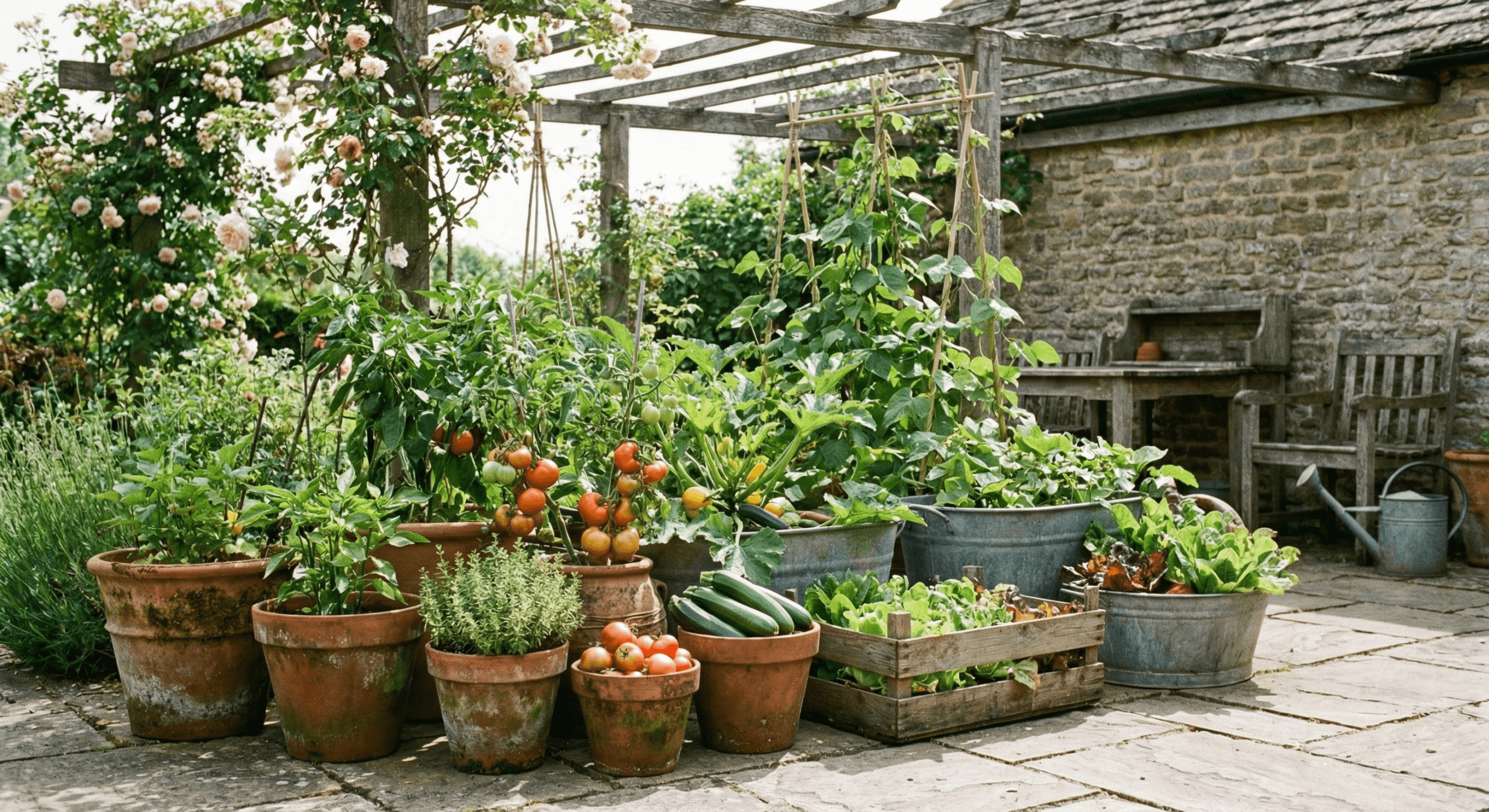
Container gardening has transformed what’s possible for gardeners without large plots. Whether you have only a patio, a balcony, or a tiny courtyard, growing vegetables in containers opens up food growing to anyone. And it’s not a compromise — container-grown vegetables can be just as productive as those grown in the ground, provided you get a few fundamentals right. The container itself, the compost you fill it with, and your watering regime are the three things that determine success or failure.
5-Step Containers Vegetables: What You’ll Need
Before you start, gather these essentials:
- Terracotta pots — Classic terracotta pots for vegetable containers
- Grow bags — Quality grow bags for tomatoes and vegetables
- Large containers — Large containers with drainage for vegetable growing
- Drainage crocks — Clay drainage crocks for container base layers
- Compost — Quality multi-purpose compost for containers
Choosing the Right Container
Almost any container can be used to grow vegetables, as long as it meets a few basic requirements: adequate depth, good drainage, and sufficient volume for the crop you want to grow. The most important dimension is depth — most vegetable roots need at least 30cm of compost to grow well, and deep-rooted vegetables like tomatoes and courgettes need 40-50cm.
- Terracotta pots: Attractive and traditional. They breathe, which helps regulate soil moisture and temperature. However, terracotta is porous, meaning compost dries out faster than in plastic or wooden containers. They’re also heavy and can crack in frost if not frost-proof.
- Plastic and fibreglass pots: Lightweight, durable, and relatively inexpensive. They retain moisture better than terracotta, which is an advantage in summer. Dark-coloured plastic absorbs heat, warming compost faster in spring but also drying out faster in summer.
- Grow bags: The classic for tomatoes and peppers. They provide sufficient depth for these crops but are relatively small in volume, meaning compost dries out quickly and nutrients deplete faster. Standing grow bags on their side and filling with compost nearly doubles the root depth.
- Wooden barrels and whiskey barrels: Excellent for deep-rooted vegetables. They have the thermal mass to regulate soil temperature well, and their large volume reduces watering frequency. Drainage must be added.
- Buckets and reclaimed containers: Food-grade buckets, large tin cans, and similar reclaimed containers work perfectly well for vegetables, provided you drill adequate drainage holes in the base.
- Self-watering containers: These have a reservoir of water in the base that feeds the compost via a wicking system, significantly reducing watering frequency. Excellent for holiday periods and summer heat. They cost more but are very effective.
Container Size Guide
Size matters enormously. A container that’s too small restricts root growth, dries out constantly, and will never produce a decent crop. As a general guide:
- Salad leaves and herbs: 15-20cm deep, minimum 15cm diameter per plant
- Carrots and parsnips: 30-40cm deep minimum (use short-rooted varieties in containers)
- Beans (French and climbing): 30cm deep, one plant per 30cm pot or 3 plants in a large container
- Courgettes and squash: 45-50cm deep, 40-50 litres volume minimum per plant
- Tomatoes: 40-50cm deep, minimum 30 litres per plant for cordon varieties
- Potatoes: Container depth determines yield — the deeper the container, the more tubers. 50cm deep containers produce good crops.
Compost and Feeding
Container compost is not the same as garden soil or the compost from a compost bin — it’s a specifically formulated growing medium. Use a quality peat-free multi-purpose compost for most vegetables, or a specifically formulated container compost which has improved water retention and structure.
Container-grown vegetables are entirely dependent on what you provide — there is no reserve of nutrients from surrounding soil to draw on. This means feeding is essential from around six weeks after planting. Use a liquid tomato feed or balanced liquid fertiliser applied every two weeks during the growing season for hungry crops like tomatoes, aubergines, and Courgettes.
Compost in containers also degrades and shrinks over time. Top-dress containers in spring by removing the top 5cm of old compost and replacing with fresh. Completely refresh compost every couple of years.
Watering: The Make-or-Break Factor
Container vegetables fail most often because of incorrect watering — usually under-watering. Container compost dries out much faster than garden soil, especially in summer, in terracotta pots, and in small containers. In hot weather, some containers may need watering twice a day.
The test for whether a container needs water is simple: push your finger 5cm into the compost. If it feels dry, water thoroughly until water drains from the base. If it feels moist, wait. A thorough watering that drains from the base is better than frequent light sprinklings, which encourage shallow root growth.
Self-watering containers or drip irrigation systems with a timer solve the holiday problem and significantly improve results for anyone who struggles to keep on top of watering.
Best Vegetables for Containers
Tomatoes: The classic container crop. Cherry and bush varieties perform best in containers. Cordon varieties need support with a stake or trellis.
Courgettes and summer squash: Remarkably productive in large containers. One plant per 40-litre pot, well watered and fed.
French and climbing beans: Very well suited to containers. A large pot with a wigwam of bamboo canes produces a surprising crop.
Salad leaves and lettuce: Perhaps the easiest container vegetables. Shallow containers (15-20cm deep) work perfectly. Succession-sow for continuous harvest.
Potatoes: Container-grown potatoes are easy to harvest and avoid the risk of soil-borne disease. Start with “chitting” seed potatoes, plant in 15cm of compost, and earth up as they grow.
Herbs: Most herbs grow well in containers. Basil, parsley, coriander, thyme, rosemary, and mint all do well — mint particularly suits containers as it prevents it from spreading.
Chard and spinach: Both grow well in containers and are productive over a long season. Ornamental chard varieties are particularly attractive in a mixed container.
Radishes and spring onions: Quick, easy, and space-efficient. Ready in under two months from sowing.
Getting the Best from Container Growing
Position containers in the sunniest spot available — most vegetables need at least 6 hours of direct sunlight to crop well. Group containers together to help maintain humidity and create a microclimate. Elevate containers on pot feet to ensure drainage holes don’t become blocked. And accept that containers are more demanding than the ground — they’ll need more attention, more watering, and more feeding. In return, they give you the flexibility to grow food in spaces that would otherwise be unused.
Frequently Asked Questions
When is the best time to do this?
The ideal time depends on your climate and the specific plants involved. Generally, early morning or late afternoon are best to avoid the heat of the day.
How often should I check on this?
Check your garden at least once a week during the growing season to catch any issues early and keep on top of tasks.
Can I do this in a container instead?
Many garden tasks can be adapted for containers. Use a good quality potting compost and ensure containers have adequate drainage holes.
What if I don’t have the right tools?
Start with the basics — a trowel, fork, gloves, and watering can will get you a long way. Add tools as you need them.
Related Articles
For more help with your garden, check out these related guides:
Continue Reading
- 5-Step Essential Garden Tools: What Every UK Gardener Needs
- Complete Guide to Week 12 Spring Garden Jobs: May 17-23
- Complete Guide to Week 11 Spring Garden Jobs: May 10-16
- Complete Guide to Week 10 Spring Garden Jobs: May 3-9
- Complete Guide to Week 9 Spring Garden Jobs: April 26 – May 2
Frequently Asked Questions
When is the best time to do this?
The best time depends on your climate zone and what you are growing, but generally early morning or late afternoon when temperatures are cooler works best for most garden tasks.
How often should I check on my garden?
Regular attention is key — check your garden every few days during the growing season. This helps you catch problems early before they become serious.
Can beginners do this?
Absolutely! Start with a few simple tasks and build up gradually. Most garden jobs are beginner-friendly with the right guidance.
What is the most important thing to remember?
Consistency matters more than perfection. Little and often beats occasional marathon sessions. Even 10-15 minutes of daily attention yields great results.
