


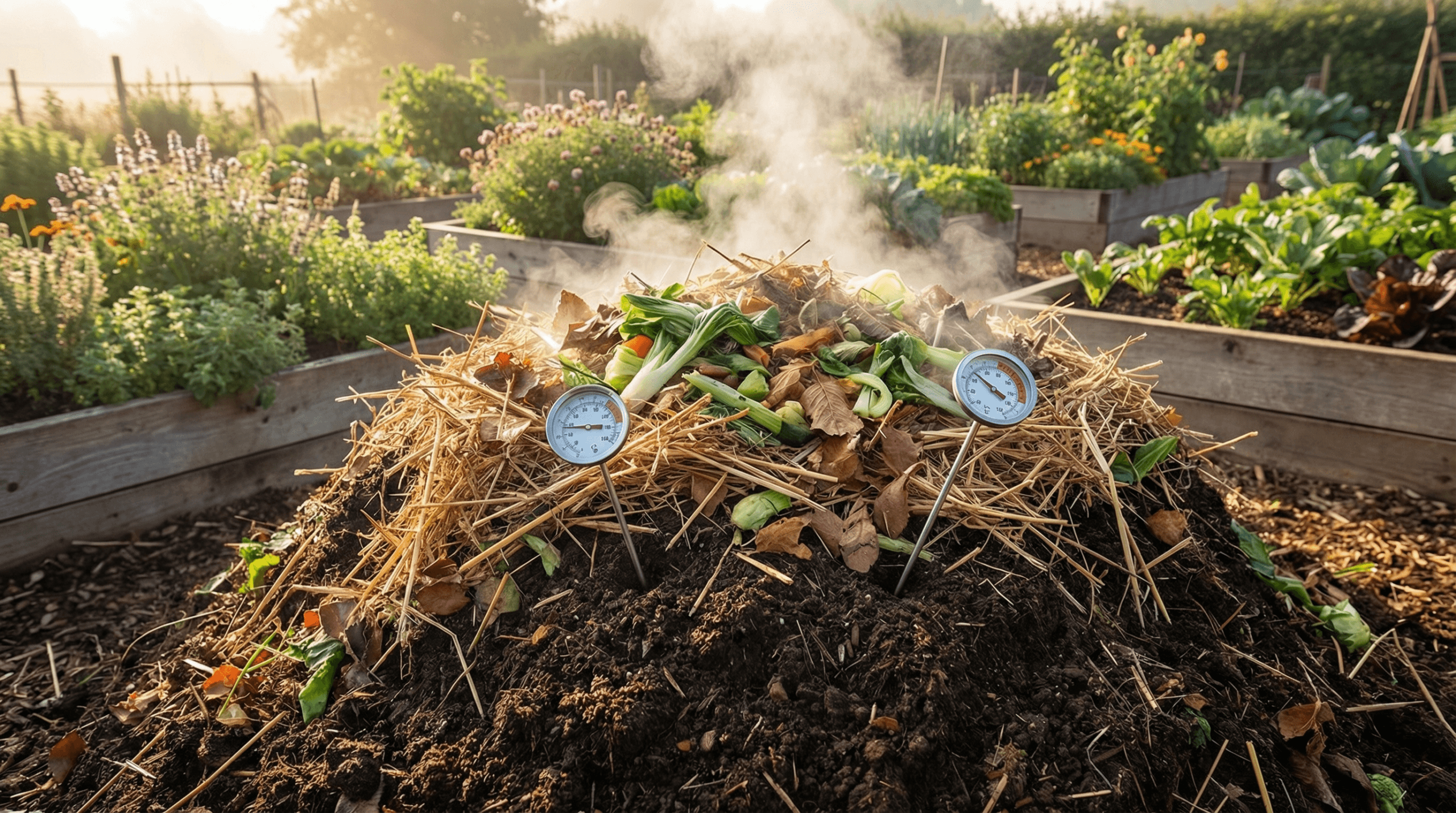
You have mastered the basics of composting — you are adding your kitchen scraps and garden waste and getting compost. Now it is time to level up. Understanding the difference between hot and cold composting, and knowing when to use each method, will transform your composting from a passive process into a powerful tool for your garden. A compost bin enables you to control the process. In this comprehensive ultimate guide, we’ll cover everything you need to know.
Shop Related Products: Compost Bin • Kitchen Caddy
For more on essential summer gardening:, see our guide.
For more on proven first-year vegetable, see our guide.
Related: Garden Planning 101: Mapping Out Your Garden Space Natural Pest Deterrents: Plants That Repel Pests
Looking for quality gardening tools and supplies? Browse our recommended garden products — hand-picked by the GardenWizz team.
Composting Advanced: Composting: Ultimate: Composting: The Two Approaches at a Glance
Hot Composting produces results in 4-8 weeks with high effort and temperatures of 55-70C.It requires smaller space and destroys weed seeds and pathogens. RHS pest and disease guide has detailed guidance on this topic. Best for fast results and allotments.
Cold Composting takes 6-12 months with low effort and ambient temperature. It needs larger space, and weed seeds may survive. Best for low-maintenance gardeners.
Understanding Hot Composting
Hot composting harnesses the natural heat generated by microorganisms breaking down organic matter. When conditions are right, the compost pile heats to 55-70 degrees Celsius — temperatures that kill weed seeds, pathogens, and fly larvae. The result is a fast turnaround of finished compost, typically in 4-8 weeks.
The Science: Why Heaps Get Hot
As bacteria, fungi, and other microorganisms consume organic matter, they release energy as heat. In a well-insulated, actively managed pile, temperatures rise rapidly. The goal is to maintain this heat for several days to achieve full sterilisation.
How to Hot Compost Successfully
The key variables are carbon-to-nitrogen ratio, moisture, oxygen, and particle size.
Carbon-to-nitrogen ratio (C:N): Aim for roughly 30:1. This means mixing browns (high carbon: straw, cardboard, dried leaves) with greens (high nitrogen: grass clippings, vegetable scraps, fresh manure) in roughly equal volumes by weight.
Moisture: The pile should feel like a wrung-out sponge — moist but not dripping. Too wet and it goes anaerobic (smells); too dry and the organisms stall.
Oxygen: Turn the pile every 2-3 days to introduce oxygen.A compost thermometer helps — if the temperature drops, RHS composting guide has detailed guidance on this topic.it needs turning.
Particle size: Smaller pieces decompose faster.Shred cardboard and prunings before adding them. RHS pruning guide has detailed guidance on this topic.
Building a Hot Compost Pile
1. Start with a 15cm layer of coarse brown material (twigs) for drainage
2. Add alternating 10cm layers of green and brown material
3. Moisten each layer as you build
4. Aim for at least 1 cubic metre (the minimum size to generate and retain heat)
5. Cover with a tarpaulin to retain moisture and heat
6. Turn every 2-3 days when the temperature peaks and starts to fall
7. After 4-6 weeks, the compost will be dark, crumbly, and ready to use
When to Use Hot Composting
– When you need compost quickly
– On allotments or community gardens where speed matters
– When you want to kill weed seeds and disease organisms from infected plant material
– When you have a lot of material to process and limited space
Understanding Cold Composting
Cold composting is exactly what it sounds like — adding organic material to a heap or bin and letting it break down at ambient temperatures over many months. There is no active management beyond adding material and occasionally turning it.
Advantages of Cold Composting
– Zero effort beyond adding material
– No science required — nature does the work
– Handles a wider variety of materials including large woody items
– No risk of overheating or cooking beneficial organisms
Limitations of Cold Composting
– Much slower — typically 6-12 months minimum
– Weed seeds and pathogens may survive — the pile does not reach temperatures high enough to kill them
– May attract flies if food scraps are added without covering
Cold Composting Best Practice
Even without active management, a few practices improve results:
– Balance browns and greens — Too much green and the pile becomes slimy; too much brown and it stalls
– Cover food scraps with a layer of brown material or soil to deter flies
– Turn occasionally — Even one turn per month speeds up the process significantly
– Be patient — Give cold compost at least a year before using it
Choosing the Right System for You
Choose hot composting if: You want fast results, have a lot of material to process, want to compost diseased plant material safely, or enjoy the process and do not mind the effort.
Choose cold composting if: You want a set-and-forget system, only generate modest amounts of waste, have plenty of space, or are composting materials unlikely to contain weed seeds or disease.
Consider both — many gardeners use a hot composting system for kitchen and allotment waste (where speed and hygiene matter) and a cold compost heap for bulk woody garden waste.
Troubleshooting
My hot compost is not heating up:
The pile may be too small (need at least 1 cubic metre), may need more nitrogen (add grass clippings or manure), could be too dry (add water while turning), or may need more oxygen (turn and aerate).
My cold compost smells:
Usually means too much nitrogen (greens) and not enough carbon (browns). Add browns and turn. May be too wet — add dry brown material.
My compost is slimy:
Too much water or too many greens. Add browns, aerate, and cover from rain.
FAQ: Hot vs Cold Composting
Does hot composting destroy all weed seeds?
Research shows temperatures of 55 degrees C sustained for several days kill most common weed seeds. Some particularly tough seeds may require higher temperatures or longer exposure.
Can I add meat and dairy to either system?
Hot composting can handle meat in small quantities if the temperatures are maintained. Cold composting should NOT include meat, dairy, or cooked food — these attract vermin and cause odours.
What is the fastest way to make compost?
Hot composting with active turning every 2-3 days, proper C:N balance, and good moisture levels can produce finished compost in as little as 4 weeks.
Can I convert cold compost to hot compost?
Yes — simply start actively managing the pile: mix in extra nitrogen, ensure moisture, insulate with straw, and turn every few days. It will heat up within a week if conditions are right.
My neighbour says hot composting is the only way. Are they right?
Not at all — cold composting produces perfectly good compost for most garden uses. Hot composting is faster and more thorough, but cold composting is lower maintenance and perfectly adequate.
Final Thoughts
Both hot and cold composting have their place. The gardener who understands both methods can choose the right tool for any situation — turning a pile of diseased prunings into safe compost in weeks, or maintaining a simple heap of garden waste with minimal effort. Master both, and nothing in your garden need ever go to waste.
For the composting basics, read our guide to Composting 101.
Continue Reading
- 5-Step Essential Garden Tools: What Every UK Gardener Needs
- Complete Guide to Week 12 Spring Garden Jobs: May 17-23
- Complete Guide to Week 11 Spring Garden Jobs: May 10-16
- Complete Guide to Week 10 Spring Garden Jobs: May 3-9
- Complete Guide to Week 9 Spring Garden Jobs: April 26 – May 2
Frequently Asked Questions
When is the best time to do this?
The best time depends on your climate zone and what you are growing, but generally early morning or late afternoon when temperatures are cooler works best for most garden tasks.
How often should I check on my garden?
Regular attention is key — check your garden every few days during the growing season. This helps you catch problems early before they become serious.
Can beginners do this?
Absolutely! Start with a few simple tasks and build up gradually. Most garden jobs are beginner-friendly with the right guidance.
What is the most important thing to remember?
Consistency matters more than perfection. Little and often beats occasional marathon sessions. Even 10-15 minutes of daily attention yields great results.
