


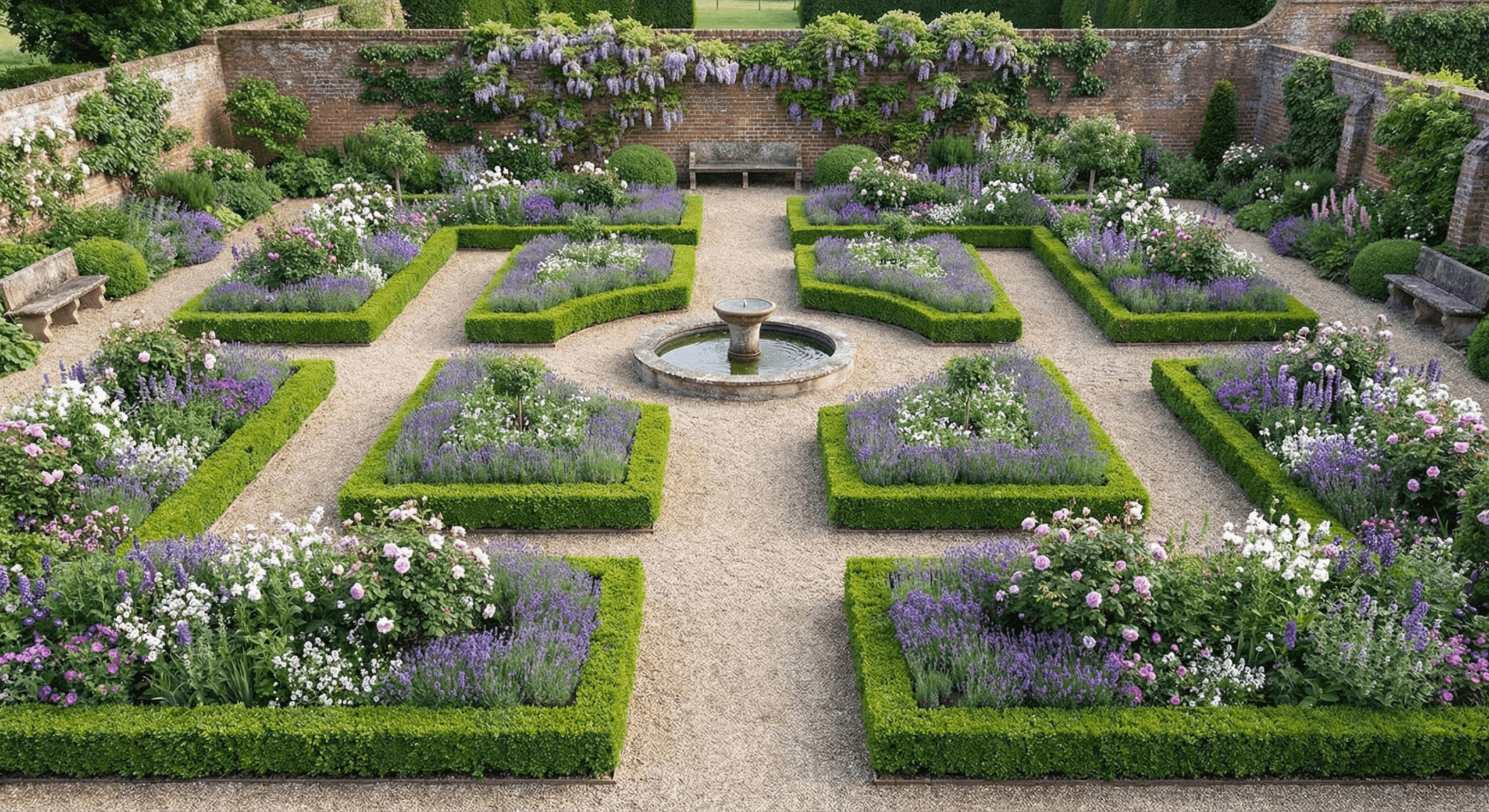
Walking out into a garden that works — where paths lead somewhere, borders overflow with colour, and the sun falls exactly where you want it to — is deeply satisfying. The good news? You do not need a landscape architecture degree to get there. A bit of planning, a few basic principles, and a weekend with some garden canes is all it takes to transform a blank plot into something genuinely lovely.
Design Beginners: Plan: What You’ll Need
Before you start, gather these essentials:
- Garden design book — RHS Step-by-Step Garden Design — the perfect beginner guide
- Graph paper pad — A3 grid paper for drawing scale garden plans
- Garden canes — Bamboo canes for marking out beds, paths and structures
- Landscaping fabric — Weed-suppressing membrane for paths and new beds
Assessing Your Space
Before you buy a single plant or shift a spade of soil, spend time really looking at what you have. Walk around your garden at different times of day. Note where the sun hits and where it does not. Watch where water pools after heavy rain. Check which direction the prevailing wind comes from — a north-facing wall can be a cold, sheltered spot ideal for shade-lovers, but a windswept south-facing terrace will need protection before anything tender goes in.
Measure your space roughly — paces work fine. Sketch it on paper, noting the house (where you enter from, which rooms overlook the garden), any existing features you want to keep (trees, sheds, walls), and the areas you use most — sunbathing, dining, the kids play zone, the compost heap nobody wants to look at.
Sun and Shade: The Most Important Factor
Understanding light is the single most critical piece of information for designing your planting scheme. Track the sun across your garden from morning to evening. Mark three zones:
- Full sun — 6+ hours of direct sun. Ideal for roses, veg, lavender, and most perennials.
- Partial shade — 3-6 hours of sun, or dappled shade all day. Great for hostas, ferns, geraniums, and foxgloves.
- Full shade — Less than 3 hours of sun. Under trees, against north-facing walls. Astilbes, hellebores, and tiarellas thrive here.
Drawing Your Plan
Grab an A3 sheet of graph paper and a pencil. Decide on a scale — 1cm = 50cm in the garden is easy to work with. Draw your house first, then the existing features you want to keep. Then overlay your sun zones using the observations you made earlier.
Before adding a single plant, think about hardscaping — the non-plant elements: paths, patios, fences, pergolas, water features. These are the bones of the garden. They are expensive to change later, so get them right first.
Ask yourself: How do I want to move through this space? A path that curves gently feels more romantic than a straight run. A patio close to the house makes indoor-outdoor living easier.
Choosing a Style
Your garden style should flow from how you want to use the space and what appeals to you visually:
- Cottage garden — Informal, packed with flowers, winding paths, romantic abundance. High maintenance but deeply rewarding.
- Modern/contemporary — Clean lines, hard landscaping, architectural planting. Works well on plots of any size.
- Minimalist — Gravel, clipped hedging, a few carefully chosen plants. Very low maintenance. Great for smaller plots.
- Wildlife garden — Natives, meadow areas, pond, log piles. Prioritises biodiversity over manicured aesthetics.
Hardscaping Basics
Lay paths first, before any planting. Use string and garden canes to mark routes and experiment — walk them, live with them for a few days. A path that is too narrow feels cramped; one that is too wide looks mean when empty.
For a simple patio, paving slabs on a sand and cement mix is manageable for beginners. For paths, gravel over membrane is quick, cheap, and looks great. Railway sleepers make excellent raised bed edges.
Fences and walls define boundaries and create privacy. A living screen — a hedge of yew, beech, or hawthorn — is far more beautiful and supports far more wildlife than a fence, but takes years to establish.
Planting Zones: Structuring Your Beds
Think of your borders in three layers: back (tall shrubs and small trees), middle (herbaceous perennials and smaller shrubs), and front (low ground cover and edging plants). This structure, called the border sandwich, ensures everything is visible and nothing gets swamped.
For the back of borders, consider Phygelius, Buddleja davidii, Lavandula angustifolia, or a compact climbing rose on a trellis.
For the middle: Echinacea, Rudbeckia, Salvia nemorosa, Geranium Rozanne, and Phlox paniculata are all reliable UK performers.
For the front: Heuchera, Bergenias, Alchemilla mollis, or compact hardy geraniums create beautiful edging.
Getting Started: What to Do First
Start with your hardscaping — paths, patio, borders, and any structures. Then prepare your soil (remove weeds, add compost, dig it over). Then plant. Autumn is the ideal time to plant perennials and shrubs — soil is warm and moist, roots establish before winter.
Do not try to do everything at once. A well-designed garden takes years to reach its full potential — and that is part of the joy of it. Add one bed at a time, learn what thrives in your particular microclimate, and enjoy the process.
Ready to put pen to paper? Grab some graph paper and start sketching — your perfect garden is already taking shape in your imagination. Let the planning begin.
Frequently Asked Questions
When is the best time to plan your garden?
Start planning in late winter (January-February) for the coming season.
Do I need any special equipment?
Graph paper, measuring tape, and our garden planning worksheet.
Can beginners do this?
Absolutely – even a simple sketch helps enormously.
How long does it take?
A basic plan takes an afternoon. Detailed designs may take longer.
Related Articles
For more help with your garden, check out these related guides:
