


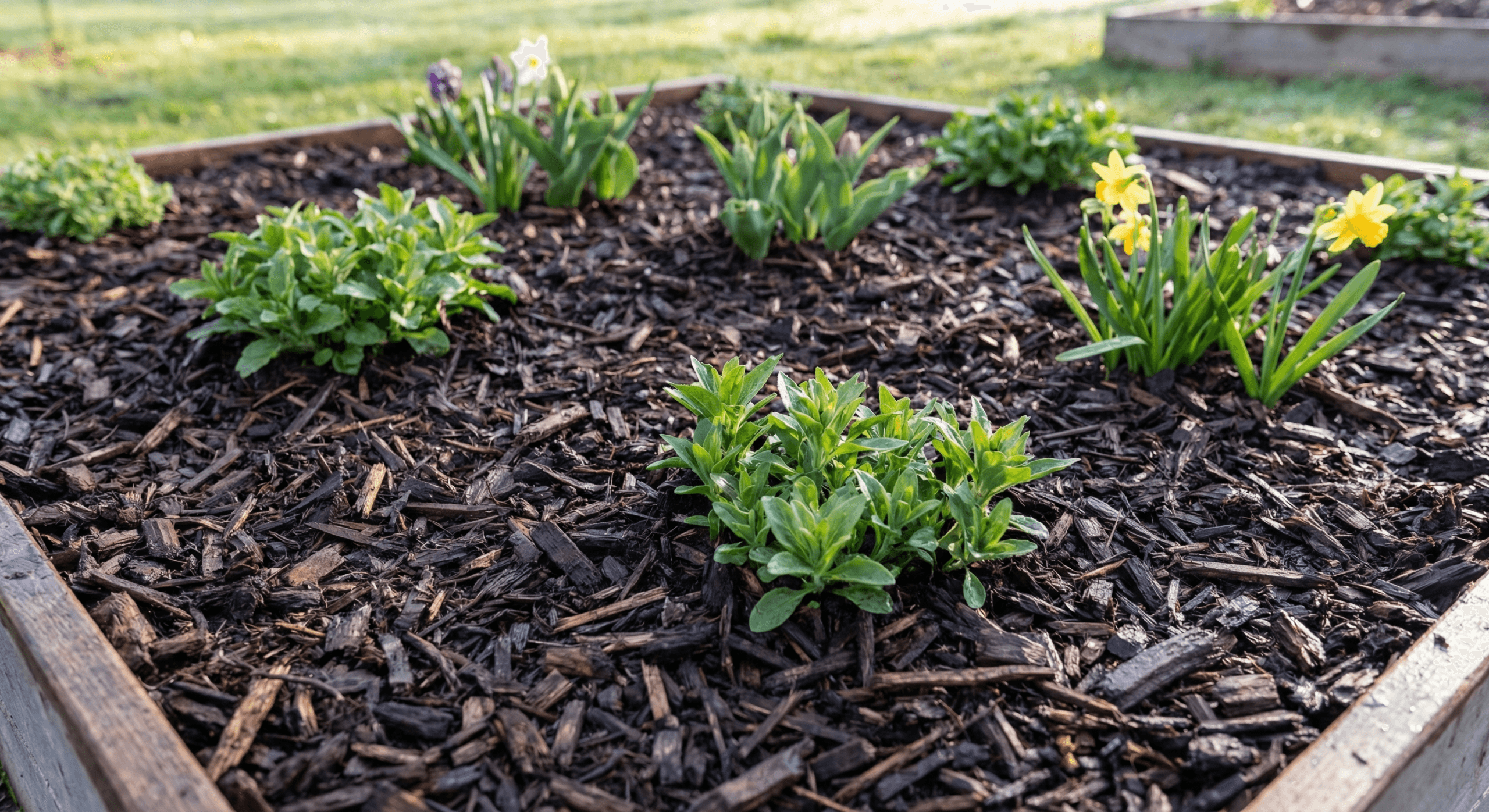
Mulch is one of the most powerful tools in a gardener’s arsenal and one of the simplest to apply. A layer of organic material spread over bare soil does more to improve your garden than almost any other single technique — suppressing weeds, retaining moisture, regulating soil temperature, feeding the soil biology, and eventually adding organic matter as it decomposes. If you’re only going to do one thing to improve your garden this season, mulching should be it.
Mulch: Matters Apply: What You’ll Need
Before you start, gather these essentials:
- Organic mulch — Organic garden mulch for moisture retention
- Bark chips — Decorative bark chips for garden borders
- Landscaping fabric — Landscape fabric to suppress weeds before mulching
- Garden fork — Quality garden fork for soil preparation
- Gardening gloves — Durable gardening gloves for mulching work
What Is Mulch and Why Does It Work?
Mulch is simply a protective layer of material spread over the surface of bare soil. Organic mulches — bark chips, compost, straw, leaf mould — are preferable to inorganic ones (plastic sheeting, gravel) because they improve soil health as they break down rather than just covering it.
The benefits are multiple and significant. First, weed suppression: a thick enough layer of mulch blocks light from reaching weed seeds, dramatically reducing the number of weeds that germinate. Weeds that do emerge through the mulch are far easier to pull because the soil beneath is kept loose and moist.
Second, moisture retention. Bare soil loses water rapidly through evaporation, especially in summer. Mulch acts as an insulating barrier between the soil and the air, reducing water loss by up to 70%. In the context of UK summers that seem to be getting hotter and drier, this is increasingly valuable.
Third, temperature regulation. Bare soil heats up rapidly in summer sun and cools rapidly in winter. Mulch moderates these extremes, keeping roots cooler in summer and protected from frost in winter.
Fourth, soil biology. A healthy soil ecosystem — earthworms, beneficial fungi, microorganisms — is the foundation of a productive garden. Mulch provides the conditions these organisms need: darkness, moisture, and a food source. Earthworms pull organic matter down into the soil, creating the rich, dark, crumbly texture that gardeners call “good tilth.”
Fifth, as organic mulches decompose, they add humus to the soil, improving its structure, water-holding capacity, and nutrient availability permanently.
Types of Organic Mulch
- Bark chips: One of the most popular and widely available. Long-lasting (2-3 years before needing topping up), attractive, and effective at suppressing weeds. Use a medium grade. Avoid fresh, uncomposted bark which can rob nitrogen from the soil as it decomposes.
- Garden compost: An excellent all-round mulch. Apply 5-8cm deep. It adds nutrients and organic matter directly to the soil. Home-made compost is ideal; council green waste compost is a good alternative.
- Straw: Particularly useful on vegetable plots. Apply 10-15cm deep around soft fruit, potatoes, and strawberries. Straw insulates soil, suppresses weeds, and keeps fruits like strawberries clean. Use straw, not hay (which contains seeds).
- Leaf mould: Made from decomposed autumn leaves, this is one of the finest soil improvers available. Apply 5-8cm deep. It has an almost magical effect on soil structure. Gather leaves in autumn and let them rot for a year to make leaf mould.
- Well-rotted manure: Very rich in nutrients; best used around hungry plants like brassicas and established fruit trees. Apply 5-8cm deep in autumn or early spring. Always use well-rotted manure — fresh manure can burn plant roots and introduce pathogens.
- Grass clippings: A readily available and free resource. Apply in thin layers (2-3cm) — thick layers become slimy and smelly as they rot. Excellent around vegetables. Never use clippings from lawns treated with weedkiller.
When to Apply Mulch
The best time to apply mulch is spring, when the soil has warmed up but before the summer heat arrives — typically April in most of the UK. At this point, the soil is moist from winter rain, the weeds have not yet taken off, and applying mulch locks in that moisture for the dry months ahead.
Mulch can also be applied in autumn, particularly around perennial plants and fruit trees. An autumn mulch of well-rotted manure or compost protects roots from frost and provides nutrients for the following growing season.
Avoid mulching frozen or waterlogged soil, or very dry soil (water first if the soil is parched, as mulch locks in whatever moisture is present — including drought).
How to Apply Mulch Correctly
The key to effective mulching is application to bare, weed-free soil. Never mulch over weeds — the weeds will simply grow through it. Weed thoroughly first, then apply the mulch on top.
Depth matters: too thin and weeds will push through; too thick and you waste material and may create anaerobic conditions. For bark chips and similar coarse materials, apply 5-8cm. For finer materials like compost or leaf mould, 5cm is sufficient.
Keep mulch away from the stems or trunks of plants — a collar of clear space around the base of each plant prevents rotting and discourages pests like slugs that shelter in damp mulch against plant stems. Mulch right up to but not over the top of the plant crown.
Mulching Specific Areas
Vegetable beds: Apply a thick mulch of compost or straw around established vegetables in late spring. Don’t mulch seed beds — the warmth needed for germination is more important than moisture retention at this stage.
Fruit trees and bushes: Apply a ring of well-rotted manure or compost 5-8cm deep around the drip line (the area beneath the outer circumference of the branches). Keep clear of the trunk itself.
Established borders: Apply bark chips or leaf mould between plants, taking care not to smother low-growing plants. A spring mulch of 5-8cm applied annually will dramatically reduce weed pressure over the course of a few years.
Containers: Apply a top dressing of compost or fine bark chips to container plants. This reduces evaporation, keeps roots cooler in summer, and adds a finished appearance.
The Long-Term Effect
Gardens that are regularly mulched transform over the years. Weed pressure decreases dramatically (weeding that once took hours takes minutes). Soil structure improves — clay soils become more friable, sandy soils retain more water. Earthworm populations increase. Plants become healthier and more productive. It’s one of those techniques that delivers compounding returns: the more consistently you mulch, the better your soil becomes, and the easier the garden is to maintain.
Frequently Asked Questions
When is the best time to do this?
The ideal time depends on your climate and the specific plants involved. Generally, early morning or late afternoon are best to avoid the heat of the day.
How often should I check on this?
Check your garden at least once a week during the growing season to catch any issues early and keep on top of tasks.
Can I do this in a container instead?
Many garden tasks can be adapted for containers. Use a good quality potting compost and ensure containers have adequate drainage holes.
What if I don’t have the right tools?
Start with the basics — a trowel, fork, gloves, and watering can will get you a long way. Add tools as you need them.
Related Articles
For more help with your garden, check out these related guides:
- Garden Mulch: Why It Matters and How to Apply It
- How to Build a Simple Compost Bin
- Beginner’s Guide to Sweet Peas
- Best Plants for Pollinators
- Herb Garden Guide
Continue Reading
- 5-Step Essential Garden Tools: What Every UK Gardener Needs
- Complete Guide to Week 12 Spring Garden Jobs: May 17-23
- Complete Guide to Week 11 Spring Garden Jobs: May 10-16
- Complete Guide to Week 10 Spring Garden Jobs: May 3-9
- Complete Guide to Week 9 Spring Garden Jobs: April 26 – May 2
Frequently Asked Questions
When is the best time to do this?
The best time depends on your climate zone and what you are growing, but generally early morning or late afternoon when temperatures are cooler works best for most garden tasks.
How often should I check on my garden?
Regular attention is key — check your garden every few days during the growing season. This helps you catch problems early before they become serious.
Can beginners do this?
Absolutely! Start with a few simple tasks and build up gradually. Most garden jobs are beginner-friendly with the right guidance.
What is the most important thing to remember?
Consistency matters more than perfection. Little and often beats occasional marathon sessions. Even 10-15 minutes of daily attention yields great results.
