


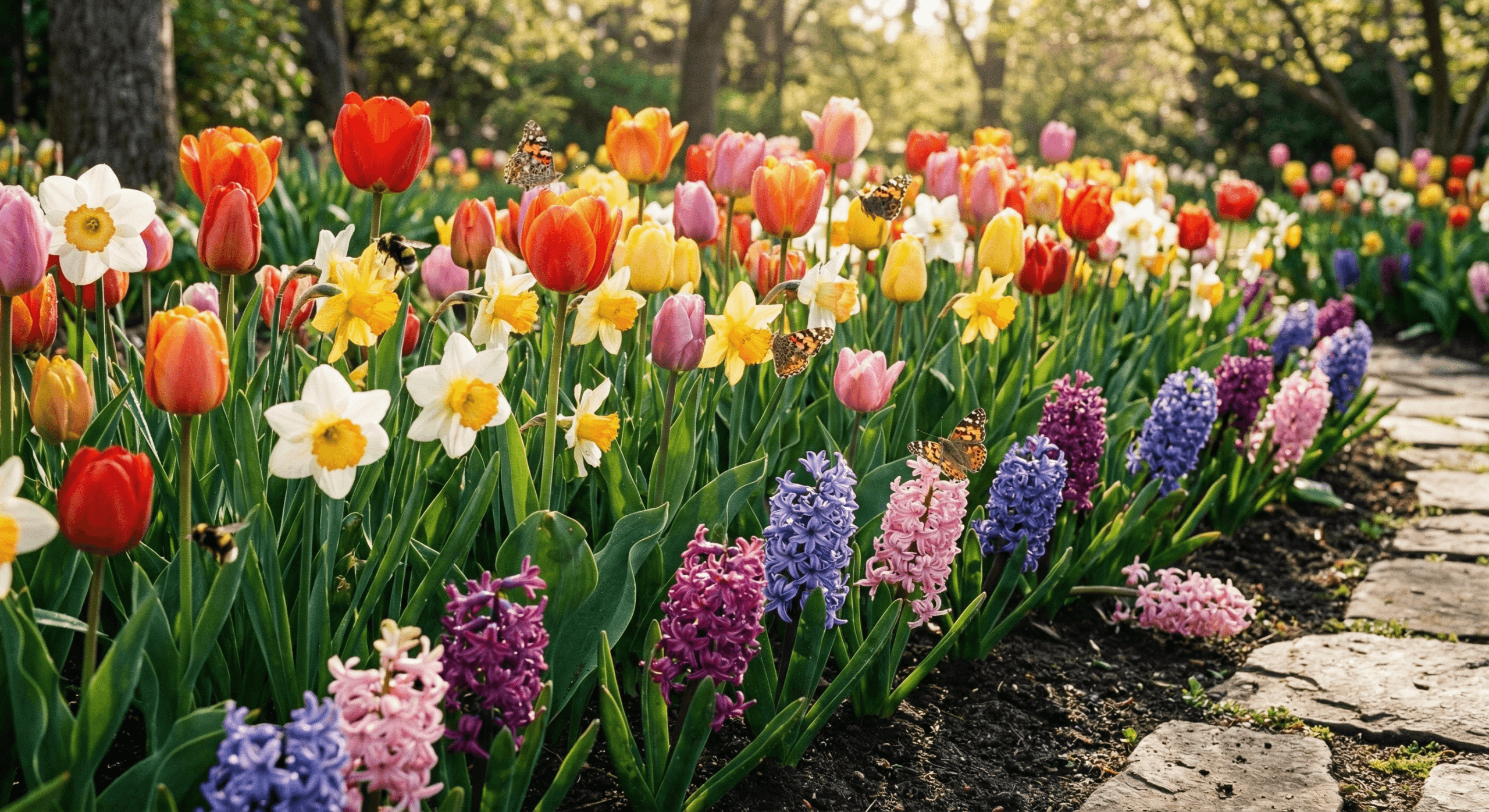
Few gardening moments compare to the first daffodil pushing through late-winter soil, or the sight of a tulip unfurling in April sunshine. The RHS soil testing guide provides detailed advice on understanding your soil type… Bulbs are nature’s stored-up surprises — each one a complete package of flower, stored energy, and future beauty waiting to happen. And the wonderful thing about most bulbs? Once planted, they come back year after year, often multiplying.
Shop Related Products: Plant Support
For more on essential mulching: single, see our guide.
For more on proven first-year vegetable, see our guide.
Related: Garden Planning 101: Mapping Out Your Garden Space Natural Pest Deterrents: Plants That Repel Pests
Looking for quality gardening tools and supplies? Browse our recommended garden products — hand-picked by the GardenWizz team.
Bulbs: Understanding Bulb Types
Spring-flowering bulbs (planted in fall): Daffodils, tulips, hyacinths, crocus, snowdrops, alliums, scilla, chionodoxa. These need a cold period (winter) to trigger blooming.
Summer-flowering bulbs (planted in spring): Dahlias, gladiolus, lilies, cannas, begonias, crocosmia, ranunculus. Most are not winter-hardy in cold climates — dig and store in fall.
Fall-flowering bulbs: Autumn crocus (Colchicum), saffron crocus — plant in late summer.
When to Plant: Timing Matters
Spring bulbs: Plant in fall 6-8 weeks before ground freezes hard. In most climates, September through November. September-October is ideal for daffodils. Tulips can go later — November-December.
Summer bulbs: Plant after last frost when soil has warmed to about 60 degrees F.
Planting: Getting It Right
Site sel.The RHS watering guidelines cover efficient watering techniques for gardens of all sizes. RHS watering guidelines has detailed guidance on this topic RHS bulbs guide has detailed guidance on this topic…ection: Full sun to part shade. Good drainage is critical — bulbs rot in standing water.
Soil preparation: Work compost into soil to improve drainage. Add a handful of bone meal fertiliser to each planting hole for strong root development in each planting hole for phosphorus.
Planting depth: 3x the height of the bulb.
– Large bulbs (daffodils, tulips): 6-8 inches deep
– Medium bulbs (crocus): 3-4 inches deep
– Small bulbs (snowdrops): 2-3 inches deep
Spacing: Space bulbs about 3-6 inches apart. Mass plantings in clusters of 5, 7, or 9 look more natural than rows.
Positioning: Plant with the pointed end facing up. If you can’t tell, plant on their side.
After-Bloom Care: Don’t Skip This!
1. Deadhead flowers but DO NOT cut foliage. The leaves produce food that recharges the bulb.
2. Wait to remove foliage until it turns yellow and dies back naturally — usually 6-8 weeks after bloom. This is why planting bulbs with a bulb planter trowel among perennials works so well — the perennial foliage hides the declining bulb leaves.
3. Fertilize with bulb fertiliser or bone meal fertiliser after bloom or compost after bloom.
Extending the Bloom Season
Plant early, mid, and late-season varieties:
– Very early (Feb-March): Snowdrops, crocus, winter aconite
– Early spring (March-April): Daffodil varieties like ‘February Gold,’ scilla, chionodoxa
– Mid-spring (April-May): Most tulips, hyacinths
– Late spring (May-June): Late tulip varieties, alliums
Naturalizing Bulbs
Daffodils are the champions of naturalizing — once established, they’ll multiply and return for decades. Other good naturalizers: crocus, scilla, and snowdrops. Plant them in drifts in lawns or under trees.
Summer Bulb Highlights
Dahlias: Incredible diversity of form and color. Plant tubers 4-6 inches deep after last frost. Provide support (stakes or cages). Dig and store tubers in fall.
Lilies: True lilies (Lilium) are garden treasures. Asiatic lilies bloom early; Oriental lilies are fragrant and bloom mid-late summer.
Gladiolus: Plant corms every 2 weeks for continuous blooms. Fabulous cut flowers.
Storage for Tender Bulbs
In zones where bulbs aren’t hardy:
1. After first frost blackens foliage, dig carefully.
2. Cure bulbs/corms/tubers in a dry, 60 degree F space for 2 weeks.
3. Store in barely-damp peat moss or vermiculite in a cool (40-50 degrees F), dark place.
4. Check periodically through winter.
Bulbs are among the easiest and most rewarding plants in any garden. Plant them once, and they’ll reward you with waves of color for years to come.
Frequently Asked Questions
When is the best time to spring garden preparation?
Start in February-March as days lengthen. Clear, feed, and plan ahead.
Do I need any special equipment?
Seed trays, compost, and basic tools. A cold frame extends the season.
Can beginners do this?
Spring is the perfect time to start – everything is optimistic and new!
How long does it take?
Tasks range from quick 10-minute jobs to full weekend projects.
