


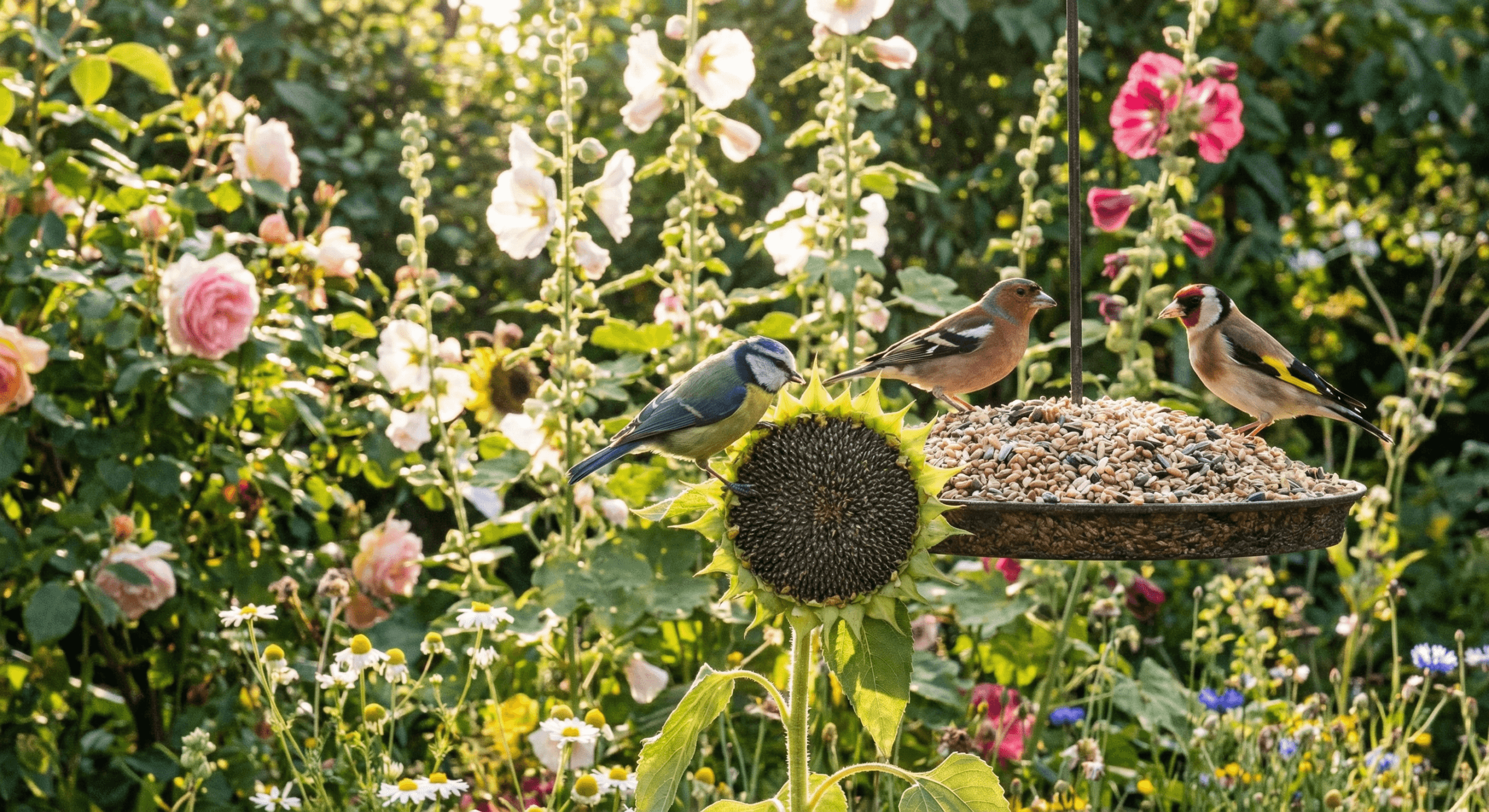
A garden alive with birds is one of the most immediately rewarding aspects of outdoor space. Their movement, colour, and sound transform a garden from a static space into something dynamic and connected to the wider natural world. Attracting birds to your garden doesn’t require a large space or special expertise — it requires three things: food, water, and shelter. Get those right and the birds will find you.
Attract Birds: What You’ll Need
Before you start, gather these essentials:
- Bird feeders — Tube and platform bird feeders for garden use
- Bird seed mix — High-energy bird seed mix for year-round feeding
- Bird bath — Stone bird bath for drinking and bathing
- Nest boxes — Wooden nest boxes for blue tit and other garden birds
- Suet balls — High-energy suet balls for winter bird feeding
Feeding Birds Year-Round
The idea that you only need to feed birds in winter is outdated. While winter feeding is most critical (natural food is scarce and cold mornings burn energy fast), birds benefit from supplementary feeding throughout the year. Different seasons call for different foods:
- Spring and summer: Feed live foods like mealworms for insect-eating birds (blue tits, wrens, robins) especially during breeding season when parents need high-protein food for their chicks.
- Autumn: Continue with seed mixes and peanuts. As natural berries and fruits are consumed, supplementary feeding becomes increasingly valuable.
- Winter: The most critical period. High-energy foods like fat balls, suet blocks, and sunflower seeds are essential. Birds can struggle to find enough calories to survive cold nights.
Choosing the Right Feeder
Different feeder types suit different foods and birds:
- Tube feeders: Best for sunflower seeds and seed mixes. Hang from a branch or feeder station. Blue tits, goldfinches, greenfinches, and siskins love them.
- Platform or table feeders: Open feeding stations that suit a wider range of birds including robins, dunnocks, blackbirds, and larger birds like collared doves and woodpigeons.
- Ground feeders: For birds that prefer to feed on the ground (house sparrows, dunnocks, blackbirds). Place seed on a clear patch of earth or on a ground-level tray. Keep the area clean to avoid disease.
- Peanut feeders: Mesh tube feeders specifically for peanuts. Blue and great tits are especially fond of peanuts. Always use a proper peanut feeder — loose peanuts can choke young chicks if fed directly.
- Suet block feeders: For fat balls and suet blocks, especially valuable in winter. Woodpeckers, starlings, and wrens are particular fans.
The Vital Importance of Water
Birds need water for drinking and bathing, and providing a reliable source is one of the most effective ways to attract them. A bird bath is a simple addition — even a shallow dish of water on the ground will attract birds. For something more permanent, a stone or ceramic bird bath adds visual interest as well as function.
Position the bird bath away from dense cover where predators (cats) might ambush, but with nearby shelter where birds can perch and preen after bathing. In winter, prevent the water from freezing by adding a small floating ball or replacing water daily — birds can become dehydrated in frozen conditions just as in drought.
Providing Shelter and Nesting Sites
Birds need places to hide from predators and shelter from bad weather. Dense shrubs and hedges provide essential cover. Native hedging plants like hawthorn, holly, and dog rose are particularly valuable as they also provide berries and insects for food.
Nest boxes offer breeding opportunities for birds that can’t find natural tree hollows. Different species need different box sizes — a 28mm entrance hole suits blue and coal tits; a 32mm hole is better for great tits, house sparrows, and starlings. Position boxes 2-3m up, facing between north and east to avoid prevailing wind and direct sun.
Leave areas of slightly overgrown garden — long grass, fallen leaves, log piles — where insects and invertebrates (bird food) thrive. A wildlife corner of the garden doesn’t have to look neglected — even a simple stack of logs provides habitat for beetles, woodlice, and other creatures that birds eat.
Planting for Birds
Thoughtful planting makes a significant difference to what birds visit and stay in your garden:
- Berry and fruit-bearing plants: Cotoneaster, pyracantha, holly, rowan, hawthorn, dog rose, and ivy all provide vital winter food when natural sources are scarce.
- Insect-friendly plants: Buddleia, lavender, comfrey, and wildflowers attract insects that many birds feed on, particularly during breeding season.
- Seed heads: Many ornamental plants — sunflowers, teasels, verbena, and grasses — produce seeds that finches and sparrows eat through autumn and winter.
- Trees and large shrubs: Even a single mature tree provides perching, nesting, and foraging opportunities.
Keeping Birds Safe
Attracting birds means also protecting them from the risks that come with garden feeding:
- Position feeders away from dense cover where cats can ambush.
- Clean feeders regularly to prevent disease spreading. If you see sick birds, stop feeding for a couple of weeks and clean all feeders with a mild disinfectant solution.
- Use feeders designed to prevent larger birds or mammals monopolising them.
- Keep cats indoors during early morning when birds are most active at feeders.
A bird-friendly garden is one that works with nature rather than against it. Providing food, water, and shelter consistently through the year is the simplest and most effective way to attract a diverse range of birds — and to be rewarded with the sight and sound of wildlife every day.
Frequently Asked Questions
When is the best time to do this?
The ideal time depends on your climate and the specific plants involved. Generally, early morning or late afternoon are best to avoid the heat of the day.
How often should I check on this?
Check your garden at least once a week during the growing season to catch any issues early and keep on top of tasks.
Can I do this in a container instead?
Many garden tasks can be adapted for containers. Use a good quality potting compost and ensure containers have adequate drainage holes.
What if I don’t have the right tools?
Start with the basics — a trowel, fork, gloves, and watering can will get you a long way. Add tools as you need them.
Related Articles
For more help with your garden, check out these related guides:
- How to Attract Birds to Your Garden
- How to Attract Birds to Your Garden
- Beginner’s Guide to Sweet Peas
- Best Plants for Pollinators
- Herb Garden Guide
Continue Reading
- 5-Step Essential Garden Tools: What Every UK Gardener Needs
- Complete Guide to Week 12 Spring Garden Jobs: May 17-23
- Complete Guide to Week 11 Spring Garden Jobs: May 10-16
- Complete Guide to Week 10 Spring Garden Jobs: May 3-9
- Complete Guide to Week 9 Spring Garden Jobs: April 26 – May 2
Frequently Asked Questions
When is the best time to do this?
The best time depends on your climate zone and what you are growing, but generally early morning or late afternoon when temperatures are cooler works best for most garden tasks.
How often should I check on my garden?
Regular attention is key — check your garden every few days during the growing season. This helps you catch problems early before they become serious.
Can beginners do this?
Absolutely! Start with a few simple tasks and build up gradually. Most garden jobs are beginner-friendly with the right guidance.
What is the most important thing to remember?
Consistency matters more than perfection. Little and often beats occasional marathon sessions. Even 10-15 minutes of daily attention yields great results.
