

Close Menu

    Subscribe to Updates

    Get the latest creative news from FooBar about art, design and business.

    What's Hot

    5-Step Essential Garden Tools: What Every UK Gardener Needs

    21 March 2026

    Complete Guide to Week 12 Spring Garden Jobs: May 17-23

    20 March 2026

    Complete Guide to Week 11 Spring Garden Jobs: May 10-16

    20 March 2026
    Facebook X (Twitter) Instagram
    • Demos
    • Buy Now
    Facebook X (Twitter) Instagram
    GardenwizzGardenwizz
    • Home
    • Seasonal Gardening
      • Spring
      • Winter
    • Herbs
    • Vegetables
    • Garden Design & Landscaping
      • Raised Beds
    GardenwizzGardenwizz
    Home»Garden Structures»5-Step How to Build a Compost Bin: Simple Guide
    Garden Structures

    5-Step How to Build a Compost Bin: Simple Guide

    GardenWizz TeamBy GardenWizz Team20 March 2026Updated:21 March 2026No Comments5 Mins Read
    Facebook Twitter Pinterest LinkedIn Tumblr WhatsApp Email
    Share
    Facebook Twitter LinkedIn WhatsApp Pinterest Email

    Making your own compost is one of the most satisfying things you can do in a garden. Instead of bagging up garden waste and putting it out for collection, you transform it into rich, dark, crumbly compost – often called black gold – that feeds your soil and grows better plants. And you do it for free.

    5-Step Build Compost: What You’ll Need

    Before you start, gather these essentials:

    • Compost bin — Large capacity wooden compost bin with slatted sides
    • Compost accelerator — Organic compost activator to speed up decomposition
    • Garden shredder — Electric garden shredder for processing woody prunings
    • Compost thermometer — Long-reach compost thermometer to monitor decomposition heat

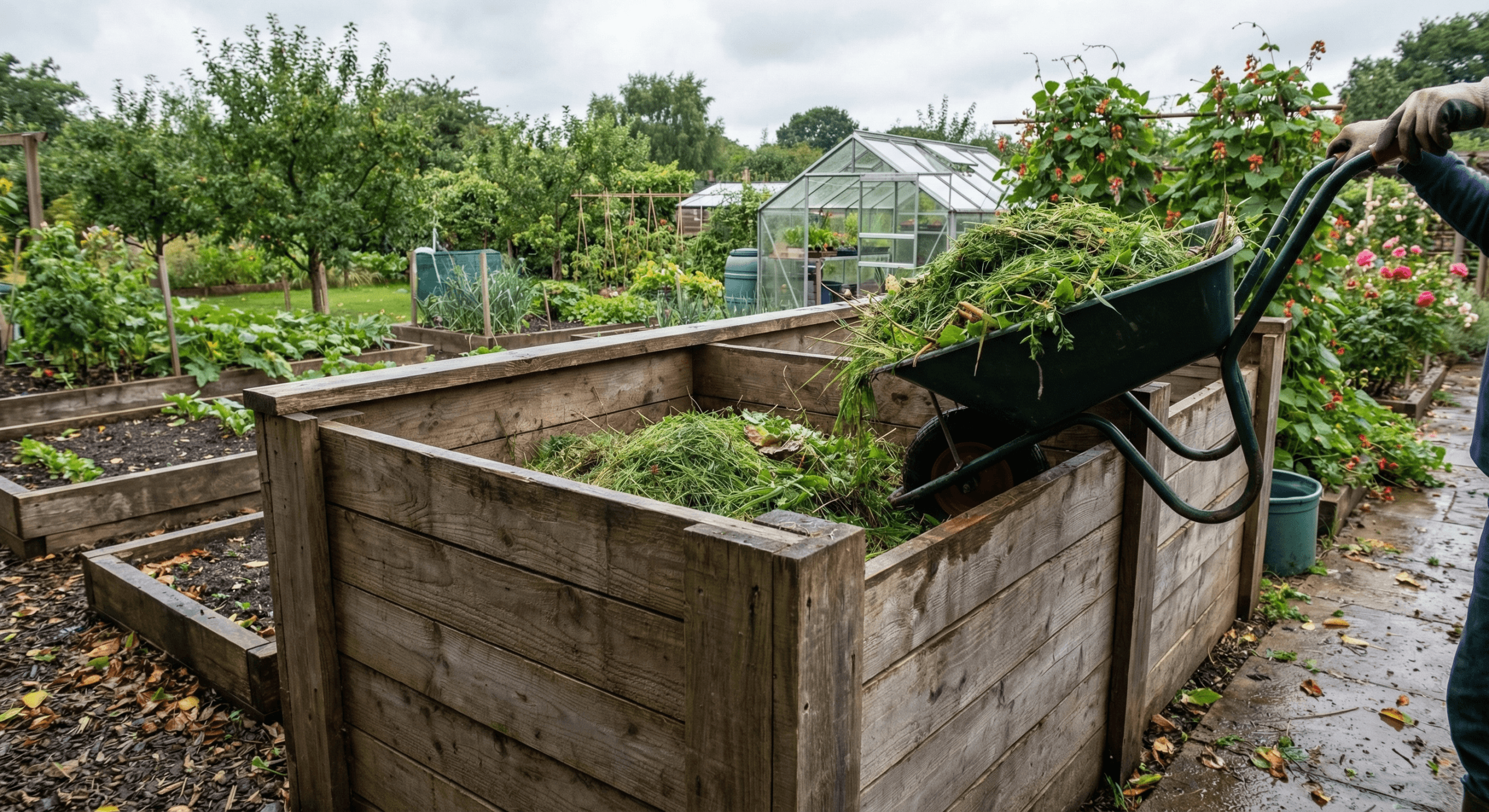
    A good compost bin is the heart of this process. Whether you build one yourself from scratch or assemble one from a kit, the principle is the same: create the right conditions for beneficial microorganisms to break down organic material into stable humus.

    Choosing the Right Location

    Where you place your compost bin matters more than many gardeners realise. The ideal location is partially shaded (direct sun dries out the compost too quickly; deep shade slows decomposition), on bare earth or grass (not on concrete, which prevents worms accessing the heap), accessible year-round, close to the kitchen for food waste, and near a water source.

    Building Your Own Wooden Compost Bin

    A simple wooden slatted bin is one of the most practical and attractive options. It provides good airflow, holds heat reasonably well, and is easy to build with basic tools.

    Materials needed:

    • Four 75cm x 75cm pressure-treated fence posts (for corner posts)
    • 12-16 lengths of 15cm x 2.5cm pressure-treated boarding (for slatted sides)
    • Two 75cm x 5cm cross-braces for the top and bottom
    • Stainless steel screws
    • Hardware cloth or heavy wire mesh for the base (excludes rats)
    • Four hinged hooks for a removable front panel (optional but useful)

    Step-by-step construction:

    1. Cut the corner posts to 1 metre length (25cm will be buried for stability)
    2. Screw the horizontal cross-braces to the corner posts at 15cm from the top and bottom
    3. Nail the slatted boards between the cross-braces, leaving 1-2cm gaps between boards for airflow
    4. Attach hardware cloth to the base to exclude vermin while allowing drainage and worm access
    5. Bury the posts 25cm into the ground for stability

    A bin approximately 1m x 1m x 1m is the ideal size – large enough to generate and retain heat for fast composting, but small enough to turn easily.

    What to Put in Your Compost Bin

    Compostable materials fall into two categories, and a good mix of both is essential for balanced, fast decomposition:

    Green materials (nitrogen-rich):

    • Fruit and vegetable scraps
    • Coffee grounds and tea bags (remove plastic tags)
    • Fresh garden cuttings and grass clippings
    • Young annual weeds (not seeded)
    • Vegetable plant remains (except diseased material)

    Brown materials (carbon-rich):

    • Autumn leaves (excellent, and free in quantity)
    • Cardboard and newspaper (torn into small pieces)
    • Straw and hay
    • Woody prunings (shredded first)
    • Paper and cardboard egg boxes
    • Wood ash (in small quantities)

    The ideal ratio is roughly 1 part green to 2-3 parts brown by volume. Too much nitrogen (greens) produces a smelly, slimy heap; too much carbon (browns) slows decomposition to a crawl.

    How to Know When Compost is Ready

    Finished compost is dark, crumbly, and earthy-smelling. You should not be able to identify any of the original materials. It typically takes 6-12 months from filling a bin to having finished compost, depending on materials, weather, and how often you turn it.

    Turn the heap every 4-6 weeks to aerate it and speed up the process. If the compost is too dry, add water; if it is wet and smelly, add more brown materials. A healthy, active heap will heat up noticeably in the centre – a compost thermometer will show temperatures of 55-65C, which kills weed seeds and pathogens.

    A well-made compost bin, properly fed and managed, will give you a continuous supply of the finest soil improver you can get – and it is entirely free.

    Frequently Asked Questions

    When is the best time to do this?
    The ideal time depends on your climate and the specific plants involved. Generally, early morning or late afternoon are best to avoid the heat of the day.

    How often should I check on this?
    Check your garden at least once a week during the growing season to catch any issues early and keep on top of tasks.

    Can I do this in a container instead?
    Many garden tasks can be adapted for containers. Use a good quality potting compost and ensure containers have adequate drainage holes.

    What if I don’t have the right tools?
    Start with the basics — a trowel, fork, gloves, and watering can will get you a long way. Add tools as you need them.

    Related Articles

    For more help with your garden, check out these related guides:

    • Beginner’s Guide to Growing Sweet Peas
    • Best Plants for Pollinators
    • Herb Garden Hub
    • How to Build a Raised Bed

    Continue Reading

    • 5-Step Essential Garden Tools: What Every UK Gardener Needs
    • Complete Guide to Week 12 Spring Garden Jobs: May 17-23
    • Complete Guide to Week 11 Spring Garden Jobs: May 10-16
    • Complete Guide to Week 10 Spring Garden Jobs: May 3-9
    • Complete Guide to Week 9 Spring Garden Jobs: April 26 – May 2

    Frequently Asked Questions

    When is the best time to do this?

    The best time depends on your climate zone and what you are growing, but generally early morning or late afternoon when temperatures are cooler works best for most garden tasks.

    How often should I check on my garden?

    Regular attention is key — check your garden every few days during the growing season. This helps you catch problems early before they become serious.

    Can beginners do this?

    Absolutely! Start with a few simple tasks and build up gradually. Most garden jobs are beginner-friendly with the right guidance.

    What is the most important thing to remember?

    Consistency matters more than perfection. Little and often beats occasional marathon sessions. Even 10-15 minutes of daily attention yields great results.

    Share. Facebook Twitter Pinterest LinkedIn Tumblr WhatsApp Email
    GardenWizz Team
    • Website

    Add A Comment
    Leave A Reply Cancel Reply

    • Popular
    • Recent
    • Top Reviews

    Seed Starting for Beginners: Complete Guide

    20 March 2026

    How to Design a Pollinator Garden That Buzzes

    20 March 2026

    Ultimate Spring Vegetable Planting Calendar: When to Plant What

    20 March 2026

    5-Step Essential Garden Tools: What Every UK Gardener Needs

    21 March 2026

    Complete Guide to Week 12 Spring Garden Jobs: May 17-23

    20 March 2026

    Complete Guide to Week 11 Spring Garden Jobs: May 10-16

    20 March 2026
    • Facebook
    • Twitter
    • Instagram
    • Pinterest
    Latest Galleries
    [latest_gallery cat="all" number="5" type="slider"]
    Latest Reviews
    Editors Picks

    5-Step Essential Garden Tools: What Every UK Gardener Needs

    21 March 2026

    Complete Guide to Week 12 Spring Garden Jobs: May 17-23

    20 March 2026

    Complete Guide to Week 11 Spring Garden Jobs: May 10-16

    20 March 2026

    Complete Guide to Week 10 Spring Garden Jobs: May 3-9

    20 March 2026
    Top Reviews
    Demo
    Demo
    Our Picks
    Stay In Touch
    • Facebook
    • Twitter
    • Pinterest
    • Instagram
    • YouTube
    • Vimeo
    Don't Miss

    5-Step Essential Garden Tools: What Every UK Gardener Needs

    By GardenWizz Team21 March 2026

    Before you start any gardening project, you need the right tools. This guide shows you…

    Complete Guide to Week 12 Spring Garden Jobs: May 17-23

    20 March 2026

    Complete Guide to Week 11 Spring Garden Jobs: May 10-16

    20 March 2026

    Complete Guide to Week 10 Spring Garden Jobs: May 3-9

    20 March 2026

    Subscribe to Updates

    Get the latest creative news from SmartMag about art & design.

    Our Picks

    5-Step Essential Garden Tools: What Every UK Gardener Needs

    21 March 2026

    Complete Guide to Week 12 Spring Garden Jobs: May 17-23

    20 March 2026

    Complete Guide to Week 11 Spring Garden Jobs: May 10-16

    20 March 2026

    Complete Guide to Week 10 Spring Garden Jobs: May 3-9

    20 March 2026
    Demo
    About
    About

    Your source for the lifestyle news. This demo is crafted specifically to exhibit the use of the theme as a lifestyle site. Visit our main page for more demos.

    We're social, connect with us:

    Facebook X (Twitter) Pinterest LinkedIn VKontakte
    From Flickr
    Ascend
    terns
    casual
    riders on the storm
    chairman
    mood
    monument
    liquid cancer
    blue
    basement
    ditch
    stars
    About

    SMARTMAG

    Neque porro quisquam est qui dolorem ipsum quia dolor sit amet, consectetur. Lorem Ipsum is simply dummy text of the printing and typesetting industry.

    We're social, connect with us:

    Facebook X (Twitter) Pinterest LinkedIn VKontakte
    Flickr Photos
    #7410 No Justice No Peace
    #7406 No Justice No Peace
    #7402 No Justice No Peace
    #7399 No Justice No Peace
    #7387 No Justice No Peace
    #7386 No Justice No Peace
    #7370 No Justice No Peace
    #7361 No Justice No Peace
    #7358 No Justice No Peace
    #7354 No Justice No Peace
    #7339 No Justice No Peace
    #7331 No Justice No Peace
    About Us
    About Us

    Your source for the gaming news. This demo is crafted specifically to exhibit the use of the theme as a gaming site. Visit our main page for more demos.

    We're accepting new partnerships right now.

    Email Us: info@example.com
    Contact: +1-320-0123-451

    Our Picks

    5-Step Essential Garden Tools: What Every UK Gardener Needs

    21 March 2026

    Complete Guide to Week 12 Spring Garden Jobs: May 17-23

    20 March 2026

    Complete Guide to Week 11 Spring Garden Jobs: May 10-16

    20 March 2026
    Top Reviews
    About Us
    About Us

    Your source for the lifestyle news. This demo is crafted specifically to exhibit the use of the theme as a lifestyle site. Visit our main page for more demos.

    We're accepting new partnerships right now.

    Email Us: info@example.com
    Contact: +1-320-0123-451

    Our Picks
    New Comments
      About Us
      About Us

      Your source for the lifestyle news. This demo is crafted specifically to exhibit the use of the theme as a lifestyle site. Visit our main page for more demos.

      We're accepting new partnerships right now.

      Email Us: info@example.com
      Contact: +1-320-0123-451

      Our Picks
      Facebook X (Twitter) Instagram Pinterest
      • Home
      • Buy Now
      © 2026 ThemeSphere. Designed by ThemeSphere.

      Type above and press Enter to search. Press Esc to cancel.