


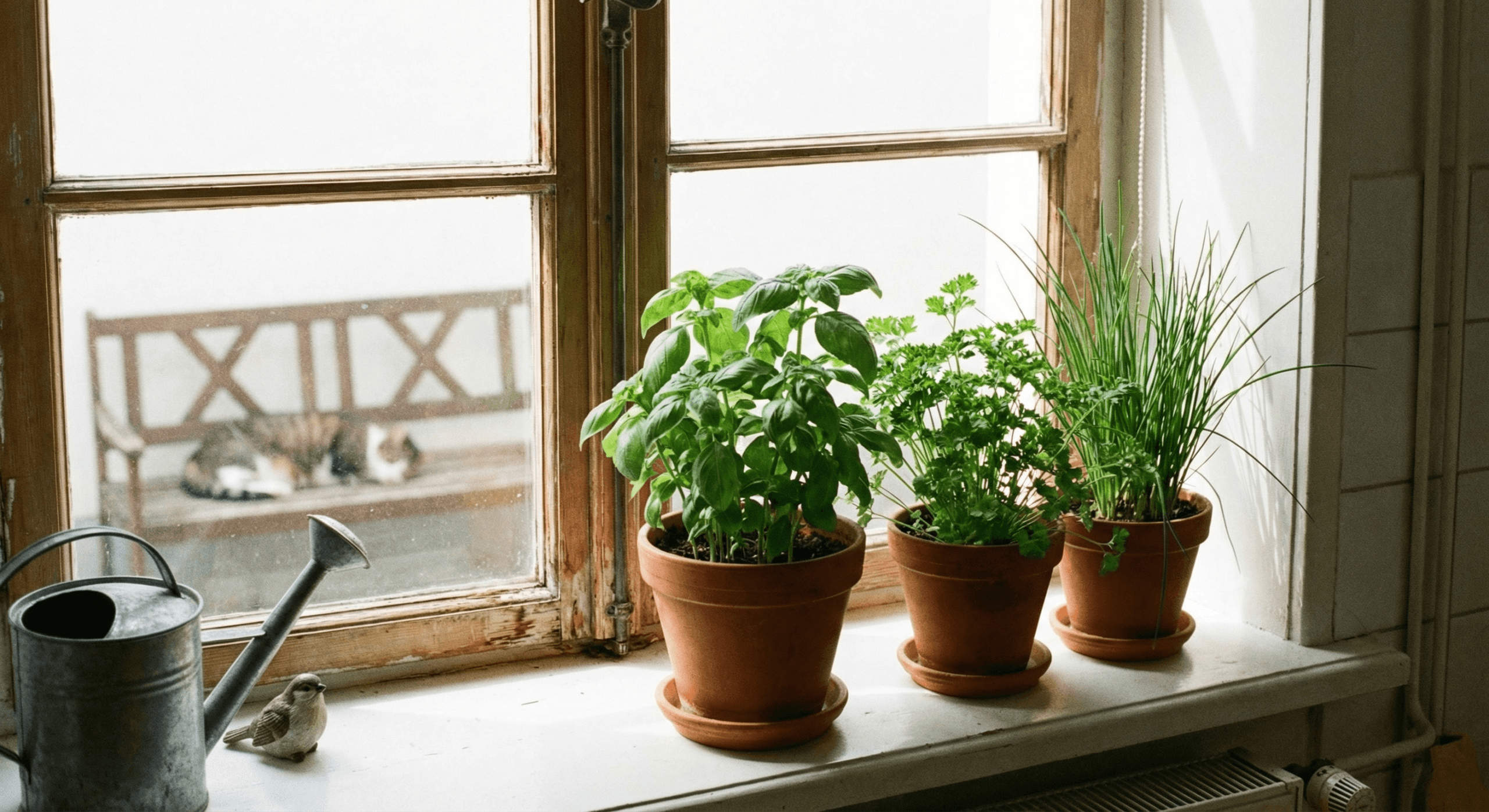
A windowsill herb garden is one of the simplest and most rewarding ways to bring fresh flavour into your kitchen year-round. You don’t need a garden, a greenhouse, or even particularly green fingers — just a sunny windowsill, a few pots, and the right selection of herbs. Within weeks of sowing, you’ll have an abundant supply of fresh basil, parsley, chives, and more, steps from your kitchen worktop.
Create Windowsill Herb: What You’ll Need
Before you start, gather these essentials:
- Herb seed collection — Essential herb seed collection for windowsill growing
- Terracotta herb pots — Classic terracotta pots with drainage for herbs
- Organic plant food — Balanced organic plant food for herbs
- Gardening gloves — Lightweight gardening gloves for indoor use
Choosing the Right Windowsill
Light is everything for herbs. A south-facing windowsill that receives at least 6 hours of direct sunlight per day is ideal. East or west-facing windowsills work for more shade-tolerant herbs, but growth will be slower. North-facing windowsills are generally too dark for most culinary herbs to thrive.
Kitchen windowsills can be cooler and more humid than other spots in the house — often a good thing, as it mimics the conditions many Mediterranean herbs love. However, avoid placing pots directly on a windowsill above a radiator in winter, as the dry, hot air will quickly stress plants.
Best Herbs for a Windowsill Garden
Not all herbs are suited to indoor windowsill growing. Here’s what works best:
- Basil — the classic windowsill herb. Loves warmth and sun. Sow little and often in spring and summer for continuous harvest. Italian large-leaf basil is best for cooking; Greek basil is more compact and ornamental.
- Parsley — remarkably tolerant of indoor conditions. Curly and flat-leaf (Italian) parsley both grow well on windowsills. Keep it harvested to prevent it going woody.
- Chives — one of the easiest herbs to grow indoors. Snip the leaves as needed and they’ll regrow quickly. A pot of chives on the windowsill is both practical and attractive.
- Mint — grows vigorously indoors but keep it in its own pot — it will outcompete everything nearby. Best on a cooler windowsill. Spearmint and peppermint are the most useful culinary varieties.
- Coriander — fast-growing but prone to bolting in heat. Succession-sow every few weeks for a constant supply. Best in cooler spots.
- Thyme and rosemary — Mediterranean herbs that love sun and good drainage. Slower-growing but long-lived on a windowsill. Rosemary in particular makes an attractive, fragrant plant.
- Sage — also Mediterranean; needs good light and careful watering. Compact enough for a windowsill with annual pruning.
Containers and Composts
Herbs need good drainage — sitting in waterlogged compost is the fastest way to kill them. Choose pots with drainage holes and a saucer to catch excess water. Terracotta pots are ideal as they breathe and help regulate soil moisture, reducing the risk of overwatering.
Use a quality potting compost, not garden soil. A peat-free multi-purpose compost works well for most herbs. Mediterranean herbs (thyme, rosemary, sage) benefit from adding 20-30% horticultural grit or perlite to improve drainage further.
Don’t crowd plants together. Each herb deserves its own pot — they have different water needs, and crowded plants restrict airflow, encouraging fungal problems.
Watering and Care
The golden rule: herbs generally prefer to be slightly under-watered than over-watered. Allow the compost to dry out a little between waterings, then water thoroughly so excess drains through the bottom. In winter, water much less frequently — the compost should be barely moist.
Mist the foliage occasionally, particularly in winter when central heating dries the air. This helps prevent red spider mite, which thrives in dry conditions.
Feed weekly during the growing season (spring to early autumn) with a diluted balanced liquid fertiliser. Don’t feed in winter when most herbs are resting.
Harvesting for Continuous Growth
The secret to a productive windowsill herb garden is regular harvesting. Unlike garden herbs, which can grow large and bolt quickly, regularly snipped windowsill herbs are encouraged to produce fresh, young growth. Never harvest more than a third of the plant at once, and always cut just above a leaf node to encourage branching.
Basil is the exception: pinch out the growing tips regularly to prevent flowering. As soon as basil plants bolt and flower, leaf production drops dramatically and the leaves turn bitter.
Extending the Season
Windowsill herb gardens are most productive in spring and summer, but with a few adjustments you can keep them going through winter too. A grow light positioned above the pots for a few extra hours in the evenings can make a significant difference during the dark winter months. Even a basic LED plant light on a timer helps herbs maintain growth rather than just surviving.
Sow coriander and parsley in late summer for autumn and winter windowsill harvests. Both tolerate cooler conditions better than heat-loving basil and will keep producing through winter if kept in a bright spot.
A windowsill herb garden is one of the simplest and most immediately rewarding indoor gardening projects. With minimal equipment and a little attention, you’ll have fresh herbs within arm’s reach every time you cook.
Frequently Asked Questions
When is the best time to do this?
The ideal time depends on your climate and the specific plants involved. Generally, early morning or late afternoon are best to avoid the heat of the day.
How often should I check on this?
Check your garden at least once a week during the growing season to catch any issues early and keep on top of tasks.
Can I do this in a container instead?
Many garden tasks can be adapted for containers. Use a good quality potting compost and ensure containers have adequate drainage holes.
What if I don’t have the right tools?
Start with the basics — a trowel, fork, gloves, and watering can will get you a long way. Add tools as you need them.
Related Articles
For more help with your garden, check out these related guides:
