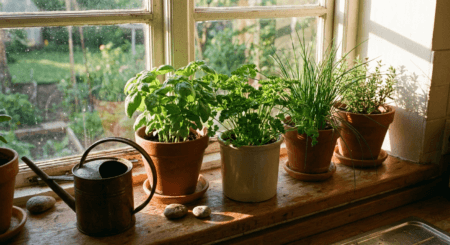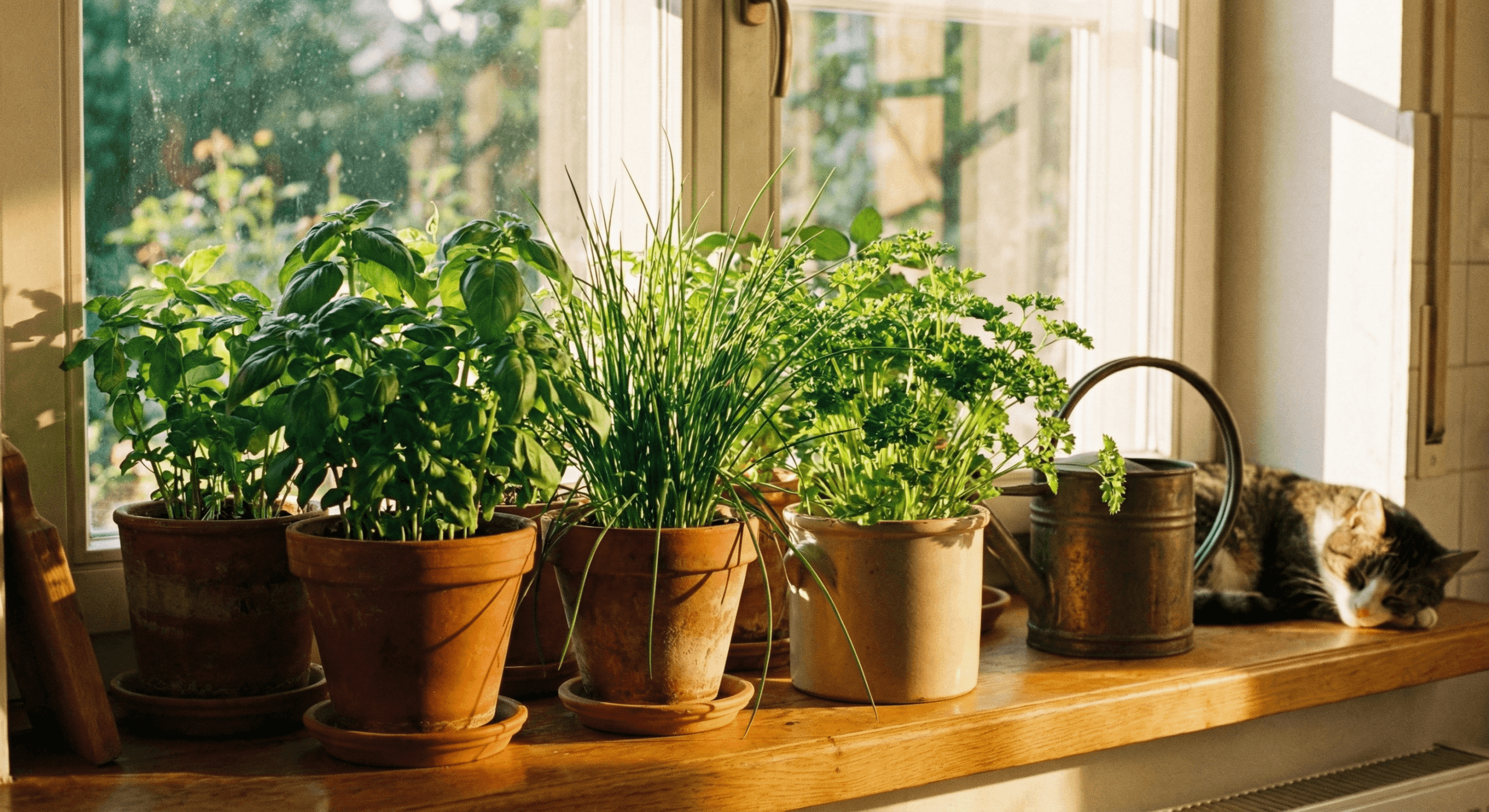
Imagine snipping fresh basil straight into your pasta, adding a handful of home-grown chives to an omelette, or having coriander and mint on demand all year round — no matter what the British weather throws at you. Growing herbs indoors is one of the simplest and most rewarding ways to bring the garden into your kitchen, and it costs far less than buying packaged herbs from the supermarket. For more detail, see our growing herbs indoors.
Grow Herbs Indoors:: What You’ll Need
Before you start, gather these essentials:
- Herb seed collection — Basil, chives, parsley, coriander and mint seeds — everything you need to start
- Terracotta herb pots — Set of 3 drainage pots, perfect for windowsill growing
- Organic plant food — Liquid seaweed plant food for healthy leafy herbs
- Gardening gloves — Lightweight gloves for indoor and outdoor gardening jobs
Best Herbs to Grow Indoors
Not all herbs are equally suited to life on a windowsill. Some struggle with low light or dry indoor air. These are the best performers for indoor growing:
- Basil — The classic kitchen herb. Loves warmth and sun. Pinch out flower buds to keep leaves coming. Sow little and often for continuous harvests.
- Chives — Incredibly easy. Snip with scissors and they regrow almost immediately. A sunny windowsill is perfect.
- Parsley — Biennial, so it lasts two years. Needs decent light but tolerates partial shade better than most herbs. Curly and flat-leaf varieties both grow well indoors.
- Mint — Vigorously spreading in the garden but quite happy in a pot indoors. Keep it in its own pot — mint will outcompete everything nearby. Harvest regularly to prevent it getting leggy.
- Coriander — Quick to bolt (flower and go to seed) in heat, but ideal on a cool windowsill. Sow little and often every few weeks for a constant supply.
- Rosemary and thyme — Mediterranean herbs that cope well with dry indoor air. Need the sunniest spot you can give them and prefer to dry out slightly between waterings.
Windowsill vs Grow Lights
A south-facing windowsill is the ideal indoor herb garden — at least 6 hours of direct sunlight is ideal. An east or west-facing window will work for most herbs, though growth will be slower in winter.
If your kitchen doesn’t get enough natural light, a small grow light makes a huge difference. LED grow bulbs screw into standard lamp fittings and cost very little to run. Position them 15-30cm above your plants and run them for 12-14 hours a day. Your herbs won’t know the difference.
Watering and Feeding Indoor Herbs
Indoor herbs are far more prone to overwatering than their outdoor cousins. The RHS recommends checking compost moisture with your finger — water only when the top centimetre feels dry. Standing pots on a drainage tray is essential.
Most herbs hate sitting in water. Terracotta pots are ideal because they allow compost to breathe and reduce the risk of overwatering. Make sure pots have drainage holes — never let herbs sit in a filled saucer of water.
Feed every couple of weeks with a diluted liquid fertiliser from spring through autumn. Stop feeding in winter when growth naturally slows, then resume when days lengthen again.
Harvesting for Continuous Growth
The key to abundant indoor herbs is harvesting little and often. Never strip a plant completely — take outer leaves and stems first, leaving the centre intact to keep growing. With basil, pinch out the growing tip to encourage bushier growth and prevent early flowering.
Cut herbs like chives can be snipped right back to within 2-3cm of the compost, and they’ll regrow within a week or two in good conditions. Parsley can be harvested from the outside in, taking outer stems first.
Common Indoor Herb Problems Solved
Leggy, stretched growth: Not enough light. Move to a sunnier spot or add a grow light. Turn pots weekly so all sides get equal light.
Yellowing leaves: Usually overwatering. Check compost is drying out between waterings. Could also mean the plant needs feeding.
Basil going black: Cold damage. Basil is very sensitive to temperatures below 10C. Keep it away from cold window panes in winter.
Coriander bolting: Too warm or too dry. Keep it cooler if possible and water consistently. Once it bolts, pull it and sow fresh.
Indoor herbs are a genuine year-round asset. Once you get the basics right — light, water, and harvesting — you’ll wonder how you ever cooked without them.
Frequently Asked Questions
When is the best time to grow herbs?
Herbs can be started indoors year-round. Outdoors, sow from April onwards in the UK.
Do I need any special equipment?
Seed trays, good quality compost, and small pots for transplanting.
Can beginners do this?
Herbs are perfect for beginners – they’re forgiving and useful!
How long does it take?
4-8 weeks from seed to a harvestable plant.
Continue Reading
- 5-Step Essential Garden Tools: What Every UK Gardener Needs
- Complete Guide to Week 12 Spring Garden Jobs: May 17-23
- Complete Guide to Week 11 Spring Garden Jobs: May 10-16
- Complete Guide to Week 10 Spring Garden Jobs: May 3-9
- Complete Guide to Week 9 Spring Garden Jobs: April 26 – May 2
Frequently Asked Questions
When is the best time to do this?
The best time depends on your climate zone and what you are growing, but generally early morning or late afternoon when temperatures are cooler works best for most garden tasks.
How often should I check on my garden?
Regular attention is key — check your garden every few days during the growing season. This helps you catch problems early before they become serious.
Can beginners do this?
Absolutely! Start with a few simple tasks and build up gradually. Most garden jobs are beginner-friendly with the right guidance.
What is the most important thing to remember?
Consistency matters more than perfection. Little and often beats occasional marathon sessions. Even 10-15 minutes of daily attention yields great results.