


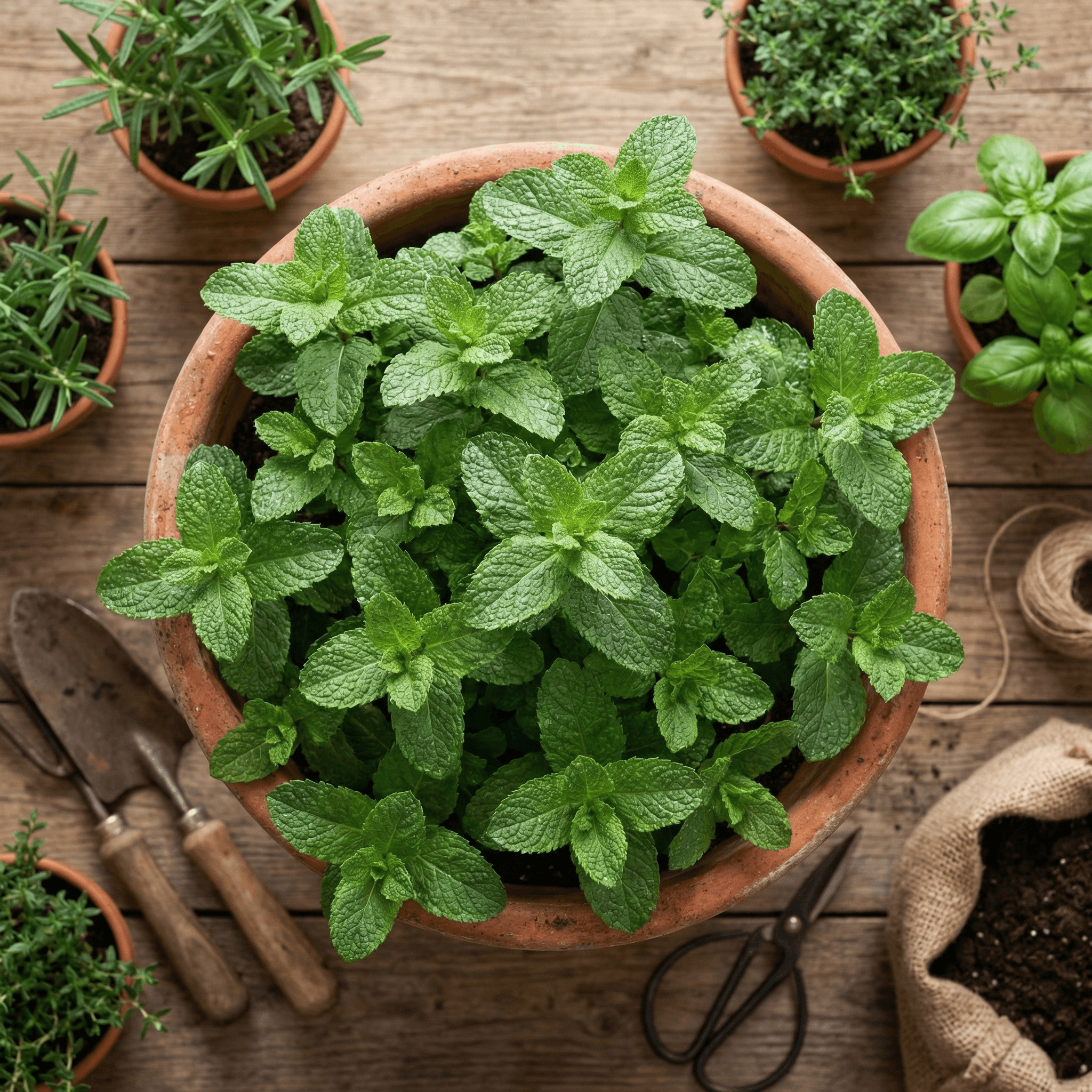
Mint is the most enthusiastic herb in the garden — and that is both its greatest strength and its greatest challenge. Given the chance, mint will spread aggressively, colonising borders, outcompeting more delicate plants, and appearing in places you never planted it.But contained properly, it is one of the most productive, versatile, and flavoursome herbs you can grow. Kew Gardens herb database has detailed guidance on this topic. In this comprehensive easy guide, we’ll cover everything you need to know.
Shop Related Products: Herb Planter
For more on essential summer gardening:, see our guide.
For more on essential mulching: single, see our guide.
Related: Garden Planning 101: Mapping Out Your Garden Space Natural Pest Deterrents: Plants That Repel Pests
Looking for quality gardening tools and supplies? Browse our recommended garden products — hand-picked by the GardenWizz team.
Grow Mint: Containment: Easy: Grow: Why Mint Needs Containing
Mint spreads through underground runners called rhizomes, which can extend 30cm or more from the parent plant and pop up anywhere in the surrounding soil. In an open border, this means a single mint plant can take over a square metre or more within a couple of growing seasons.
This vigour is precisely why mint is such a rewarding plant to grow — it is nearly impossible to kill, grows rapidly, and produces量大 fresh leaves from spring through to autumn. But it must be contained.
The Best Methods for Containing Mint
1. Container Growing (Recommended)
The most reliable method. Plant mint in a pot with drainage holes and stand the pot in the soil (with the rim slightly above soil level) rather than planting it directly into the border. This prevents the runners from escaping into the soil. The RHS soil testing guide provides detailed advice on understanding your soil type… Alternatively, grow entirely in containers on a patio or windowsill.
Use a pot at least 20cm in diameter and at least 20cm deep. Mint is shallow-rooted but spreads widely, so wider containers are better than narrow deep ones.
2. Root Barriers
For in-ground planting, install physical barriers around the planting hole.Purpose-made root barrier rolls are available, or you can use a bucket with the bottom removed, or even old paving slabs buried vertically in the soil around the plant. RHS soil testing guide has detailed guidance on this topic. The barrier should extend at least 30cm deep.
This allows you to grow mint in a border without it taking over, while giving the roots more room than a container would.
3. Dedicated Mint Patch
Some gardeners dedicate a whole raised bed to mint, accepting its dominance and simply harvesting what they need. This works well if you have the space and want to grow several varieties of mint without them crossing.
Growing Mint Successfully
Position: Mint tolerates partial shade but grows most vigorously in full sun. In shade, it becomes leggy but still produces usable growth.
Soil: Mint is not fussy about soil, but it performs best in moist, fertile conditions. Container-grown mint benefits from regular feeding with a balanced RHS watering guidelines has detailed guidance on this topic..” rel=”noopener”>liquid fertiliser.
Watering: Mint needs consistent moisture. In containers, water daily in hot weather with a watering can — mint is one of the few herbs that rarely suffers from overwatering.
Harvesting: The more you harvest, the more mint produces.Pick stems regularly from the top of the plant, cutting just above a pair of leaves. RHS plant propagation guide has detailed guidance on this topic. This encourages bushy, compact growth.
Mint Varieties Worth Growing
The world of mint is far richer than the single spearmint variety found in most supermarkets:
– Spearmint (Mentha spicata) — The classic garden mint, perfect for mint sauce, salads, and drinks
– Peppermint (Mentha x piperita) — Stronger, more menthol-heavy, excellent for teas and desserts
– Apple mint (Mentha suaveolens) — Fruity, with woolly leaves. Great for making mint jelly
– Chocolate mint (Mentha x piperita ‘Chocolate’) — Chocolate-mint aroma, excellent in desserts and drinks
– Eau de Cologne mint (Mentha x piperita citrata) — Orange-blossom fragrance, beautiful in drinks
– Moroccan mint (Mentha spicata var. crispa) — Widely considered the best for mint tea
Mint in the Kitchen
Fresh mint is one of the most versatile culinary herbs:
– Drinks: Classic mint julep, mojitos, Pimms, mint tea, mint water
– Salads: Potato salad, watermelon and feta salad, tabbouleh
– Sauces: Mint sauce (with roast lamb), raita (with curry), mint jelly
– Desserts: Mint chocolate-chip ice cream, chocolate truffles with mint, fresh fruit salads
– Preserving: Make mint vinegar (mint sprigs in white wine vinegar, left for 2-3 weeks)
Mint for Health and Wellbeing
Mint has been used medicinally for thousands of years. The menthol in mint has a cooling effect, aids digestion, and can help relieve symptoms of coughs and colds when taken as a tea or inhaled as steam.
A sprig of fresh mint in hot water makes a simple, soothing tea that aids digestion after a large meal. Peppermint tea is particularly effective.
Common Mint Problems
Powdery mildew: A white, dusty coating on leaves, worse in dry conditions with poor airflow. Improve airflow, remove affected leaves, and spray with a milk solution (1 part milk to 9 parts water).
Rust: Orange or brown pustules on leaves. Remove and destroy affected plants; do not compost them. According to Gardeners’ World, Remove is one of the most rewarding skills a gardener can develop… The Remove process is explained in detail by the RHS composting guide, which covers everything from starting your bin to troubleshooting common problems… Prevent by ensuring good air circulation and not crowding plants.
Mint flea beetle: Tiny metallic-green beetles that riddle leaves with holes. Pyrethrum spray or simply accepting some damage in late summer.
Legginess: Usually insufficient light. Move to a sunnier position and cut back leggy growth to encourage fresh, compact shoots.
FAQ: Growing Mint
Can I grow mint indoors?
Yes — a bright windowsill is perfect. Keep the pot well watered and harvest regularly. Indoor mint may need supplemental lighting in winter.
How do I stop mint from taking over my garden?
Contain it — always grow mint in a pot with drainage holes, and either sink the pot into the soil or stand it on a patio. Wear gardening gloves when handling plants to avoid getting mud under your fingernails.
Should I cut mint back for winter?
Yes — cut the plant to ground level after the first hard frost. Mint dies back naturally in autumn and will return from its roots in spring. Mulching with compost in autumn protects the roots.
Is mint perennial?
Yes. Mint is herbaceous, meaning it dies back to the ground each winter and regrows from its root system each spring. In a container, mint may need dividing every 2-3 years as the roots become congested.
Why does my mint have white spots on the leaves?
This is likely powdery mildew, a fungal disease encouraged by dry conditions and poor airflow. Improve growing conditions and remove affected leaves.
Can I grow different mint varieties together?
Be careful — different mint varieties readily cross-pollinate, which can result in new hybrids with unpredictable flavours. If you want to preserve distinct varieties, grow them in separate containers.
Final Thoughts
Mint is the herb that gives and gives. Given proper containment, a single plant will supply more than enough fresh leaves for a whole summer of cooking, drinks, and herbal teas. It asks for very little in return — just water, a bit of sun, and a pot that keeps it in check. Grow it well, and your kitchen, your cocktails, and your digestion will thank you.
For more on herb growing, read our guide to Culinary Herbs. And for more container growing ideas, see Container Gardening.
