


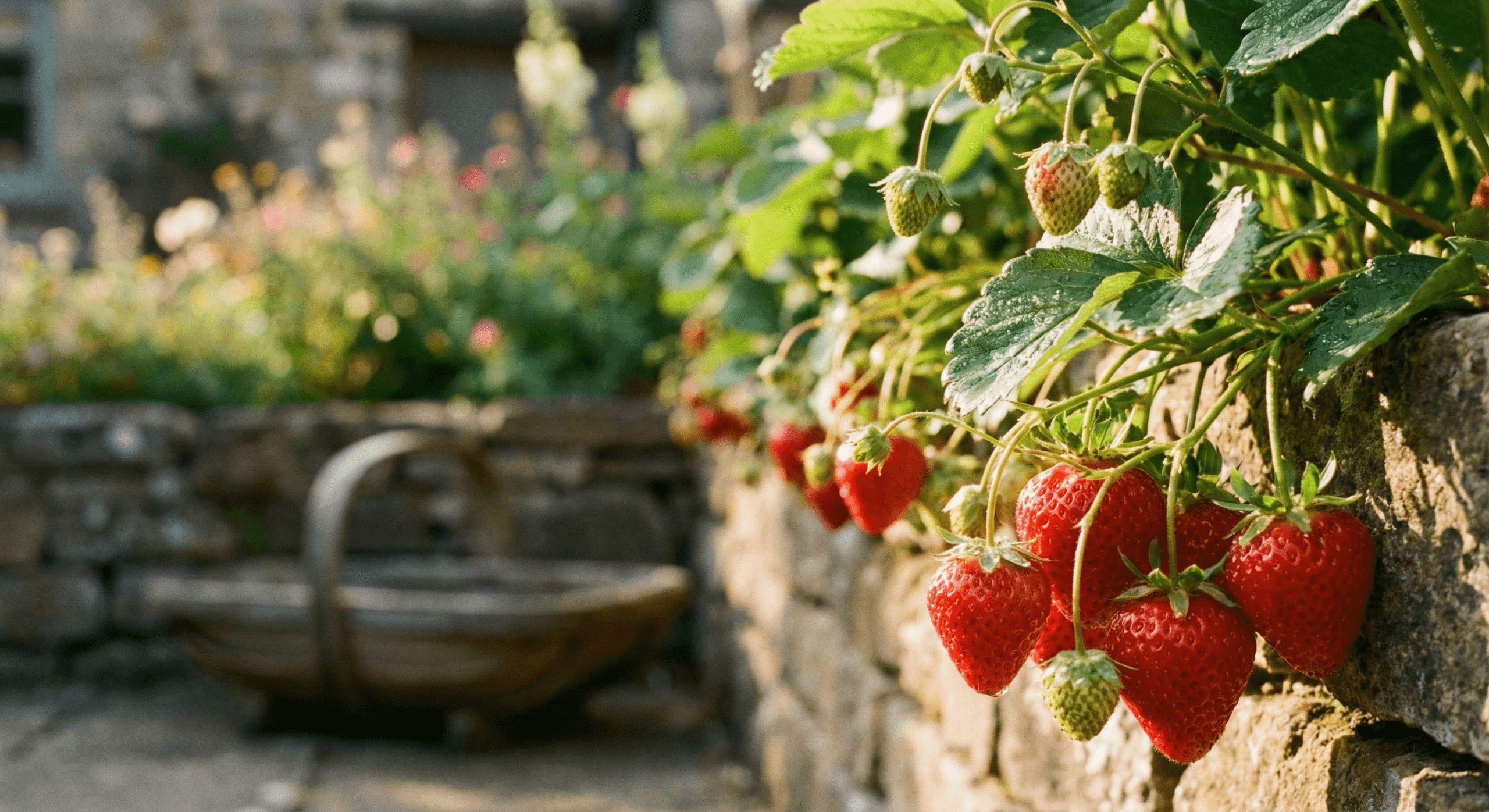
Few things beat the taste of a sun-warmed strawberry picked straight from your own garden. Growing strawberries in the UK is remarkably straightforward — they thrive in our climate, produce fruit quickly, and reward even the smallest space with a surprisingly generous harvest.
Grow Strawberries: Gardeners: What You’ll Need
Before you start, gather these essentials:
- Strawberry plants — Certified disease-free runners from a UK supplier
- Strawberry planter pot — Multi-plant strawberry planter, great for patios
- Quality compost — Rich, free-draining compost for berries
- Organic strawberry feed — Liquid feed for fruiting plants
- Gardening gloves — Protect your hands while gardening
Why Grow Your Own Strawberries?
Shop-bought strawberries rarely taste like the real thing. Home-grown berries, picked at peak ripeness, are immeasurably sweeter and more aromatic. A single plant can produce up to 500g of fruit per year, and a small patch of six plants will keep a household well-stocked through summer. They’re also brilliant for beginners — fast to establish, forgiving of occasional neglect, and compact enough to grow in containers on a patio or balcony.
When to Plant Strawberries
Strawberry plants are typically planted in early spring (March to April) or late summer (August to September). Spring planting allows plants to establish before the first fruiting season. Autumn planting is ideal for established runners — they’ll root over winter and fruit heavily the following summer.
How to Plant Strawberries
Strawberries need a sunny, sheltered spot with free-draining soil. Avoid low-lying areas where frost collects, and don’t plant where tomatoes, potatoes, or brassicas have recently grown — these can share soil-borne diseases.
Plant so the crown (where the leaves meet the roots) sits just at soil level. Plant too deep and the crown rots; too shallow and the roots dry out. Space plants about 30-45cm apart in rows, and water well after planting.
Caring for Your Plants
Keep plants moist while they’re establishing. Once fruits start to form, water at the base of the plant rather than from above to reduce the risk of grey mould. Feed with a high-potash liquid fertiliser (like tomato feed) every couple of weeks from flowering through to late summer.
Mulch around plants with straw in late spring — this keeps the soil moist, suppresses weeds, and keeps the fruits clean. As fruits develop, net the plants to protect them from birds.
Harvesting
Pick strawberries when they’re fully red and fragrant — they’re less perishable than you think and will ripen a little further after picking. Handle gently, and don’t wash them until just before eating.
Frequently Asked Questions
Can I grow strawberries in containers?
Absolutely. A strawberry planter pot or a generous hanging basket works well. Use quality compost and ensure good drainage.
How do I stop birds eating my strawberries?
Cover plants with horticultural netting as fruits start to ripen. Support the netting on stakes so it doesn’t lie directly on the plants.
Do strawberry plants come back every year?
Most strawberry varieties are productive for 3-4 years before they need replacing. After that, runners can be potted up to start new plants.
When should I replace strawberry plants?
After 3-4 years of heavy cropping. Take runners from your best-performing plants to propagate replacements for free.
Ready to get started? Pick up some certified strawberry plants and quality compost — your future harvests will thank you.
Frequently Asked Questions
When is the best time to gardening in the UK?
Most tasks can be done spring through autumn. Check specific plant requirements.
Do I need any special equipment?
Basic tools: spade, fork, watering can, and gloves.
Can beginners do this?
Yes! Start small and learn as you grow.
How long does it take?
Varies by task from 30 minutes to several hours.
Related Articles
For more help with your garden, check out these related guides:
- How to Grow Blackcurrants: A Simple Guide for UK Gardeners
- Beginner’s Guide to Sweet Peas
- Best Plants for Pollinators
- Herb Garden Guide
Continue Reading
- 5-Step Essential Garden Tools: What Every UK Gardener Needs
- Complete Guide to Week 12 Spring Garden Jobs: May 17-23
- Complete Guide to Week 11 Spring Garden Jobs: May 10-16
- Complete Guide to Week 10 Spring Garden Jobs: May 3-9
- Complete Guide to Week 9 Spring Garden Jobs: April 26 – May 2
Frequently Asked Questions
When is the best time to do this?
The best time depends on your climate zone and what you are growing, but generally early morning or late afternoon when temperatures are cooler works best for most garden tasks.
How often should I check on my garden?
Regular attention is key — check your garden every few days during the growing season. This helps you catch problems early before they become serious.
Can beginners do this?
Absolutely! Start with a few simple tasks and build up gradually. Most garden jobs are beginner-friendly with the right guidance.
What is the most important thing to remember?
Consistency matters more than perfection. Little and often beats occasional marathon sessions. Even 10-15 minutes of daily attention yields great results.
