


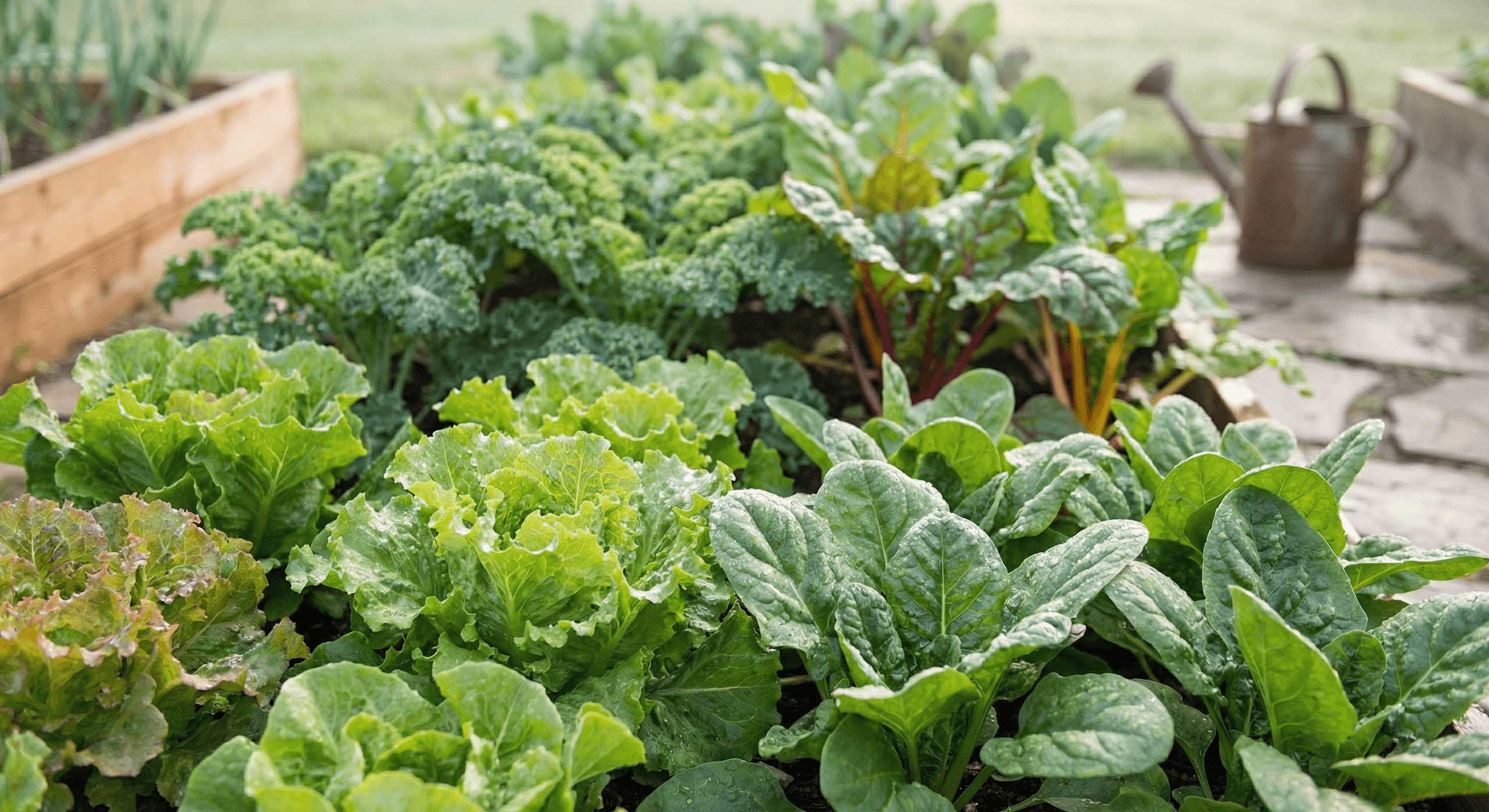
If there’s one category of vegetables that rewards beginner gardeners more than any other, it’s leafy greens. They’re fast, they’re productive, they’re nutritious, and they transform a boring salad into something spectacular. And here’s the best part: you can grow them for most of the year in most climates. Here’s your complete guide to growing lettuce, spinach, kale, chard, arugula, and more. In this comprehensive easy guide, we’ll cover everything you need to know.
Shop Related Products: Raised Bed
For more on essential mulching: single, see our guide.
For more on proven first-year vegetable, see our guide.
Related: Garden Planning 101: Mapping Out Your Garden Space Natural Pest Deterrents: Plants That Repel Pests
Looking for quality gardening tools and supplies? Browse our recommended garden products — hand-picked by the GardenWizz team.
Easy: Why Leafy Greens Are Perfect for Every Garden
Leafy greens are quick to mature (many in 30-60 days from seed), they’re space-efficient, and they thrive in the cooler parts of the growing season when summer heat makes growing other vegetables a challenge. Whether you have a large garden bed, a few raised beds, or just some containers on a patio, you can grow leafy greens.
The Cool-Season Advantage
Most leafy greens prefer cool weather — temperatures between 50-70 degrees F. They actually dislike heat: above 75 degrees F, lettuce bolts (goes to seed, getting bitter), and spinach bolts quickly in warmth.
The payoff? Spring and fall are prime time for leafy greens. In many climates, you can grow them almost year-round with just a little protection.
Season extension tools:
– Cold frames: RHS season extension guide has detailed guidance on this topic.Keep greens growing through November and December in most climates
– Row covers: Lightweight fabric adds 2-4 degrees F of frost protection
– Low tunnels: PVC hoops with row cover protect down to about 20 degrees F
Best Leafy Greens for Beginners
Lettuce (Lactuca sativa): The classic salad green. Quick (30-60 days), easy, comes in many types: romaine, butterhead, iceberg, and loose-leaf. Direct sow or transplant. Harvest outer leaves or cut whole head. In summer, provide afternoon shade or grow in containers that can be moved.
Spinach (Spinacia oleracea): Nutrient-dense and versatile. Prefers 50-65 degrees F.Direct sow as soon as soil can be worked in spring. RHS soil testing guide has detailed guidance on this topic. The RHS soil testing guide provides detailed advice on understanding your soil type… Plant again in fall. Bolts quickly in heat. ‘Bloomsdale’ and ‘Space’ are heat-tolerant varieties.
Arugula (Eruca vesicaria): Peppery, fast-growing (25-40 days), tolerates light frost. Direct sow spring through fall. Succession plant every 2-3 weeks for continuous harvest.
Kale (Brassica oleracea var. sabellica): The hardy champion. Handles both cold and heat better than almost any other green. ‘Lacinato’ (dinosaur kale) and ‘Winterbor’ are excellent varieties. Frost actually improves flavor. Plant 18 inches apart, harvest outer leaves.
Swiss Chard (Beta vulgaris): Not a true chard (it’s a beet relative) but one of the most reliable garden vegetables. Handles heat and cold. ‘Bright Lights’ has gorgeous rainbow stems. ‘Fordhook Giant’ is classic white-stemmed. Plant 12 inches apart, harvest outer leaves all season.
Soil and Growing Conditions
Soil: Leafy greens need fertile, moisture-retentive soil with good drainage.Work 2-3 inches of compost into beds before planting. RHS composting guide has detailed guidance on this topic. According to Gardeners’ World, Work is one of the most rewarding skills a gardener can develop… The Work process is explained in detail by the RHS composting guide, which covers everything from starting your bin to troubleshooting common problems… Most prefer a slightly acidic to neutral pH (6.0-7.0).
Fertilizing: Nitrogen is the key nutrient for leafy .Gardeners’ World has an excellent mulching guide that covers materials and techniques. RHS mulching advice has detailed guidance on this topic..growth. A compost top-dress or side-dress with fish emulsion or blood meal keeps greens growing vigorously. If leaves are pale, that’s usually a nitrogen deficiency.
Watering: Consistent moisture is critical. Greens stressed by drought get bitter and bolt faster. Aim for 1-2 inches of water per week. Mulch to retain moisture.
Succession Planting: The Secret to Constant Harvest
Don’t plant all your seeds at once! Plant a new batch every 2-3 weeks for a continuous supply. This is called succession planting and it prevents the all-at-once harvest that leaves you drowning in lettuce for two weeks and then waiting a month for more.
Harvesting for Maximum Yield
Cut-and-come-again method: Cut outer leaves 2 inches above the soil crown. The plant regrows and you harvest again in 2-3 weeks. This works for lettuce, spinach, arugula, kale, and chard.
Whole-head harvest: For head-forming lettuce and spinach, cut entire plant at base when firm and full-sized.
Microgreens: Harvest any green at the seed-leaf stage (first true leaves just emerging) for intense flavor and nutrition. Harvest with scissors 7-14 days after planting.
Growing Greens in Containers
Leafy greens are ideal container vegetables — shallow roots, quick harvest, and you can move them to follow the shade in summer. Use containers at least 6 inches deep. Window boxes work great for lettuce and arugula. Water more frequently than in-ground plants — containers dry out faster.
Common Problems and Solutions
Bolting: When greens suddenly send up a flower stalk and get bitter. Caused by heat stress. Solution: choose heat-tolerant varieties, provide afternoon shade, keep soil consistently moist.
Slugs: Holes chewed in leaves. Beer traps or iron phosphate baits. Improve drainage and remove hiding spots.
Aphids: Clusters of tiny insects on undersides of leaves. Spray off with water or apply insecticidal soap.
Leaf miners: White tunneling trails inside leaves. Remove affected leaves. Use Protect with horticultural fleece to exclude cabbage white butterfly and other pests to prevent adult flies from laying eggs.
Flea beetles: Tiny holes in leaves, especially on brassicas. Row covers are very effective.
Growing leafy greens is one of the fastest ways to feel the satisfaction of harvest. From seed to salad in under two months — what’s not to love? Get those seeds in the ground and start picking!
Frequently Asked Questions
When is the best time to do this in the UK?
The ideal timing depends on your location and the specific task. Spring (March-May) is generally the busiest gardening season in the UK, though autumn is perfect for planting and soil improvement.
Do I need expensive equipment to get started?
No. A few quality basic tools — a trowel, hand fork, watering can, and gloves — will see you through most beginner gardening tasks.
Is this suitable for small spaces or containers?
Most gardening tasks can be adapted for small spaces. Containers, grow bags, and raised beds all work well on patios, balconies, and even windowsills.
Can beginners do this successfully?
Absolutely. UK gardens are full of challenging conditions — clay soil, shade, slugs — but beginners achieve great results every year by starting small and learning as they grow.
