


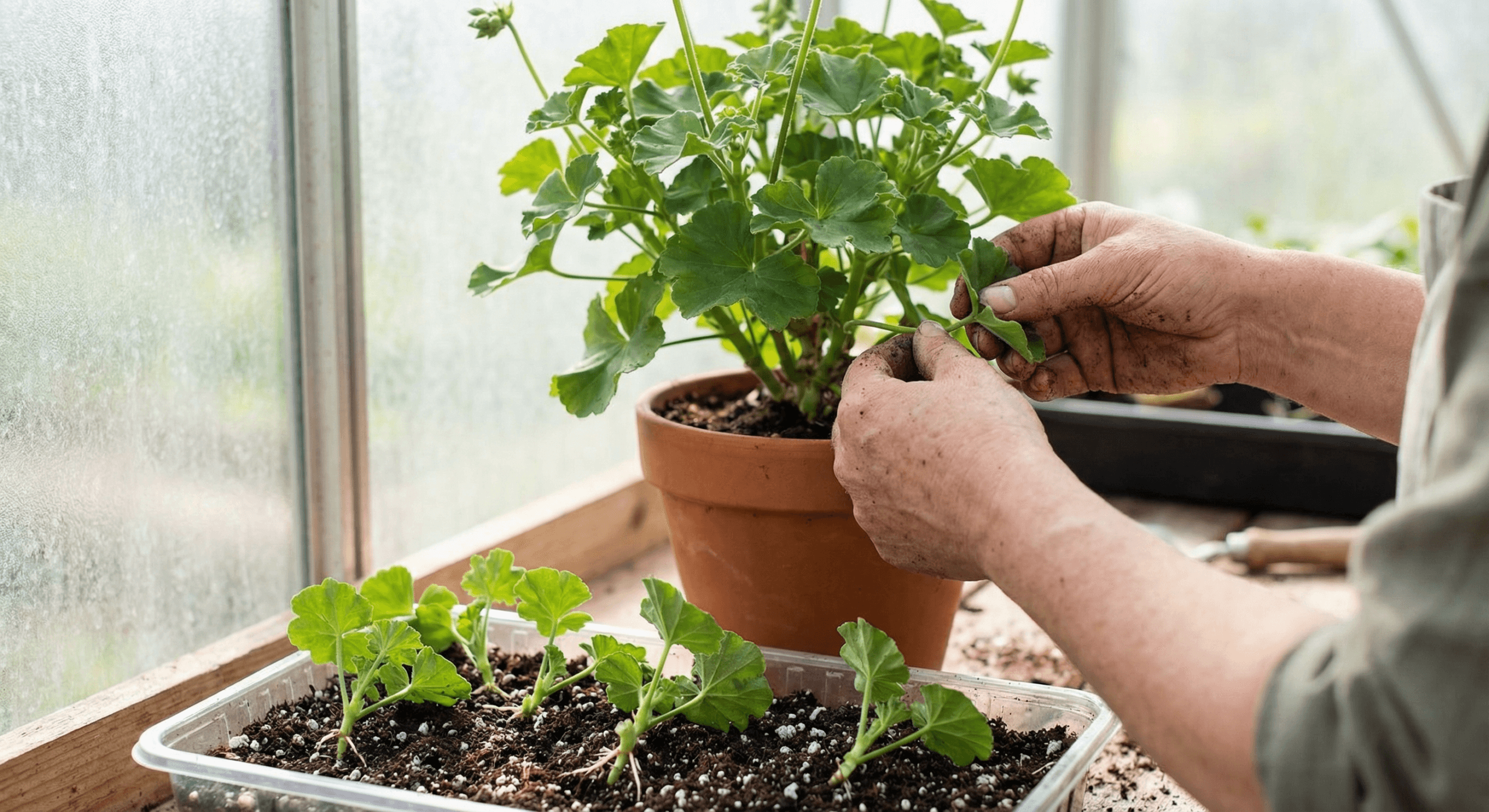
Plant propagation is the gift that keeps on giving. Once you have mastered a few simple techniques, you will never need to buy another fuchsia, pelargonium, or hydrangea again. You can fill your garden with plants at virtually no cost — all it takes is a bit of know-how and a willingness to experiment. In this comprehensive complete guide, we’ll cover everything you need to know.
Shop Related Products: Seed Tray • Propagator
For more on essential summer gardening:, see our guide.
For more on essential mulching: single, see our guide.
Related: Garden Planning 101: Mapping Out Your Garden Space Natural Pest Deterrents: Plants That Repel Pests
Looking for quality gardening tools and supplies? Browse our recommended garden products — hand-picked by the GardenWizz team.
Proven Plant Propagation:: Complete: What Is Plant Propagation?
Propagation simply means creating new plants from existing ones. This can happen sexually (from seed, producing a new combination of traits) or asexually (from cuttings, division, or other vegetative methods, producing genetically identical copies of the parent plant).
Most gardeners focus on vegetative propagation because it is faster, more reliable, and produces plants identical to the ones you already love.
Taking Stem Cuttings
The most useful technique for most gardeners.Stem cuttings can be taken from a wide range of plants — shrubs, perennials, houseplants, herbs, Kew Gardens herb database has detailed guidance on this topic.and more.
Softwood Cuttings (Spring/Early Summer)
Taken from fresh, new growth before it hardens:
1. Choose healthy, pest-free stems with 3-4 pairs of leaves
2. Cut below a leaf node (this is where roots will emerge) using sharp, clean secateurs
3. Remove the lowest pair of leaves and the growing tip
4. Dip in rooting hormone powder (optional but improves success rates)
5. Insert into a small pot of cutting compost (or a mix of perlite and multipurpose quality potting compost)
6. Water, cover with a clear plastic bag or place in a heated propagator
7. Keep moist and in bright light (not direct sun)
8. Roots typically form in 2-6 weeks
Great for: Fuchsias, pelargoniums, dahlias, penstemons, salvias, buddleias.
Hardwood Cuttings (Autumn/Winter)
Taken from mature, woody stems — slower but incredibly easy:
1. Take 20-30cm sections of this year’s wood
2. Cut straight across below a bud at the base, angled above a bud at the top
3. Insert two-thirds deep into well-drained soil in a sheltered spot
4. The RHS soil testing guide provides detailed advice on understanding your soil type… Leave until the following autumn — virtually no attention needed
Great for: Roses, currants, willows, dogwoods, forsythia.
Division
Division is one of the oldest propagation methods and works brilliantly for clump-forming perennials. It is also an opportunity to reinvigorate tired, overgrown plants.
When and How to Divide
Divide plants in autumn or early spring when they are dormant:
1. Dig up the entire clump
2.Use two forks back-to-back to lever the clump apart, RHS garden tools guide has detailed guidance on this topic.or cut it into sections with a sharp spade
3. Each section should have at least 3-5 healthy shoots and a portion of root
4. Replant the healthiest outer sections; compost the tired centre
Ideal plants for division: Hostas, daylilies, geraniums, primulas, phlox, asters, ornamental grasses. According to Gardeners’ World, Replant is one of the most rewarding skills a gardener can develop.The RHS watering guidelines cover efficient watering techniques for gardens of all sizes. RHS watering guidelines has detailed guidance on this topic.. ..The Replant process is explained in detail by the RHS composting guide, RHS composting guide has detailed guidance on this topic.which covers everything from starting your bin to troubleshooting common problems…
Layering
Layering is a simple technique where you encourage a stem to root while it is still attached to the parent plant. The parent provides water and nutrients while roots develop.
Simple Layering
1. Choose a low, flexible stem
2. Bend it down to the soil and make a small wound on the underside (scratch the bark with secateurs)
3. Peg the wounded section into the soil with a bent wire or stone
4. Leave for 6-12 months until roots have formed
5. Sever from the parent and transplant
Great for: Magnolias, rhododendrons, camellias, clematis, wisteria.
Root Cuttings
Some plants produce new plants from pieces of root. This works particularly well for plants with fleshy, vigorous root systems.
1. Dig up a portion of root in late autumn/early winter when the plant is dormant
2. Cut sections roughly 5-10cm long, noting which end is the top (closest to the plant crown)
3. Insert vertically into compost, with the top just below the surface
4. Place in a cold frame or sheltered spot — most root cuttings need winter cold to trigger growth
Great for: Japanese anemones, phlox, romneya, verbascum, sea kale.
Propagating Succulents from Leaves
As covered in our succulents guide, many succulents can be propagated from a single leaf:
1. Gently twist a healthy leaf from the stem — do not cut it
2. Leave the leaf to callous over for a day or two
3. Place on gritty compost surface — do not bury it
4. Keep in bright light and mist occasionally
5. Tiny roots and a baby plant form at the base within weeks
FAQ: Plant Propagation
What is the best time of year to take cuttings?
Softwood cuttings: spring and early summer. Hardwood cuttings: autumn and winter. Semi-ripe cuttings: late summer.
Do I need rooting hormone?
It is helpful but not essential. Rooting hormone improves success rates and speeds root development, particularly for trickier plants. It expires after about 2 years — check the expiry date.
Why do my cuttings keep failing?
The most common causes are: overwatering (causing rot), underwatering (cuttings dry out), too much direct sun (cuttings scorch before roots form), and using old or inappropriate compost. Cuttings do not need fertiliser — they use stored energy from the parent stem until roots form.
Which plants are easiest to propagate?
Pelargoniums, succulents, fuchsias, hydrangeas, forsythia, rosemary, and lavender are all near-guaranteed successes. If you are new to propagation, start with one of these.
How long does it take for cuttings to root?
Softwood cuttings: 2-6 weeks. Hardwood cuttings: several months. Rooting depends on plant type, temperature, and conditions.
Can I propagate from shop-bought vegetables?
Tomatoes, potatoes, sweet potatoes, and herbs like basil and mint can all be propagated from supermarket produce. They are often hybrids or treated with growth inhibitors, so results vary — but it is a fun experiment.
Final Thoughts
Plant propagation is one of the most satisfying skills a gardener can develop. There is something magical about coaxing a new life from a piece of stem or a handful of root. And once you have mastered it, you will never look at your garden the same way again — every plant becomes a source of future plants, and suddenly the question is not “how do I afford to fill my garden?” but “which plants should I propagate first?”
For more on multiplying your plants, read our guide to Seed Saving. And for creating new growing spaces, see Raised Beds.
Frequently Asked Questions
When is the best time to plan your garden?
Start planning in late winter (January-February) for the coming season.
Do I need any special equipment?
Graph paper, measuring tape, and our garden planning worksheet.
Can beginners do this?
Absolutely – even a simple sketch helps enormously.
How long does it take?
A basic plan takes an afternoon. Detailed designs may take longer.
Continue Reading
- 5-Step Essential Garden Tools: What Every UK Gardener Needs
- Complete Guide to Week 12 Spring Garden Jobs: May 17-23
- Complete Guide to Week 11 Spring Garden Jobs: May 10-16
- Complete Guide to Week 10 Spring Garden Jobs: May 3-9
- Complete Guide to Week 9 Spring Garden Jobs: April 26 – May 2
Frequently Asked Questions
When is the best time to do this?
The best time depends on your climate zone and what you are growing, but generally early morning or late afternoon when temperatures are cooler works best for most garden tasks.
How often should I check on my garden?
Regular attention is key — check your garden every few days during the growing season. This helps you catch problems early before they become serious.
Can beginners do this?
Absolutely! Start with a few simple tasks and build up gradually. Most garden jobs are beginner-friendly with the right guidance.
What is the most important thing to remember?
Consistency matters more than perfection. Little and often beats occasional marathon sessions. Even 10-15 minutes of daily attention yields great results.
