


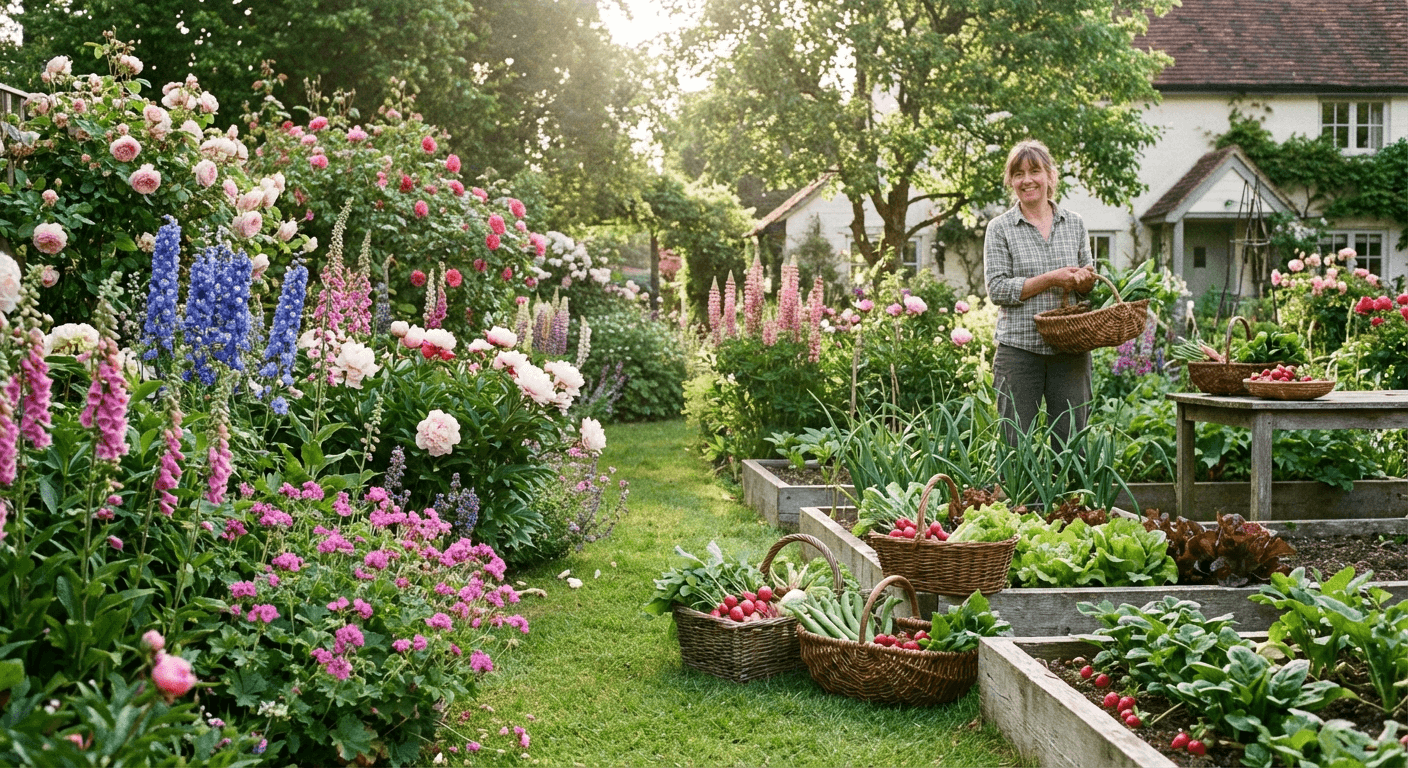
The last week of spring — and in many ways the most rewarding. The first crops are being harvested, the garden is lush and green, and summer is just around the corner. It is time to enjoy what you have built.
Week Spring Jobs:: Seeds to Sow This Week
- French and runner beans — final successional sowing for beans through summer and autumn
- Courgettes — very last sowing for late-cropping in September
- Salad leaves — keep the succession going. Every 2 weeks, forever.
- Herbs for drying — basil, thyme, rosemary — cut before they flower for best flavour
Jobs to Do This Week
- First harvests are here! — cut-and-come-again lettuce, radishes, spring onions, and early peas should be ready. Pick little and often.
- Harvest herbs — cut basil, mint, and parsley. Dry or freeze the excess so nothing goes to waste.
- Water consistently — this is the most critical week for watering. Containers, grow bags, and newly planted areas all need daily water in hot weather.
- Mulch everything — after watering, mulch around plants to lock moisture in the soil. Homemade compost or bark chips work well.
- Net soft fruit — birds love strawberries, currants, and gooseberries. Net before they start ripening.
- Keep tying in and training — sweet peas, beans, and cucumbers need weekly attention to grow well.
What to Watch For
Blight! Warm, humid weather in June and July is ideal for potato and tomato blight. Remove lower leaves on tomatoes to improve airflow, and keep water off leaves when watering.
What You Need This Week
- Harvest basket — for collecting vegetables
- Preserving jars — for excess produce
- Summer lawn feed — slow release lawn fertiliser
- Pond care kit — for garden pond maintenance
Frequently Asked Questions
When is the best time to do this?
The ideal time depends on your climate and the specific plants involved. Generally, early morning or late afternoon are best to avoid the heat of the day.
How often should I check on this?
Check your garden at least once a week during the growing season to catch any issues early and keep on top of tasks.
Can I do this in a container instead?
Many garden tasks can be adapted for containers. Use a good quality potting compost and ensure containers have adequate drainage holes.
What if I don’t have the right tools?
Start with the basics — a trowel, fork, gloves, and watering can will get you a long way. Add tools as you need them.
Related Articles
For more help with your garden, check out these related guides:
