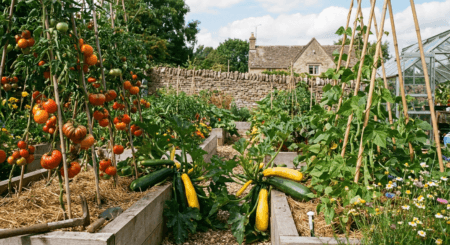
What if you could garden for an extra 4-8 weeks in spring and fall without any expensive equipment or complicated systems? With just a few simple season extension tools, you can do exactly that.Cold frames and row covers are the workhorses of the four-season garden, and they’re accessible to any gardener regardless of budget or space. RHS season extension guide has detailed guidance on this topic. Here’s how to put them to work for you. In this comprehensive ultimate guide, we’ll cover everything you need to know.
Shop Related Products: Watering Can
For more on essential mulching: single, see our guide.
For more on proven first-year vegetable, see our guide.
Related: Garden Planning 101: Mapping Out Your Garden Space Natural Pest Deterrents: Plants That Repel Pests
Looking for quality gardening tools and supplies? Browse our recommended garden products — hand-picked by the GardenWizz team.
Cold Frames &: Ultimate: Cold: Season Extension: Why It Matters
Most gardeners have a frost-free growing window of about 120-180 days, depending on their climate.That sounds like plenty — but many of the vegetables we love most (tomatoes, RHS vegetables growing guide has detailed guidance on this topic RHS leafy crops guide has detailed guidance on this topic..peppers, squash) need long, warm seasons to produce well. And salad greens, kale, and other cool-season crops would grow happily nearly year-round if we could just protect them from light frosts.
Season extension tools create microclimates — slightly warmer, more protected environments that let you push the calendar at both ends of the season.
Understanding Cold Frames
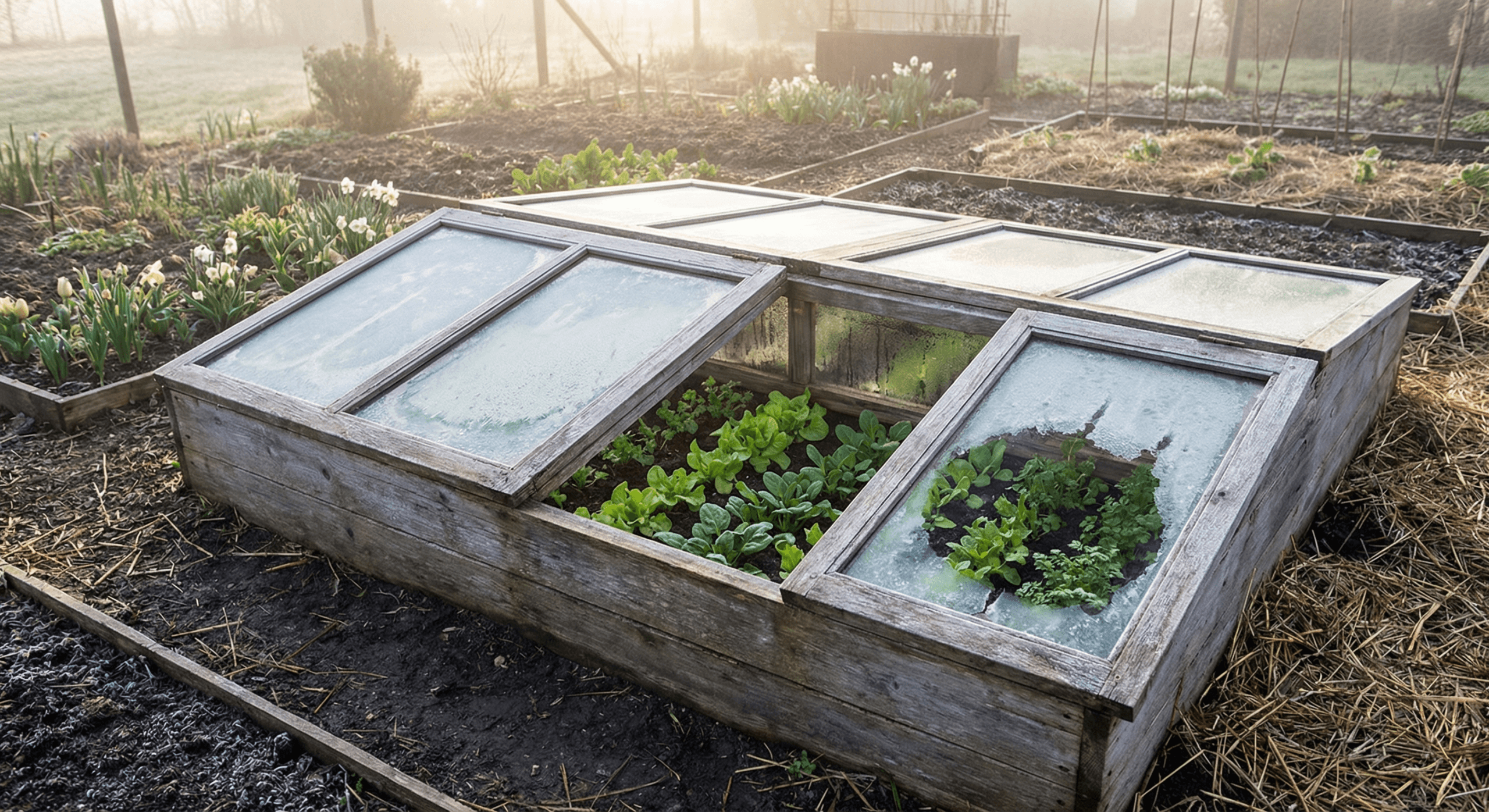
A garden cold frame extends the growing season by protecting plants from frost is essentially a bottomless box with a transparent lid that captures solar heat. Simple, right? And incredibly effective. A well-designed cold frame can be 10-20 degrees warmer inside than the outside air.
What cold frames do:
– Protect plants from frost (light frosts, at least)
– Extend the growing season by 4-8 weeks in fall and spring
– Harden off seedlings gradually in a garden cold frame before transplanting outdoors gradually
– Overwinter dormant plants
– Start early spring crops
Choosing or building a cold frame:
– Salvage materials: Old windows make excellent lids. Stack wooden boards or concrete blocks for sides. You don’t need to spend money.
– Materials: Sides can be wood, concrete block, straw bales, or even earth/soil. RHS soil testing guide has detailed guidance on this topic. The RHS soil testing guide provides detailed advice on understanding your soil type…
– Orientation: Place cold frames facing south for maximum sun exposure. A slight slope is ideal.
– Size: Make it no more than 3 feet deep (you need to reach into the center). Width should match your window or lid width.
– The lid: Old storm windows are ideal. Clear polyethylene sheeting stretched over a frame works too. The lid should fit snugly but be removable for ventilation.
Ventilation is critical: On sunny days, even in winter, cold frames can overheat. Prop the lid open a few inches on warm days (above 50 degrees F outside). The goal is to keep the inside cool but frost-free.
Understanding Row Covers
Use horticultural fleece for lightweight frost protection over crops are lightweight fabric (or plastic) sheets draped over plants or supported on hoops. They act like a blanket for your garden, trapping heat and blocking wind.
Types of row cover:
Lightweight floating row cover (spunb. The RHS watering guidelines cover efficient watering techniques for gardens of all sizes..onded polypropylene): The most versatile option. Allows light and water to pass through. Can be laid directly on plants or supported on hoops. Provides 2-4 degrees F of frost protection.
– Weight: 0.5-1.0 oz/sq yd
– Best for: Insect protection, light frost protection, shade in summer
Medium weight row cover: Provides 4-6 degrees F of frost protection. Can be used spring through fall.
– Weight: 1.5 oz/sq yd
– Best for: Extending shoulder seasons, frost protection for semi-hardy crops
Heavyweight row cover: Provides 6-8+ degrees F of frost protection. More durable but lets less light through.
– Weight: 2.0 oz/sq yd
– Best for: Winter protection, overwintering crops
Plastic row cover (clear polyethylene): Provides excellent frost protection and heat retention but doesn’t breathe — must be ventilated or removed when temperatures rise. Much like a mini-greenhouse.
Installing Row Covers: Low Tunnels
Low tunnels are the most effective way to use row covers in the vegetable garden:
Materials needed:
– 10-foot lengths of 1/2-inch PVC pipe (for hoops)
– Row cover fabric or plastic sheeting
– Rocks, boards, or earth pins to secure edges
Installation:
1. Insert PVC hoops into the soil every 3-4 feet along the row.
2. Push hoops at least 6 inches into the soil for stability.
3. Drape row cover over the hoops.
4. Bury edges in soil, or weight them down heavily with boards or rocks.
5. Leave enough slack so the cover doesn’t stretch tight when it gets cold (it needs room to sag).
For double protection in very cold weather, layer a heavyweight row cover over the low tunnel frame.
What to Grow Under Covers
Cold-hardy crops for spring and fall:
– Lettuce, spinach, arugula
– Kale, collards, Swiss chard
– Radishes, carrots, beets
– Broccoli, cauliflower, Brussels sprouts (established plants)
– Green onions, leeks
Crops to start early under covers:
– Peas (2-4 weeks before last frost)
– Spinach (as soon as soil can be worked)
– Lettuce and arugula (succession plant early)
– Radishes (very early)
Cold Frames: What to Grow
Cold frames excel at protecting low-growing crops through winter:
Winter harvest crops:
– Lettuce (cold-hardy varieties like ‘Winter Density’)
– Spinach (plant in fall for winter harvest)
– Swiss chard (cold-hardy)
– Mache/corn salad (incredibly cold-hardy, harvested all winter)
– Claytonia (another super-cold-hardy green)
– Carrots (harvest as needed through winter)
– Parsley (survives light freezes)
Early spring starts:
– Broccoli, cauliflower, cabbage transplants (4-6 weeks before last frost)
– Lettuce seedlings
– Onion and leek transplants
Cold Frames Through the Seasons
Late winter: Start early seeds (onions, leeks) in the cold frame on sunny days. Bring inside if temperatures drop below 25 degrees F.
Early spring: Harden off seedlings gradually in a garden cold frame before transplanting outdoors gradually by placing them outside in the cold frame during the day and closing at night.
Fall: As temperatures drop, close cold frame lids earlier in the day. Harvest fall crops through December and beyond.
Deep winter: Ventilate occasionally on mild, sunny days (above 35 degrees F). Don’t let greens overheat — a closed cold frame on a 40-degree winter day can cook plants.
Key Principles for Success
Ventilate proactively: Even on cold days, if the sun is shining, temperatures inside a cold frame or low tunnel can spike. Open covers when temperatures are above 40 degrees F.
Water carefully: Covers reduce rainfall access to plan. The RHS pest and disease guide identifies common garden pests and how to deal with them… Garden Organic provides comprehensive advice on managing garden pests organically..ts. Check soil moisture regularly. Plants under covers can dry out faster in wind and sun, or stay too wet if covered during rain.
Watch for pests: Use horticultural fleece for lightweight frost protection over crops exclude flying insects — great for pest prevention. But slugs and mice can still get in. Check under covers periodically.
Remove covers when no longer needed: Once spring weather stabilizes or summer heat arrives, remove covers. Leaving covers on through hot weather will cook plants.
Start This Season
You don’t need to build anything elaborate to get started. Place a few hay bales in a U-shape, lay an old window on top, and you’ve got a cold frame. Buy a package of spunbonded row cover and some PVC pipe, and you can protect a whole bed.
Start with one cold frame or one low tunnel, grow something you love, and see the difference a few degrees of protection makes. Once you taste a fresh salad from the garden in November — or eat the first tomato of the season two weeks before your neighbors — you’ll be hooked. Season extension is the gift that keeps on giving.
Frequently Asked Questions
When is the best time to do this in the UK?
The ideal timing depends on your location and the specific task. Spring (March-May) is generally the busiest gardening season in the UK, though autumn is perfect for planting and soil improvement.
Do I need expensive equipment to get started?
No. A few quality basic tools — a trowel, hand fork, watering can, and gloves — will see you through most beginner gardening tasks.
Is this suitable for small spaces or containers?
Most gardening tasks can be adapted for small spaces. Containers, grow bags, and raised beds all work well on patios, balconies, and even windowsills.
Can beginners do this successfully?
Absolutely. UK gardens are full of challenging conditions — clay soil, shade, slugs — but beginners achieve great results every year by starting small and learning as they grow.
Continue Reading
- 5-Step Essential Garden Tools: What Every UK Gardener Needs
- Complete Guide to Week 12 Spring Garden Jobs: May 17-23
- Complete Guide to Week 11 Spring Garden Jobs: May 10-16
- Complete Guide to Week 10 Spring Garden Jobs: May 3-9
- Complete Guide to Week 9 Spring Garden Jobs: April 26 – May 2
Frequently Asked Questions
When is the best time to do this?
The best time depends on your climate zone and what you are growing, but generally early morning or late afternoon when temperatures are cooler works best for most garden tasks.
How often should I check on my garden?
Regular attention is key — check your garden every few days during the growing season. This helps you catch problems early before they become serious.
Can beginners do this?
Absolutely! Start with a few simple tasks and build up gradually. Most garden jobs are beginner-friendly with the right guidance.
What is the most important thing to remember?
Consistency matters more than perfection. Little and often beats occasional marathon sessions. Even 10-15 minutes of daily attention yields great results.