




Good compost helps soil retain moisture — reducing watering needs.
Drip Irrigation Systems:: What You Need
- Drip irrigation kit — complete kit with timer
- Garden hose — expandable hose with spray gun
- Timer tap connector — automatic watering timer
Hand watering is satisfying for small gardens, but once your plot expands beyond a few dozen square metres, drip irrigation becomes essential. A well-designed system delivers water exactly where plants need it — at the roots — while you get on with other jobs. In the UK’s increasingly dry summers, it’s also the most water-efficient way to garden.
What Is Drip Irrigation?
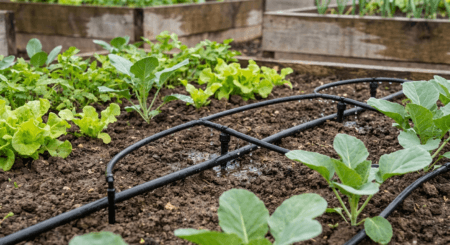
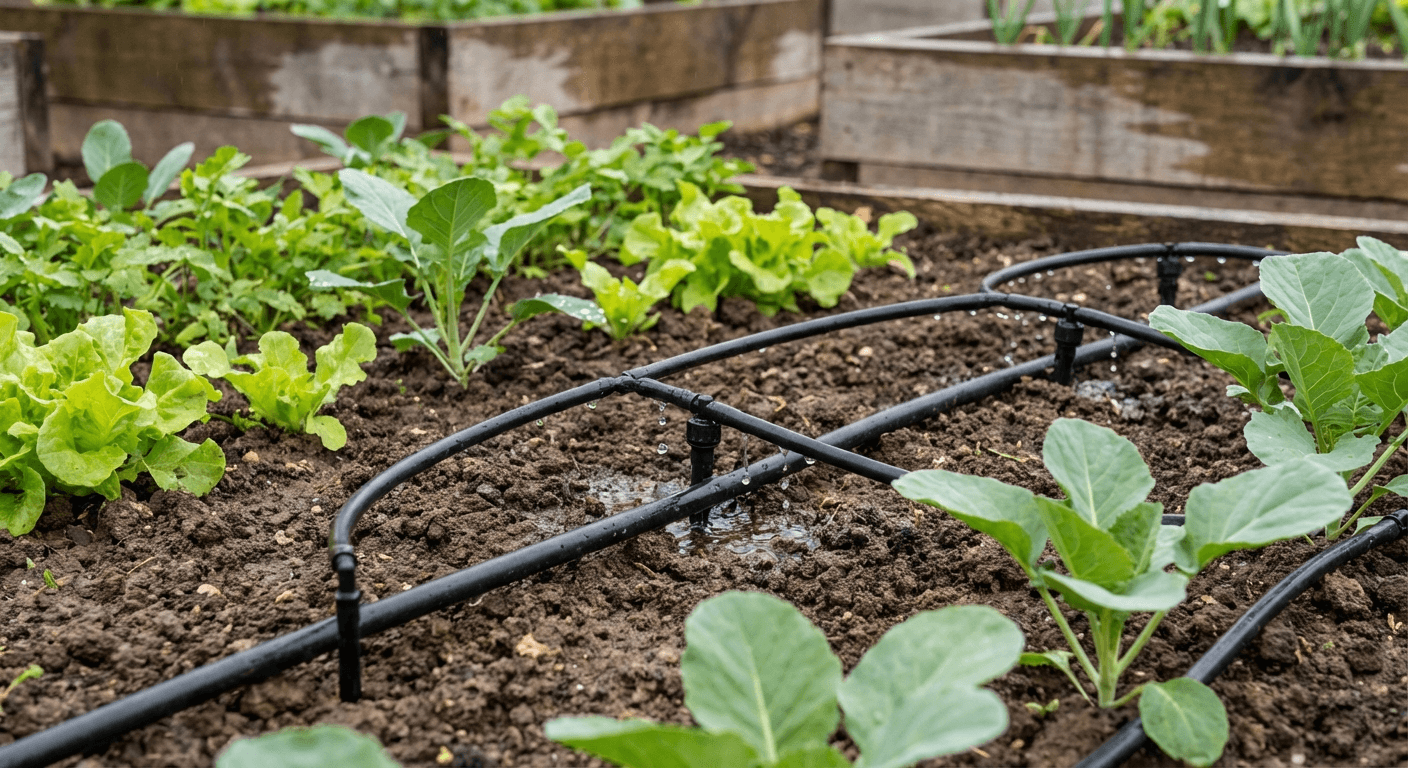
Drip irrigation (also called trickle irrigation) delivers water directly to the soil around each plant through a network of pipes and emitters. Water seeps slowly into the ground, providing consistent moisture without waste. No runoff, no evaporation from leaves, no wet foliage to encourage disease.
Benefits for UK Gardens
During dry summers — which are becoming more common — a drip system can reduce water use by 30-50% compared to hand watering or sprinklers. It also saves time: connect a timer and your garden waters itself even when you’re away on holiday. Plants growing in greenhouses benefit enormously from automated drip systems.
Choosing a System
For small gardens and containers, a simple drip kit with a timer attached to a tap is perfect. These kits include everything you need: tubing, stakes, and adjustable drippers. For larger gardens, you can add additional sections, pressure compensating drippers, and soil moisture sensors.
Installation Tips
Run the main tubing along the top of each bed, then cut and insert dripper stakes at each plant. Adjust flow rates at each dripper — thirsty plants like tomatoes get higher flow, less demanding plants get less. Bury the tubing just under the soil surface to prevent algae growth and UV degradation.
Frequently Asked Questions
Can I connect a drip system to a water butt?
Yes, but you need a pump to maintain pressure. Some kits are specifically designed for gravity-fed systems from water butts.
Do drip systems get clogged?
They can if your water is hard or contains sediment. Use a filter at the inlet and flush the system monthly. Rainwater is ideal — no limescale and free!
How much does a drip system cost?
A basic kit starts around £20-30. A full garden system with timer and multiple zones costs £80-150 but pays for itself in water savings within a season.
Can I use liquid feed through a drip system?
Yes — diluted liquid fertiliser can be run through most drip systems. Use a Venturi injector or dilute heavily to prevent dripper blockages.
Once you’ve installed drip irrigation, you’ll wonder how you ever gardened without it. More time to enjoy your garden, and healthier plants too.
Continue Reading
- 5-Step Essential Garden Tools: What Every UK Gardener Needs
- Complete Guide to Week 12 Spring Garden Jobs: May 17-23
- Complete Guide to Week 11 Spring Garden Jobs: May 10-16
- Complete Guide to Week 10 Spring Garden Jobs: May 3-9
- Complete Guide to Week 9 Spring Garden Jobs: April 26 – May 2
Frequently Asked Questions
When is the best time to do this?
The best time depends on your climate zone and what you are growing, but generally early morning or late afternoon when temperatures are cooler works best for most garden tasks.
How often should I check on my garden?
Regular attention is key — check your garden every few days during the growing season. This helps you catch problems early before they become serious.
Can beginners do this?
Absolutely! Start with a few simple tasks and build up gradually. Most garden jobs are beginner-friendly with the right guidance.
What is the most important thing to remember?
Consistency matters more than perfection. Little and often beats occasional marathon sessions. Even 10-15 minutes of daily attention yields great results.