




Let’s be honest: a traditional lawn is high maintenance.It needs regular mowing, feeding, watering, RHS watering guidelines has detailed guidance on this topic.and still somehow develops bald patches and moss despite your best efforts.The RHS watering guidelines cover efficient watering techniques for gardens of all sizes… But here’s the good news — there are dozens of beautiful, low-maintenance ground cover plants that can replace grass entirely, or at least reduce the amount of lawn you need to maintain. RHS ground cover guide has detailed guidance on this topic. In this comprehensive ultimate guide, we’ll cover everything you need to know.
Shop Related Products: Watering Can
For more on essential summer gardening:, see our guide.
For more on essential mulching: single, see our guide.
Related: Garden Planning 101: Mapping Out Your Garden Space Natural Pest Deterrents: Plants That Repel Pests
Ground cover plants combined with garden mulch sheets create an impenetrable weed barrier do exactly what their name suggests: they cover the ground, forming a dense, attractive mat that suppresses weeds, prevents soil erosion, and looks good all year round. Some flower, some are evergreen, and some are grown purely for their textural foliage.
Looking for quality gardening tools and supplies? Browse our recommended garden products — hand-picked by the GardenWizz team.
Ground Covers: Alternatives: Ultimate: Why Replace Grass with Ground Covers?
Before we get into the plants, let’s talk about why you’d want to make the switch:
– Less mowing — Some ground covers need trimming just once or twice a year, compared to weekly mowing during the growing season
– No fertilisers or chemicals needed — Once established, most ground cover plants are self-sufficient
– Better for the environment — No petrol mowers, no synthetic fertilisers, and many ground cover species support pollinators
– More interesting visually — A tapestry of different foliage textures and flowers is far more engaging than a flat green lawn
The Best Grass Alternatives
Flowering Ground Covers
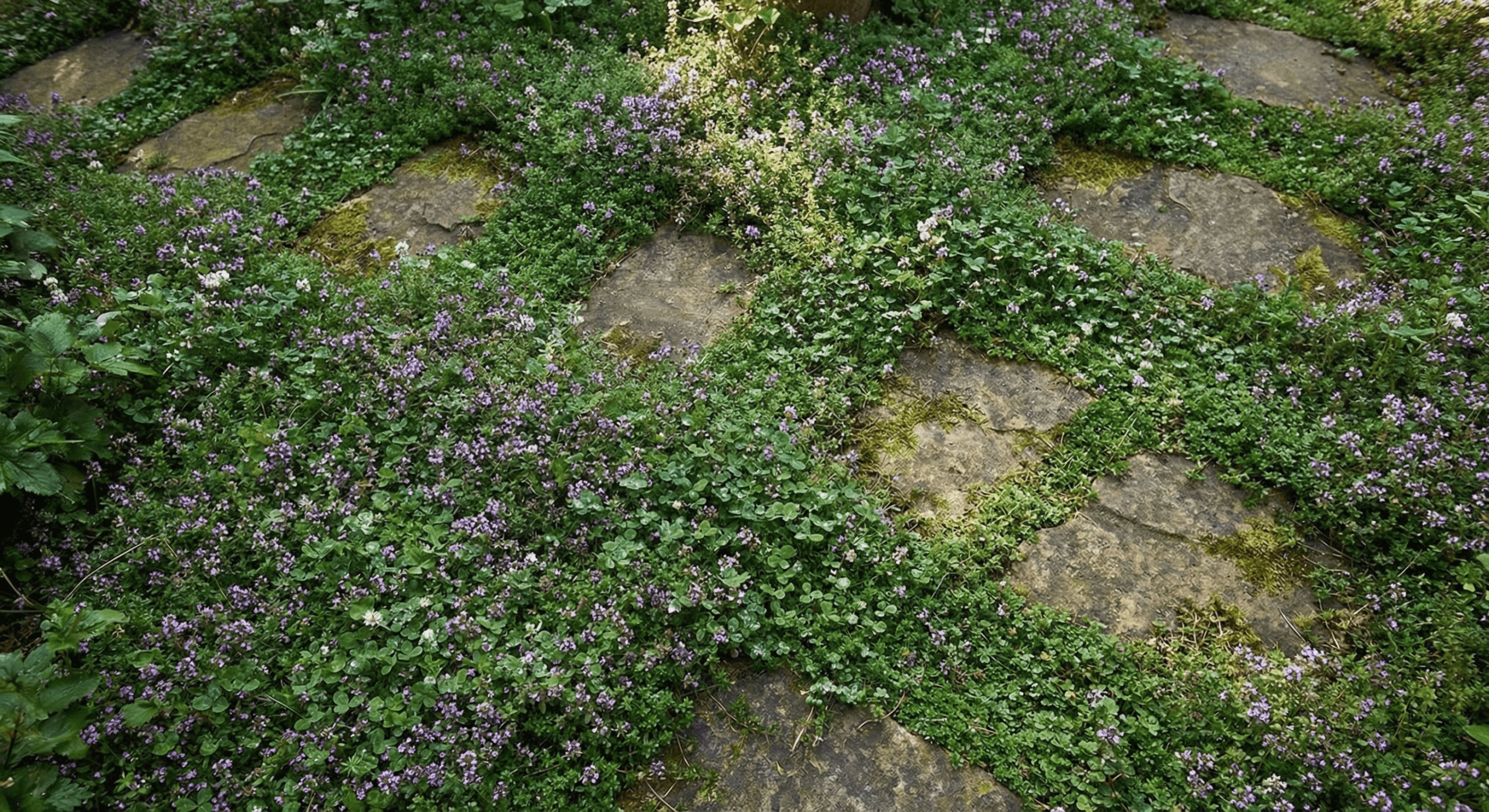
Thyme (Thymus serpyllum) is one of the most charming grass alternatives you can choose. Creeping thyme forms a dense, fragrant mat that smothers weeds and produces masses of pink-purple flowers in summer. It’s evergreen, drought-tolerant once established, and releases beautiful scent when walked on. Perfect for between paving stones or as a lawn substitute in sunny spots.
Clover (Trifolium repens) has experienced a well-deserved renaissance.White clover stays green even in drought, fixes nitrogen in the soil (reducing the need for fertiliser), RHS soil testing guide has detailed guidance on this topic Buglife pollinator resources has detailed guidance on this topic..and produces pretty white flowers that bees adore. The RHS soil testing guide provides detailed advice on understanding your soil type… It copes with light foot traffic and spreads quickly. The only downside is it can look a little scruffy in winter.
Bugleweed (Ajuga reptans) is a superb woodland-edge ground cover with dark green, purple, or variegated foliage and spikes of blue flowers in spring. It’s evergreen, spreads quickly by runners, and thrives in partial shade where grass struggles. Ideal under trees or on north-facing banks.
Vinca (Periwinkle) and lesser periwinkle (Vinca minor) are classic evergreen ground covers with glossy leaves and blue, white, or purple flowers from spring through autumn. They spread vigorously and are excellent for suppressing weeds on banks or beneath shrubs. Handle with care — they’re vigorous and can become invasive if not contained.
Evergreen Ground Covers
Liriope (lilyturf) forms clumps of strap-shaped, grass-like leaves that stay green year-round. Spikes of purple or white flowers appear in late summer. It’s brilliant for dry shade and works well as a ground cover under trees or in woodland gardens.
Bergenia (elephant bush) has large, leathery evergreen leaves that often take on reddish or bronzy tints in winter. Pink, white, or red flowers appear on sturdy stems in spring. It’s tough as anything and thrives in challenging conditions including dry shade.
Epimedium (barrenwort) is one of the most elegant evergreen ground covers for shade. Its heart-shaped leaves emerge with beautiful bronze tints in spring, and delicate spidery flowers in yellow, pink, or white appear in early spring. It’s slow to establish but forms a beautiful, weed-smothering carpet over time.
Flowering Lawn Alternatives
Mazus (Mazus reptans) is a relative newcomer to the grass-alternative scene and it’s already winning fans. This low-growing perennial forms a tight, flat mat of green leaves and produces masses of blue, pink, or white flowers in late spring. It tolerates light foot traffic and stays green through winter in milder areas.
Sedum (Stonecrop) species like Sedum acre and Sedum kamtschaticum form dense, low-growing mats of succulent foliage that are incredibly drought-tolerant. They’re perfect for sunny, well-drained areas where nothing else will grow, and their star-shaped flowers attract pollinators.
How to Establish Ground Cover Plants
Ground cover plants combined with garden mulch sheets create an impenetrable weed barrier are typically sold as plug plants or small pots. For best results:
1. Clear the area thoroughly — Remove all existing grass and perennial weeds
2. Improve the soil — Dig in organic matter, especially on poor or thin soils
3. Plant closely — Space plants roughly 15-30cm apart depending on their vigour. For more on mulching, the RHS mulching advice covers when and how to apply mulch for best results.. Gardeners’ World has an excellent mulchingguide that covers materials and techniques.. Closer spacing means faster coverage
4. Mulch between plants — A thick mulch suppresses weeds while plants establish
5. Keep watered — Water regularly until plants are established and covering the area
Managing Foot Traffic
Not all ground covers tolerate foot traffic equally. If you need to walk on your grass alternative regularly, your best options are creeping thyme, clover, and mazus. For areas with occasional light foot traffic, ajuga and some sedums will cope. For areas you barely need to access, any ground cover from the list above will thrive.
FAQ: Ground Covers as Grass Alternatives
Can ground covers replace a lawn completely?
In low-traffic areas, yes absolutely. For high-traffic lawns (where children play daily, for example), a mix of stepping stones with ground cover between them is a practical compromise.
Do ground covers need mowing?
Most don’t. Flowering ground covers like thyme may benefit from a light trim after flowering to keep them dense and tidy, but this is nothing like weekly mowing.
Are ground covers expensive to establish?
The initial cost is higher than scattering grass seed, but the long-term savings in time, water, and fertilisers make ground covers economical over just a few years. Buy plug plants for economy and plant tightly for fast coverage.
What grows in full shade where grass won’t?
Ajuga, vinca, liriope, bergenia, and epimedium are all excellent shade-tolerant ground covers that will thrive where grass gives up.
Can I mix ground cover species?
Absolutely — mixing creates a more naturalistic, interesting tapestry and can provide year-round interest as different species take the spotlight through the seasons.
Final Thoughts
Replacing your lawn with ground covers is one of the most satisfying garden changes you can make. Yes, it requires some upfront effort, but once established, you’ll wonder why you spent years chained to a mower. Whether you choose fragrant creeping thyme, elegant epimedium, or cheerful clover, your garden will be healthier, more biodiverse, and infinitely more interesting.
For more garden design ideas, read our guide to Garden Design & Planning: Create Your Dream Garden. And if you’re interested in reducing your garden workload, check out Mulching: The Single Best Thing You Can Do for Your Garden.
Continue Reading
- 5-Step Essential Garden Tools: What Every UK Gardener Needs
- Complete Guide to Week 12 Spring Garden Jobs: May 17-23
- Complete Guide to Week 11 Spring Garden Jobs: May 10-16
- Complete Guide to Week 10 Spring Garden Jobs: May 3-9
- Complete Guide to Week 9 Spring Garden Jobs: April 26 – May 2
Frequently Asked Questions
When is the best time to do this?
The best time depends on your climate zone and what you are growing, but generally early morning or late afternoon when temperatures are cooler works best for most garden tasks.
How often should I check on my garden?
Regular attention is key — check your garden every few days during the growing season. This helps you catch problems early before they become serious.
Can beginners do this?
Absolutely! Start with a few simple tasks and build up gradually. Most garden jobs are beginner-friendly with the right guidance.
What is the most important thing to remember?
Consistency matters more than perfection. Little and often beats occasional marathon sessions. Even 10-15 minutes of daily attention yields great results.


