Summer is peak season in the garden — the garden is fully awake, plants are growing vigorously, and the harvest is starting to roll in.But summer gardening also brings its own set of challenges: heat stress, water demands, pest pressure, RHS pest and disease guide has detailed guidance on this topic.and the need to keep up with rapid growth.The RHS watering guidelines cover efficient watering techniques for gardens of all sizes… Here’s how to make the most of the summer garden while keeping everything thriving. RHS watering guidelines has detailed guidance on this topic. In this comprehensive essential guide, we’ll cover everything you need to know.
Shop Related Products: Plant Support • Tomato Cage
For more on essential mulching: single, see our guide.
For more on proven first-year vegetable, see our guide.
Related: Garden Planning 101: Mapping Out Your Garden Space Natural Pest Deterrents: Plants That Repel Pests
Looking for quality gardening tools and supplies? Browse our recommended garden products — hand-picked by the GardenWizz team.
Essential: Watering: Summer’s 1 Priority
When temperatures climb and rain is scarce, watering becomes the most critical garden task:
How much: Most vegetables need 1-2 inches of water per week from irrigation or rain combined. In extreme heat, container plants may need water daily.
How to water: Water deeply and thoroughly at soil level. The RHS soil testing guide provides detailed advice on understanding your soil type… Morning watering (6-10 AM) is ideal — water has time to soak in before evaporating, and foliage dries quickly. Avoid evening watering when possible, as wet foliage overnight encourages fungal diseases.
The finger test: Stick your finger 2-3 inches into the soil. If it’s dry at that depth, water. If moist, wait. This simple test prevents both over- and under-watering.
Drip irrigation and soaker hoses: These are summer garden lifelines.They deliver water directly to the soil, RHS soil testing guide has detailed guidance on this topic RHS mulching advice has detailed guidance on this topic..minimize evaporation, and keep foliage dry. For more on mulching, the RHS mulching advice covers when and how to apply mulch for best results.. Gardeners’ World hasan excellent mulching guide that covers materials and techniques.. Set them on timers for consistency.
Mulching: Your Summer Survival Tool — apply garden mulch sheets around plants to conserve moisture
If you haven’t mulched yet, do it now! 2-4 inches of organic mulch around plants:
– Keeps soil cool (critical in heat)
– Retains moisture (reduces watering needs by up to 50%)
– Suppresses weeds
– Improves soil as it decomposes
Best mulches for summer: straw (not hay, which has seeds), shredded leaves, wood chips (around permanent plants, not vegetable beds where you’ll be replanting), or compost.
Keeping Up with the Harvest
Summer’s most rewarding task is harvest — and you need to keep up with it:
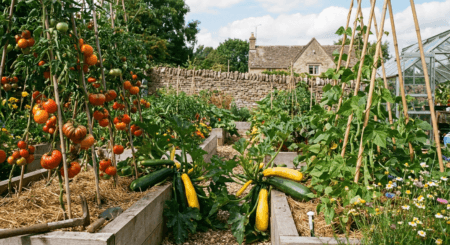
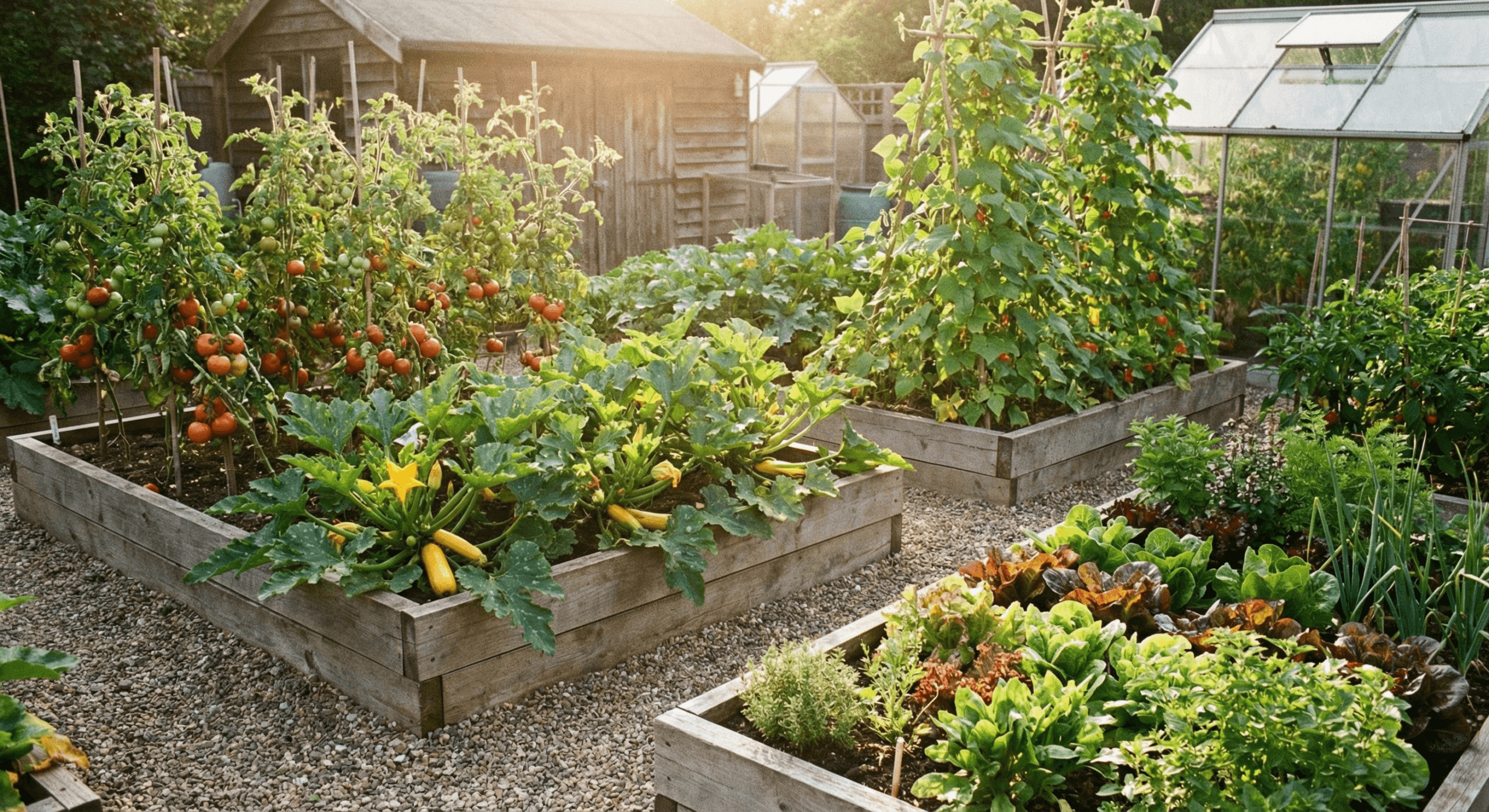
– Check vegetables daily at peak season. Zucchini hide under leaves, beans can go from perfect to seedy overnight, and tomatoes crack if left too long.
– Harvest in the morning when vegetables are most crisp and hydrated.
– Pick regularly to encourage continued production. Leaving overripe fruits on the plant signals it to stop producing.
– Succession plant: Follow spent spring crops (lettuce, radishes, peas) with summer crops (beans, squash, cucumbers).
Succession Planting for Continuous Harvest
Many vegetables have a limited production window, especially in hot climates. Keep planting all summer for continuous harvest:
– Beans: Succession plant every 3 weeks through mid-summer.
– Cucumbers and squash: Plant every 4-6 weeks.
– Corn: Stagger plantings every 2 weeks for extended harvest (or skip it if you’re not a big corn gardener — it takes a lot of space for a short harvest window).
– Fall brassicas: Start broccoli, cauliflower, and Brussels sprout seeds indoors in June-July for fall harvest.
Dealing with Summer Heat Stress
When temperatures consistently exceed 90 degrees F, even warm-season crops suffer:
Shade cloth: Drape 30-50% shade cloth over heat-sensitive crops (lettuce, spinach, peas) during the hottest part of summer. It can extend their season by weeks.
Containers to the rescue: Move containers to shadier spots during extreme heat.
Wilting vs. heat stress: Many plants (squash, cucumber, tomatoes) wilt in afternoon heat even when soil is moist — this is a natural heat response. Check them the next morning: if they’ve recovered, they were fine. If they haven’t, they need water.
Summer Pest and Disease Vigilance
Pest pressure peaks in summer. Walk your garden every 2-3 days:
– Aphids: Check new growth and undersides of leaves. Spray off with water.
– Tomato hornworms: Check tomato plants daily — they’re masters of camouflage. Hand-pick.
– Squash vine borers: These burrow into squash stems, causing sudden wilt. Check for sawdust-like frass at base of stems. Cover stems with soil or aluminum foil at the base to prevent egg-laying.
– Blossom end rot: Black, sunken spots on the bottom of tomatoes, peppers, and squash. Caused by calcium deficiency made worse by irregular watering. Maintain consistent moisture.
Tomatoes: Summer’s Star
No summer garden is complete without tomatoes. Peak tomato care in summer:
– Stake or cage early: Once plants are tall and fruiting, it’s harder to install support.
– Prune suckers (side shoots between the main stem and branches) on indeterminate varieties to direct energy to fruit production.
– Watch for disease: Early blight, late blight, and septoria leaf spot are common. Remove affected leaves promptly, water at soil level, and improve air circulation.
– Pick ripe fruit promptly: Ripening tomatoes on the vine attract pests and can crack.
Planning for Fall: Start Now
It may seem early, but summer is the time to plan and start your fall garden:
– Order fall seeds in July for fall and winter gardening.
– Start fall brassicas (broccoli, cauliflower, kale, Brussels sprouts) indoors 6-8 weeks before first fall frost.
– Clear spent summer crops as they finish and immediately amend soil and replant.
– Plant fall cover crops in empty beds.
The Summer Garden’s Greatest Gift
After all the planning, planting, and nurturing of spring, summer is when the garden gives back. Every tomato eaten still warm from the vine, every cucumber sliced directly into a salad, every zucchini handed to a neighbor with a knowing smile — this is what summer gardening is all about. Stay on top of watering, keep harvesting, and enjoy every minute of peak season.
Frequently Asked Questions
When is the best time to do this in the UK?
The ideal timing depends on your location and the specific task. Spring (March-May) is generally the busiest gardening season in the UK, though autumn is perfect for planting and soil improvement.
Do I need expensive equipment to get started?
No. A few quality basic tools — a trowel, hand fork, watering can, and gloves — will see you through most beginner gardening tasks.
Is this suitable for small spaces or containers?
Most gardening tasks can be adapted for small spaces. Containers, grow bags, and raised beds all work well on patios, balconies, and even windowsills.
Can beginners do this successfully?
Absolutely. UK gardens are full of challenging conditions — clay soil, shade, slugs — but beginners achieve great results every year by starting small and learning as they grow.