




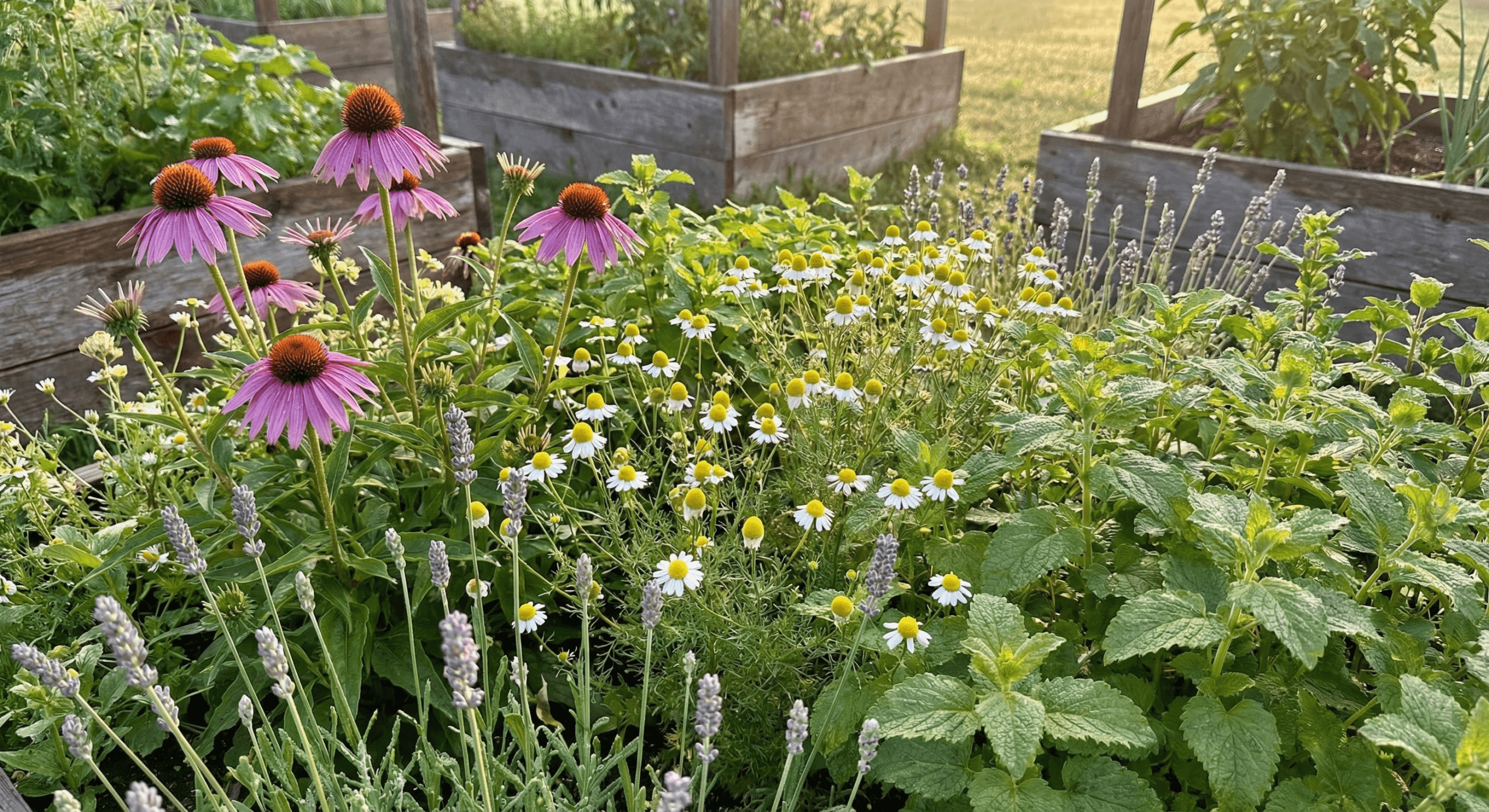
Long before pharmacies lined every street, people grew medicinal herbs in their gardens and kitchens. Today, there’s a beautiful resurgence of interest in growing your own herbal remedies — and you don’t need a large plot to do it. A sunny border, a raised bed, or even a few pots on a patio — use terracotta pots for Mediterranean herbs can yield a pharmacy’s worth of healing plants. Here’s how to grow the most useful medicinal herbs at home.
Shop Related Products: Herb Planter • Seed Packet
For more on essential summer gardening:, see our guide.
For more on essential mulching: single, see our guide.
Related: Garden Planning 101: Mapping Out Your Garden Space Natural Pest Deterrents: Plants That Repel Pests
Looking for quality gardening tools and supplies? Browse our recommended garden products — hand-picked by the GardenWizz team.
Medicinal: Before You Begin: Important Safety Note
Medicinal herbs are powerful. Always consult a qualified healthcare practitioner before using herbs to treat any medical condition, especially if you’re pregnant, nursing, taking medications, or have underlying health conditions. This article is for educational purposes about growing herbs, not medical advice.
The Big hitters: Herbs Every Medicinal Garden Should Include
Lavender (Lavandula angustifolia)
Beautiful, fragrant, and remarkably useful. Lavender’s essential oils are calming — perfect for stress relief, sleep support, and mild anxiety. Grow in full sun with excellent drainage; lavender hates “wet feet.” Harvest flower stems when buds just begin to open for the highest oil content. Dry by hanging bundles in a dark, airy space.
Peppermint & Spearmint (Mentha species)
Nature’s digestive aid. Mint soothes upset stomachs, calms nausea, and makes a wonderfully refreshing tea. Here’s the critical tip: grow mint in containers. Mint spreads aggressively and will take over your entire garden if given the chance.Harvest by cutting stems at any time; RHS plant propagation guide has detailed guidance on this topic.it regrows quickly. Dry leaves for tea or use fresh.
Echinacea (Echinacea purpurea)
The immune system champion. Echinacea is widely used to support the immune system during cold and flu season.Perennial in zones 3-9, it prefers full sun and well-drained soil. RHS soil testing guide has detailed guidance on this topic. The RHS soil testing guide provides detailed advice on understanding your soil type… Harvest roots in fall of the second year, or gather flower heads when in full bloom. Both aerial parts and roots have medicinal properties.
Chamomile (Matricaria chamomilla)
A gentle herb for sleep and digestion. German chamomile is an annual that self-seeds freely — plant it once and you’ll have it forever. Harvest flowers when fully open (they’ll smell like fresh apples) and dry on screens. Brew as a tea for insomnia, anxiety, or digestive upset.
Lemon Balm (Melissa officinalis)
A calming herb in the mint family with a bright lemony scent. Lemon balm is wonderful for stress relief and promoting restful sleep. Also a gentle calming herb for children. Grow in sun to partial shade; like mint, it can spread, so containers are wise. Harvest leaves before the plant flowers for best flavor and potency.
Calendula (Calendula officinalis)
“Pot marigold” is a first-aid garden essential. Calendula’s bright orange petals have anti-inflammatory and wound-healing properties — think of it as nature’s Neosporin. Make infused salves with the petals for cuts, scrapes, and dry skin. Easy to grow from seed, thriving in full sun. Deadhead regularly to keep those flowers coming.
Yarrow (Achillea millefolium)
A classic wound herb — yarrow was carried by Achilles to treat battle wounds on the battlefield. It helps stop bleeding, soothes bruises, and supports immune function. The feathery foliage and flat-topped flower clusters are beautiful in the garden. Hardy perennial; give it sun and well-drained soil.
Elderberry (Sambucus nigra)
Highly medicinal berries that support immune function. Elderberries are traditionally made into syrups and gummies for colds and flu. Grow as a shrub in sun to part shade; you’ll need two plants for good berry production. Harvest berries in late summer when fully ripe (never eat raw berries — always cook them first).
Growing Tips for Medicinal Herbs
Soil: Most medicinal herbs prefer lean, well-drained soil. Don’t over-fertilize — it dilutes the concentration of beneficial compounds. Work in some organic compost at planting time at planting time, then go easy.
Sunlight: Full sun (6+ hours) brings out the highest essential oil content in most medicinal herbs, which means more therapeutic potency.
Harvest timing: Harvest leaves and flowers in the morning after dew has dried but before the sun is blazing hot — that’s when essential oil content peaks.
Drying: Air dry by hanging small bundles upside down in a dark, warm, well-ventilated space.The RHS watering guidelines cover efficient watering techniques for gardens of all sizes. RHS watering guidelines has detailed guidance on this topic.. Once completely dry, store in glass jars away from light and heat.
How to Use Your Medicinal Herbs
– Teas/Infusions: Steep 1-2 teaspoons of dried herb (or 2-3 teaspoons fresh) in hot water for 5-10 minutes for most leaf herbs. Flowers steep faster, roots take longer.
– Tinctures: Soak herbs in alcohol for 4-6 weeks to create concentrated liquid extracts. Kew Gardens herb database has detailed guidance on this topic.
– Salves: Infuse herbs in carrier oil, then combine with beeswax for a healing topical ointment.
– Syrups: Combine herbal tea or decoction with honey for a delicious, shelf-stable immune support remedy.
Growing medicinal herbs connects you to centuries of traditional wisdom and gives you a living first-aid kit just steps from your door. Start with two or three of your favorites and grow from there — your future self will thank you!
Frequently Asked Questions
When is the best time to do this in the UK?
The ideal timing depends on your location and the specific task. Spring (March-May) is generally the busiest gardening season in the UK, though autumn is perfect for planting and soil improvement.
Do I need expensive equipment to get started?
No. A few quality basic tools — a trowel, hand fork, watering can, and gloves — will see you through most beginner gardening tasks.
Is this suitable for small spaces or containers?
Most gardening tasks can be adapted for small spaces. Containers, grow bags, and raised beds all work well on patios, balconies, and even windowsills.
Can beginners do this successfully?
Absolutely. UK gardens are full of challenging conditions — clay soil, shade, slugs — but beginners achieve great results every year by starting small and learning as they grow.


