By midsummer, the garden is either glory or chaos — sometimes both simultaneously. July and August are the months of maximum growth, maximum harvest, and maximum need for your attention. Stay on top of maintenance now, and your garden will continue rewarding you. Let it slide, and problems multiply quickly. In this comprehensive easy guide, we’ll cover everything you need to know.
Shop Related Products: Watering Can
For more on essential summer gardening:, see our guide.
For more on essential mulching: single, see our guide.
Related: Garden Planning 101: Mapping Out Your Garden Space Natural Pest Deterrents: Plants That Repel Pests
Looking for quality gardening tools and supplies? Browse our recommended garden products — hand-picked by the GardenWizz team.
Midsummer Maintenance: July-August: Easy: Midsummer: Watering: The Number One Priority — use a watering can for beds and a expandable garden hose for larger areas
Midsummer watering is non-negotiable. In hot weather, a lack of water is the single biggest threat to your garden. The RHS watering guidelines cover efficient watering techniques for gardens of all sizes…
Water deeply and infrequently rather than little and often. A thorough soaking once or twice a week encourages roots to go deep, making plants more resilient than a daily light sprinkle.
Water early morning or late evening to minimise evaporation.Avoid watering in full midday sun — water on leaves can magnify sunlight and cause scorch. RHS watering guidelines has detailed guidance on this topic.
Focus on key areas:
– Containers and hanging baskets (drying out fastest) RHS container gardening guide has detailed guidance on this topic.
– Newly planted trees, shrubs, and perennials (not yet established)
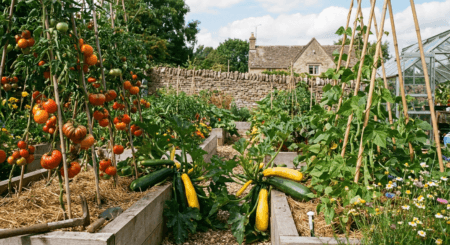
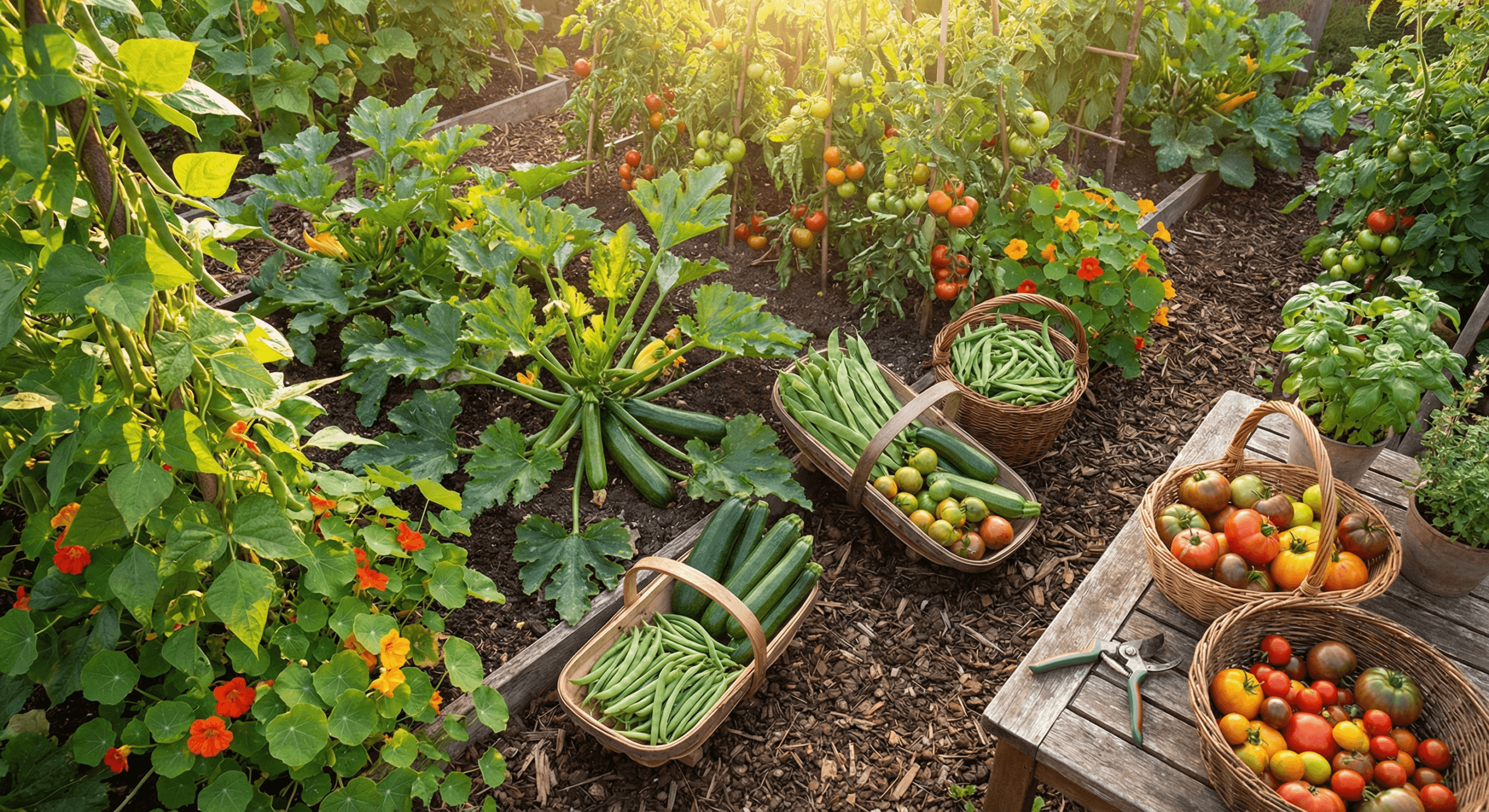
– Vegetable crops, especially those forming fruits (tomatoes, courgettes, beans)
– Anything showing signs of stress (wilting, yellowing lower leaves)
Harvest Little and Often
The secret to getting the most from your vegetable garden is harvesting regularly. Vegetables left on the plant too long send signals to the plant to stop producing.
– Courgettes — Harvest at 10-15cm; larger marrows signal the plant is slowing down
– Beans — Pick every 2-3 days to keep them coming
– Tomatoes — Pick ripe fruits promptly to encourage more to form
– Cucumbers — Cut when uniformly green; yellowing means overripe
– Salad leaves — Cut-and-come-again leaves regrow faster with regular harvesting
Feeding
Heavy-cropping plants need fuel. Feed containers and hanging baskets weekly with a liquid fertiliser — high potash feeds (like tomato fertiliser) for fruiting plants, high nitrogen for leafy crops.
In the borders, a top-dress of blood fish and bone or a liquid feed around hungry performers keeps them going through August.
Keep on Top of Weeds
Weeds grow at their fastest in midsummer, competing with your plants for water and nutrients. A quick hoe through borders and vegetable beds every week keeps them manageable.It’s far easier to hoe dry soil than to dig out established weeds later. RHS soil testing guide has detailed guidance on this topic. The RHS soil testing guide provides detailed advice on understanding your soil type…
Pruning and Deadheading
Deadheading flowers is one of the most satisfying midsummer tasks.Removing spent blooms from roses, RHS roses growing guide has detailed guidance on this topic.dahlias, sweet peas, and bedding plants encourages more flowers to form. Don’t deadhead plants you’re growing for autumn berries or seed heads.
Trim hedges — July and August are good months for trimming hedges (though check for nesting birds first). A light trim now keeps them neat for the rest of the season.
Summer prune wisteria — Cut this year’s long wispy growths back to 5-6 leaves to encourage the formation of flower buds for next year.
Cut back early-flowering perennials — Geraniums, alchemilla, and campanu. The RHS pest and disease guide identifies common garden pests and how to deal with them… Garden Organic provides comprehensive advice on managing garden pests organically..las that have finished flowering can be cut to the ground for fresh foliage and possibly a second flush.
Watch for Pests and Diseases
Midsummer is peak pest season. Keep a close eye on:
– Aphids — Colonies build rapidly in warm weather; blast off with water or treat with insecticidal soap
– Caterpillars — Check brassicas regularly; hand-pick or use netting
– Slugs and snails — Still active in damp weather; protect vulnerable seedlings and Hostas
– Tomato blight — A fungal disease that strikes in warm, humid conditions; remove affected plants immediately to prevent spread
– Powdery mildew — Common on roses, squash, and phlox in dry conditions; improve watering and airflow
Greenhouse Management
Greenhouses become intensely hot in midsummer. Good ventilation is essential:
– Open all vents and doors during the day
– Use shading netting or paint on glass to reduce temperature
– Install automatic vent openers so ventilation works even when you’re not there
– Water twice daily if needed
– Check for pests like whitefly and red spider mite more frequently
Stop Feeding and Pruning Fruit Trees
By August, stop feeding fruit trees and bushes — this allows this year’s growth to ripen and harden before winter. Remove any broken or crossing branches but hold off on major pruning until dormancy.
Summer prune apples and pears trained as cordons, espaliers, or fans. This means cutting back this year’s leafy growth to 3 leaves above the basal clusters.
Planning Ahead: Order Autumn and Winter Seeds
It might seem early, but July and August are the time to order autumn-sown flowers and vegetables. Sweet peas, winter pansies, spring cabbage, and overwintering onions all need to be sown or planted in late summer/early autumn. Get your orders in before stocks run low.
FAQ: Midsummer Garden Tasks
How often should I water my lawn in summer?
In prolonged hot, dry weather, lawns naturally go dormant and brown — they’ll recover when rain returns. If you want to keep your lawn green, water deeply once a week. But honestly, letting it go brown is perfectly healthy and saves water.
Is it too late to plant vegetables in July/August?
Some vegetables can still go in — French and runner beans (early July for a late crop), courgette plants, lettuce, and other salad leaves. Autumn and winter vegetables like kale and winter cabbage can be started in modules for planting out later.
What should I do with spring bulbs after they’ve finished?
Let the foliage die back naturally (don’t cut it off while still green — the leaves are feeding the bulb for next year’s flowers). Once yellowed, you can remove dead foliage.
Why are my tomatoes dropping their flowers?
Blossom end rot (hard brown patches on the fruit base) and flower drop are usually caused by inconsistent watering — the plant can’t move calcium to the fruit properly. Water regularly and evenly.
Can I prune roses in summer?
Light deadheading is fine, but save major pruning for late winter/early spring. Rambling roses that have finished flowering can be pruned after their summer flush.
Final Thoughts
Midsummer is when the garden tests your commitment. The rewards are there — fresh vegetables, fragrant flowers, buzzing pollinator borders — but so is the need for consistent attention. Water well, harvest often, stay on top of weeds and pests, and your garden will keep giving through to autumn and beyond.
For year-round growing inspiration, read our guide to Summer Gardening: Your Complete Guide to the Hottest Growing Season.
Continue Reading
- 5-Step Essential Garden Tools: What Every UK Gardener Needs
- Complete Guide to Week 12 Spring Garden Jobs: May 17-23
- Complete Guide to Week 11 Spring Garden Jobs: May 10-16
- Complete Guide to Week 10 Spring Garden Jobs: May 3-9
- Complete Guide to Week 9 Spring Garden Jobs: April 26 – May 2
Frequently Asked Questions
When is the best time to do this?
The best time depends on your climate zone and what you are growing, but generally early morning or late afternoon when temperatures are cooler works best for most garden tasks.
How often should I check on my garden?
Regular attention is key — check your garden every few days during the growing season. This helps you catch problems early before they become serious.
Can beginners do this?
Absolutely! Start with a few simple tasks and build up gradually. Most garden jobs are beginner-friendly with the right guidance.
What is the most important thing to remember?
Consistency matters more than perfection. Little and often beats occasional marathon sessions. Even 10-15 minutes of daily attention yields great results.