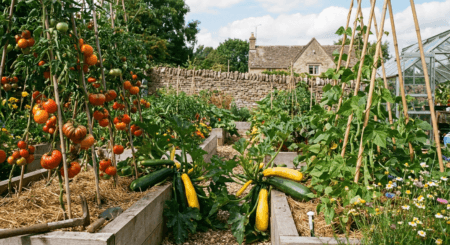
Organic gardening is more than just avoiding synthetic pesticides and fertilizers — it’s a philosophy of gardening that works with natural systems rather than against them.It’s about building healthy, living soil, RHS soil testing guide has detailed guidance on this topic.encouraging beneficial insects, and recognizing that your garden is part of a larger ecosystem.The RHS soil testing guide provides detailed advice on understanding your soil type… Buglife pollinator resources has detailed guidance on this topic.If you want to grow food and flowers that are better for you, better for the environment, and better for the pollinators visiting your yard, here’s your guide to getting started.
Shop Related Products: Watering Can
For more on essential mulching: single, see our guide.
For more on proven first-year vegetable, see our guide.
Related: Garden Planning 101: Mapping Out Your Garden Space Natural Pest Deterrents: Plants That Repel Pests
Looking for quality gardening tools and supplies? Browse our recommended garden products — hand-picked by the GardenWizz team.
Organic: The Foundation: Healthy, Living Soil
Conventional gardening often treats soil as an inert medium to hold plants upright.Organic gardening recognizes soil as a living ecosystem — billions of bacteria, fungi, protozoa, and other microorganisms per handful that cycle nutrients, improve soil structure, and support plant health. Garden Organic growing guide has detailed guidance on this topic.
How to build living soil:
– Add organic matter — compost, RHS composting guide has detailed guidance on this topic.aged manure, leaf mold. According to Gardeners’ World,
is one of the most rewarding skills a gardener can develop… The
process is explained in detail by the RHS composting guide, which covers ev. Gardeners’ World has an excellent mulching guide that covers materials and techniques..erything from starting your bin to troubleshooting common problems… This is the single most important thing you can do.
– Minimize soil disturbance — excessive tilling breaks up fungal networks and disrupts soil biology.
– Keep soil covered — bare soil is unhealthy soil. Use mulch, cover crops, or living plants at all times.
– Practice crop rotation — don’t plant the same family in the same spot year after year.
The Organic Approach to Fertilizing
Instead of synthetic fertilizers, organic gardening uses:
Compost: The cornerstone of organic fertility. Apply 1-3 inches of finished compost as a top-dress or side-dress around plants each season. Work it in lightly for beds being replanted.
Aged manure: Use only well-aged (at least 6 months, preferably a year) manure from herbivores (cows, horses, chickens, rabbits). Fresh manure can burn plants and harbor pathogens.
Cover crops: Planted to add organic matter, fix nitrogen (legumes), prevent erosion, and suppress weeds. Buckwheat, crimson clover, winter rye, and Austrian winter peas are excellent cover crops.
Organic amendments: Blood meal (high nitrogen), bone meal (phosphorus), kelp meal (potassium and micronutrients), greensand (potassium), and rock phosphate (phosphorus). These release slowly, feeding plants and soil life over time.
Compost tea: Steep finished compost in water for 24-48 hours, aerated if possible, and use as a liquid fertilizer and soil drench. Research on its effectiveness is mixed, but many gardeners swear by it.
The Organic Approach to Pest Management
Organic pest management is about prevention, tolerance, and using the least invasive intervention first:
Prevention:
– Choose disease-resistant varieties
– Rotate crops annually to break pest and disease cycles
– Keep the garden clean — remove dead plant material where pests overwinter
– Encourage beneficial insects with bug hotel garden and diverse plantings by planting diverse flowers and herbs
– Use row covers to physically exclude pests
Monitoring: Walk your garden regularly. Know what’s normal. Catch problems early.
Intervention ladder (in order of preference):
1. Hand-pick larger pests (hornworms, beetles)
2. Prune off affected plant parts
3. Strong water spray to dislodge aphids and mites
4. Biological controls (Bt for caterpillars, beneficial nematodes for soil pests, ladybugs for aphids)
5. Organic sprays only as a last resort: neem oil, insecticidal soap, horticultural oil, spinosad
Companion Planting in the Organic Garden
Planting certain plants together can naturally deter pests and improve growth:
– The Three Sisters: Corn, beans, and squash planted together. Corn provides a trellis for beans, beans fix nitrogen for all three, squash shades the soil with its big leaves.
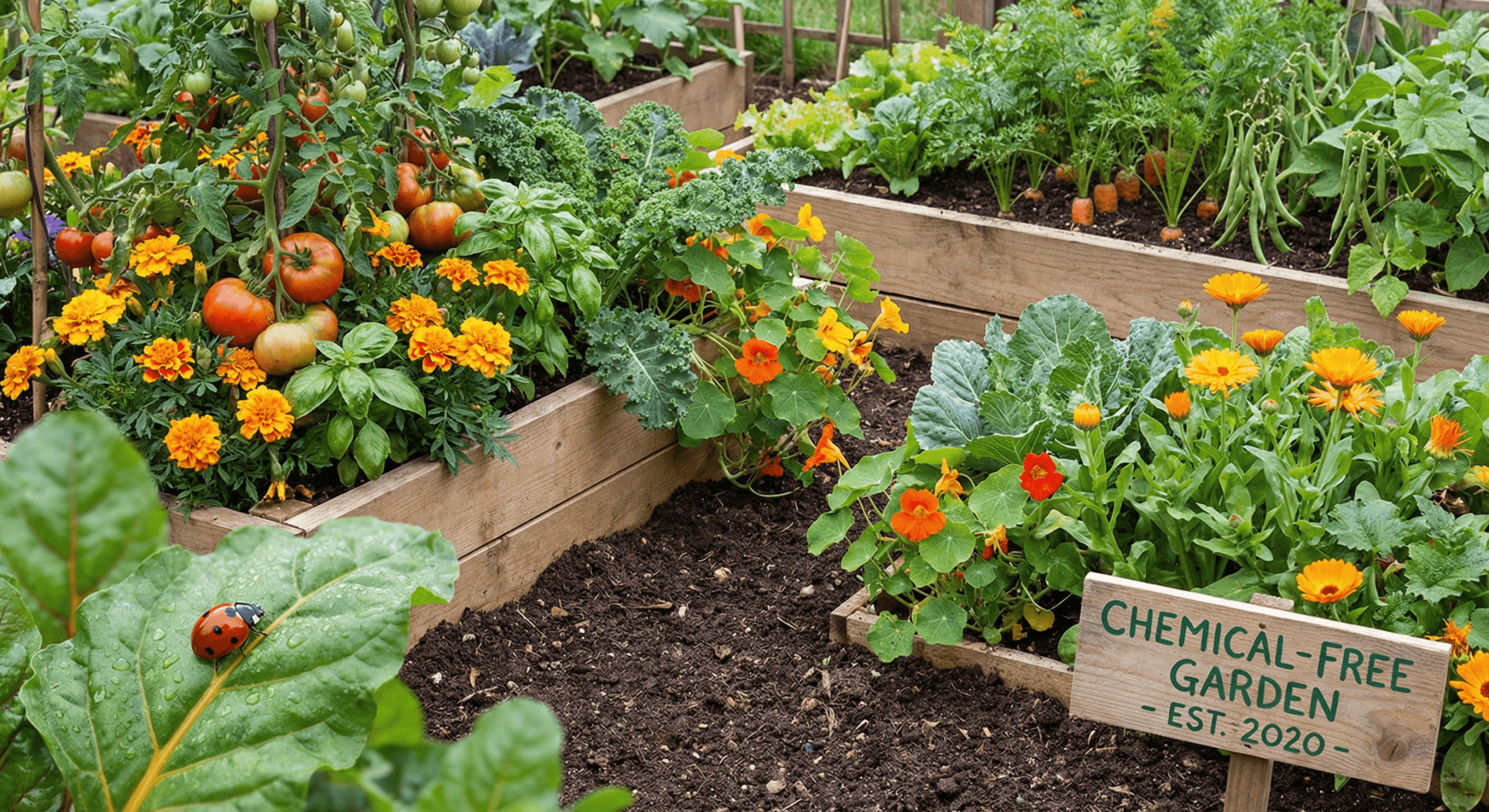
– Tomatoes + basil + carrots: Basil may repel aphids and improve tomato flavor
– Marigolds: Planted around vegetable gardens, marigolds deter many pests with their pungent scent
– Nasturtiums as trap crops: Plant away from main crops — aphids prefer nasturtiums and will gather there, making them easier to manage
Organic Weed Control
Weeds compete with your plants for water, nutrients, and light. Organic weed management:
– Mulch, mulch, mulch: 3-4 inches of organic mulch (straw, shredded leaves, bark) blocks light and prevents weed seed germination
– Hand weeding: The old-fashioned method still works. Weeding after rain or watering makes it easier
– Flame weeding: Using a propane torch to kill weed seedlings in empty beds. Fast and effective before planting.
– Solarization: Covering beds with clear plastic in summer heat to kill weeds and soil pathogens
– Cover crops: Dense plantings of buckwheat or clover outcompete weeds
Dealing with Disease Organically
Prevention is everything:
– Choose resistant varieties
– Space plants properly for good air circulation
– Water at soil level, not overhead
– Remove and discard (don’t compost) diseased plant material
– Rotate crops so disease organisms don’t build up in soil
Organic disease controls:
– Copper fungicides for fungal diseases (use sparingly — copper accumulates in soil)
– Baking soda spray for powdery mildew
– Milk spray (1 part milk : 2 parts water) for powdery mildew
– Sulfur dust for fungal diseases
Organic Gardening Is a Journey
Going organic in the garden isn’t about being perfect — it’s about being thoughtful. You don’t have to overhaul everything at once. Start by building better soil, choosing a few organic pest control methods, and going from there. Every organic practice you add makes your garden healthier, your food cleaner, and your local ecosystem a little richer.
The goal isn’t perfection — it’s progress. And every garden that moves toward organic practices is a win for everyone.
Frequently Asked Questions
When is the best time to do this in the UK?
The ideal timing depends on your location and the specific task. Spring (March-May) is generally the busiest gardening season in the UK, though autumn is perfect for planting and soil improvement.
Do I need expensive equipment to get started?
No. A few quality basic tools — a trowel, hand fork, watering can, and gloves — will see you through most beginner gardening tasks.
Is this suitable for small spaces or containers?
Most gardening tasks can be adapted for small spaces. Containers, grow bags, and raised beds all work well on patios, balconies, and even windowsills.
Can beginners do this successfully?
Absolutely. UK gardens are full of challenging conditions — clay soil, shade, slugs — but beginners achieve great results every year by starting small and learning as they grow.