Composting improves soil — add plenty before planting.
Summer Vegetable Garden:: What You Need
- Vegetable seed collection — mixed seeds for summer growing
- Watering can — 5 litre can, perfect for gardens
- Tomato feed — high potash liquid fertiliser
- Gardening gloves — protect your hands
A well-planned summer vegetable garden can feed your family from June through to the first autumn frosts. The key is succession planting — sowing little and often — so you have a constant supply rather than a glut all at once. This guide covers exactly what to grow and when in your UK summer garden.
What to Sow in June and July
June and July are busy months. Many crops can still be direct-sown outdoors: lettuce, radishes, spring onions, beetroot, carrots, and catch crops like lamb’s lettuce. In the greenhouse or on a sunny windowsill, you can start autumn and winter brassicas (calabrese, kale, Brussels sprouts) in modules for transplanting later.
Best Summer Vegetables for UK Gardens
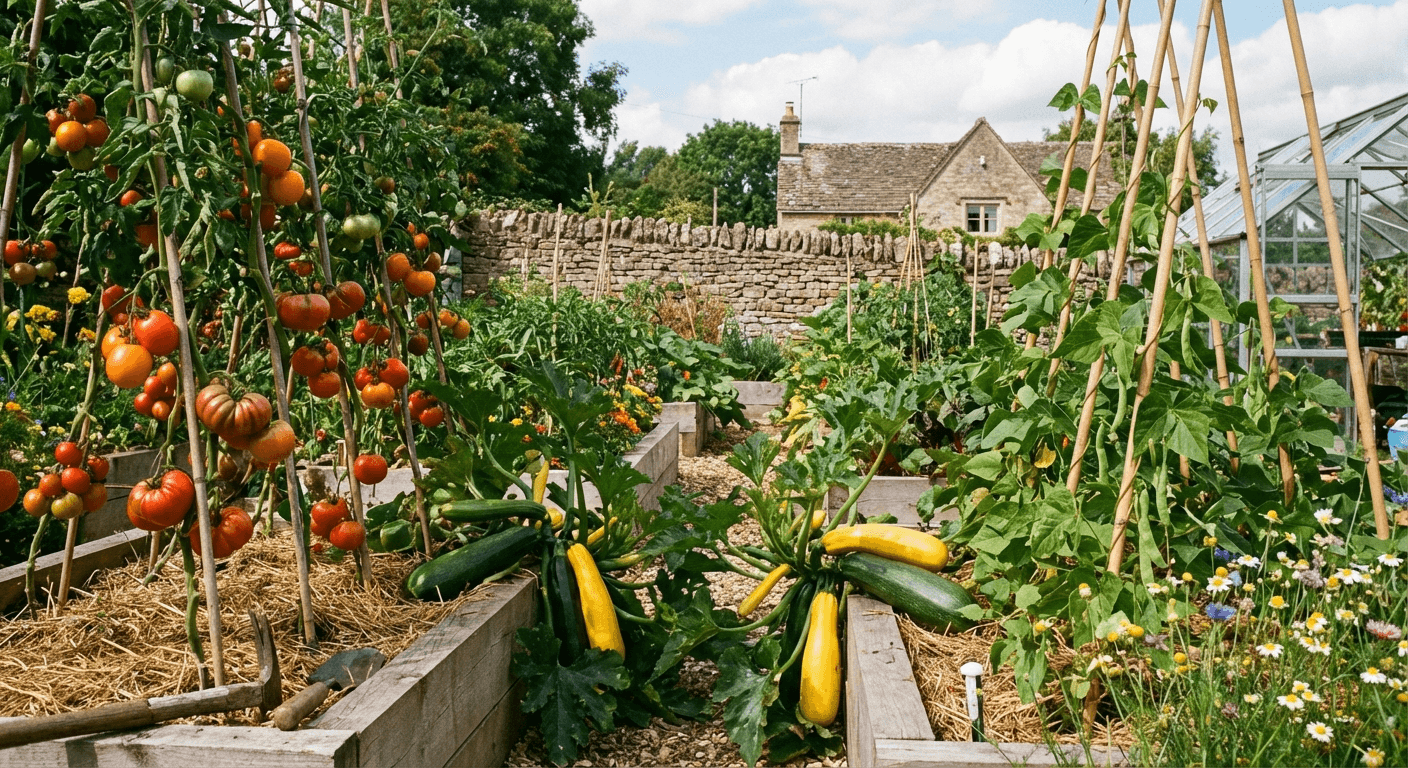
Courgettes are one of the most productive crops — two plants will keep a family well-stocked all summer. Tomatoes need regular watering and feeding but reward you generously. Climbing beans (runner beans and French beans) are reliable and prolific. Leafy greens like chard and perpetual spinach give cut-and-come-again harvests for months.
Succession Sowing for Continuous Harvest
The biggest mistake beginners make is sowing everything at once. Instead, sow small amounts every two weeks. A row of lettuce every fortnight from March to September gives you salad leaves all summer long. Same with radishes (ready in 4 weeks), beetroot, and spring onions.
Watering and Feeding
Summer watering is critical. Most vegetables need 2-3cm of water per week. Water deeply in the morning or evening — never in blazing sunshine. Tomatoes, courgettes, and beans benefit from weekly liquid feeding once they start flowering and fruiting.
Harvesting Tips
Pick little and often to encourage more production. Courgettes are best harvested small (10-15cm) — giant marrows are actually a sign to pick more! Beans should be picked regularly to encourage continued flowering. The more you pick, the more you get.
Frequently Asked Questions
What vegetables can I still plant in July?
Lettuce, radishes, beetroot, spring onions, chard, and turnips can all be sown in July for autumn harvest.
Is it too late to sow carrots?
You can sow carrots until August for late autumn harvest. Choose a quick variety like ‘Adelaide’.
How do I stop my lettuce bolting?
Lettuce bolts in hot, dry conditions. Keep soil moist, provide afternoon shade in very hot summers, and choose bolt-resistant varieties.
What’s the easiest summer vegetable to grow?
Courgettes, beans, and radishes are among the easiest. They reward even beginner gardeners with generous harvests.
Ready to plan your summer vegetable garden? Stock up on seeds and get sowing — your future self will thank you.
Continue Reading
- 5-Step Essential Garden Tools: What Every UK Gardener Needs
- Complete Guide to Week 12 Spring Garden Jobs: May 17-23
- Complete Guide to Week 11 Spring Garden Jobs: May 10-16
- Complete Guide to Week 10 Spring Garden Jobs: May 3-9
- Complete Guide to Week 9 Spring Garden Jobs: April 26 – May 2
Frequently Asked Questions
When is the best time to do this?
The best time depends on your climate zone and what you are growing, but generally early morning or late afternoon when temperatures are cooler works best for most garden tasks.
How often should I check on my garden?
Regular attention is key — check your garden every few days during the growing season. This helps you catch problems early before they become serious.
Can beginners do this?
Absolutely! Start with a few simple tasks and build up gradually. Most garden jobs are beginner-friendly with the right guidance.
What is the most important thing to remember?
Consistency matters more than perfection. Little and often beats occasional marathon sessions. Even 10-15 minutes of daily attention yields great results.