Every garden faces challenges from pests and diseases at some point — it’s simply part of gardening. The good news? Most garden problems are manageable without resorting to harsh chemicals, and often the best solutions work with nature, not against it. Here’s your practical guide to keeping your garden healthy and thriving using smart, natural strategies.
Shop Related Products: Watering Can
For more on essential mulching: single, see our guide.
For more on proven first-year vegetable, see our guide.
Related: Garden Planning 101: Mapping Out Your Garden Space Natural Pest Deterrents: Plants That Repel Pests
Looking for quality gardening tools and supplies? Browse our recommended garden products — hand-picked by the GardenWizz team.
Understanding Common Garden Pests
The first step in pest management is knowing what you’re dealing with. Here’s a rundown of the most common culprits:
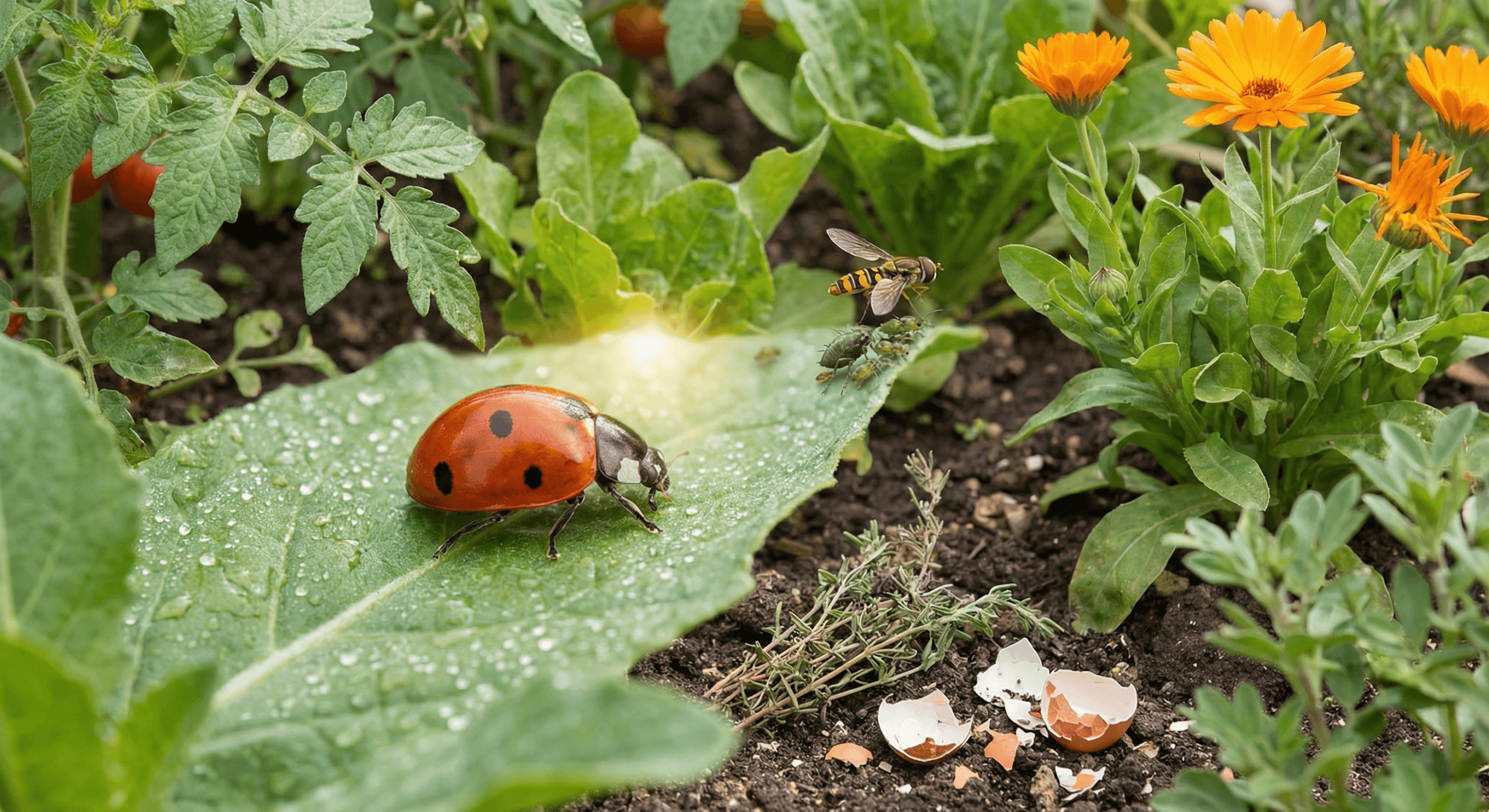
Aphids: Tiny (usually green or black) insects that cluster on new growth and suck plant sap. They cause distorted, curling leaves and excrete sticky honeydew that leads to sooty mold. Remedy: Spray off with a strong stream of water. For heavy infestations, apply insecticidal soap or neem oil. Encourage ladybugs, which are voracious aphid predators.
Tomato Hornworms: Large green caterpillars (up to 4 inches!) that can defoliate a tomato plant almost overnight. Remedy: Hand-pick and drop in soapy water. Look for white rice-like cocoons on their backs — those are parasitic wasp eggs that will kill the hornworm. Planting dill or basil nearby attracts wasps.
Slugs and Snails: Holes chewed in leaves, silvery slime trails on plants and soil. The RHS soil testing guide provides detailed advice on understanding your soil type… They feast at night and on damp days. Remedy: Hand-pick at night.Set beer traps (shallow dishes of beer at soil level). Buglife pollinator resources has detailed guidance on this topic. Apply iron phosphate baits (organic, pet-safe). Improve drainage and clear hiding spots.
Spider Mites: Tiny arachnids that cause stippled, yellowing leaves and fine webbing on plants, especially in hot, dry conditions. Most common on tomatoes, cucumbers, and indoor plants. Remedy: Spray plants with water to knock them off. Apply neem oil or insecticidal soap. Increase humidity around plants.
Whiteflies: Tiny white flying insects that cluster on undersides of leaves, especially on tomatoes, peppers, and cucumbers. Remedy: Yellow sticky traps for adults. Insecticidal soap or neem oil for nymphs.
Understanding Common Plant Diseases
Powdery Mildew: White, dusty coating on leaves, stems, and sometimes fruit. Common on squash, cucumbers, lilacs, and phlox, especially in humid weather with poor air circulation. Prevention: Improve air circulation by proper spacing. Water at the base, not overhead. Remove affected leaves. Apply a baking soda spray (1 tsp baking soda + 1 quart water + a few drops of dish soap).
Tomato Blight: Brown spots on lower leaves that spread upward, .Gardeners’ World has an excellent mulching guide that covers materials and techniques. RHS mulching advice has detailed guidance on this topic..eventually defoliating the plant.Prevention: Mulch around stems to prevent soil splash. RHS soil testing guide has detailed guidance on this topic. Space plants well. Water at base only.Remove and discard (don’t compost) infected plant material. RHS composting guide has detailed guidance on this topic. According to Gardeners’ World, Remove is one of the most rewarding skills a gardener can develop… The Remove process is explained in detail by the RHS composting guide, which covers everything from starting your bin to troubleshooting common problems…
Root Rot: Caused by overwatering or poor drainage. Plants wilt despite moist soil, roots are brown and mushy. Prevention: Plant in well-drained soil. Water properly.
The IPM Approach: Work Smarter, Not Harder
Integrated Pest Management (IPM) combines multiple strategies:
1. Prevention first: Healthy soil produces healthy plants that resist pests better. Rotate crops annually. Choose disease-resistant plant varieties.
2. Monitor regularly: Walk your garden every few days. Check undersides of leaves. Catch problems early.
3. Identify before treating: Not every bug is a bad bug. Ladybugs, lacewings, ground beetles, parasitic wasps, and hover flies all devour garden pests. Learn to recognize them.
4. Choose the right intervention: Start with the least invasive option — physical removal, water spray, biological control using beneficial nematodes for soil-dwelling pestss, then organic sprays.
Companion Planting for Pest Control
– Basil with tomatoes: Repels aphids and hornworms
– Nasturtiums: Trap crop for aphids — plant away from main crops to draw aphids away
– Marigolds: Deter many pests, especially around vegetable gardens
– Garlic and chives: Repel aphids near roses and vegetables
– Dill and fennel: Attract beneficial wasps
When to Take Action
Not every pest requires intervention. A few aphids on a healthy plant are usually kept in check naturally. But take action when damage is rapidly spreading, plants are being defoliated, or you see signs of disease spreading to other plants.
A healthy garden is a living ecosystem. Work with nature, stay observant, and remember — most problems have solutions that don’t require reaching for the harshest product on the shelf.
Frequently Asked Questions
When is the best time to do this in the UK?
The ideal timing depends on your location and the specific task. Spring (March-May) is generally the busiest gardening season in the UK, though autumn is perfect for planting and soil improvement.
Do I need expensive equipment to get started?
No. A few quality basic tools — a trowel, hand fork, watering can, and gloves — will see you through most beginner gardening tasks.
Is this suitable for small spaces or containers?
Most gardening tasks can be adapted for small spaces. Containers, grow bags, and raised beds all work well on patios, balconies, and even windowsills.
Can beginners do this successfully?
Absolutely. UK gardens are full of challenging conditions — clay soil, shade, slugs — but beginners achieve great results every year by starting small and learning as they grow.