




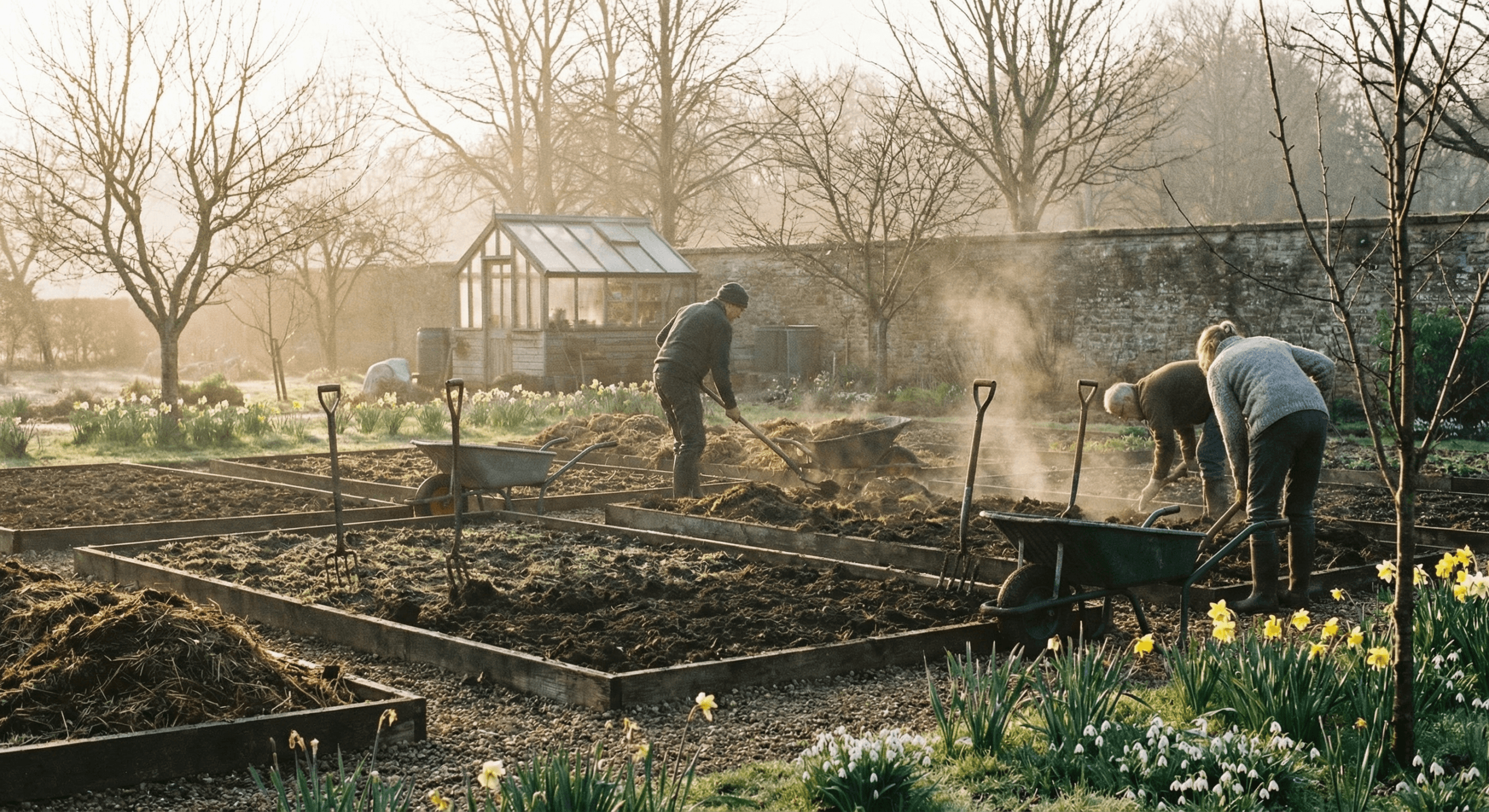
Spring is the season of possibility in the UK garden. After months of winter dormancy, the garden wakes up and there’s no shortage of things to do. The key to a productive year ahead is getting your preparation right — and doing it in the right order. Here’s your month-by-month guide to spring garden prep.
Spring Prep: Month-By-Month: What You’ll Need
Before you start, gather these essentials:
- Seed trays — Modular trays for sowing seeds indoors
- Seed compost — Fine, nutrient-rich compost for seed sowing
- Garden fork — Essential for digging and breaking up soil
- Gardening gloves — Protect your hands during spring jobs
- Propagator — Heated propagator for germinating seeds indoors
Why Spring Preparation Matters
A well-prepared garden pays dividends all season long. Getting your soil ready, your tools sorted, and your seeds sown at the right time means stronger plants, bigger harvests, and fewer pest and disease problems. Skip the prep and you’ll spend the whole season playing catch-up.
February: Planning and Cutting Back
February can still be cold, but it’s the ideal time to plan the year ahead. Order seed catalogues, plan your vegetable rotation, and decide what you’re going to grow this year. If the ground isn’t frozen or waterlogged, you can start some early tasks:
- Cut back dead foliage on ornamental grasses and herbaceous perennials
- Clean and sharpen your garden tools
- Check sheds and greenhouses — repair any damage before spring
- Start forcing rhubarb by covering crowns with a dark bucket
March: The Real Work Begins
March is when things start moving. As daylight stretches and soil temperatures rise, garden centres fill up and seeds start flying off shelves. Prioritise these jobs:
- Prepare seed beds: Fork over beds, break up clods, and rake to a fine tilth. Add compost if your soil needs it.
- Start seeds indoors: Tomatoes, peppers, aubergines, and brassicas can all be sown under cover in March. Use a heated propagator for best results.
- Cut back winter shrubs: Remove any dead or damaged wood from shrubs before they burst into growth.
- Mulch borders: Apply a thick layer of compost or well-rotted manure to borders while plants are still dormant.
- Plant garlic and shallots: If you haven’t already, get them in the ground now — they need a cold period to bulb up properly.
April: Sowing Season Arrives
April is the month the garden really comes alive. Frosts are still possible in many areas, but the soil is warming up and seeds germinate readily. Undercover sowings can continue, but direct outdoor sowing starts in earnest:
- Sow hardy annuals directly outdoors — calendula, cornflowers, and nigella all do well
- Start chitting potatoes by standing them in egg boxes in a cool, bright spot
- Plant onion sets and shallots
- Prepare beds for carrots — avoid freshly manured ground to prevent forked roots
- Harden off early sowings by moving them outside during the day
May: The Rush to Plant
By May, the garden is in full swing. Last frosts typically pass in most areas by mid-May (though always check your local forecast — UK frosts can be fickle). This is the busy planting month:
- Plant out tender seedlings once all risk of frost has passed
- Direct sow French beans, runner beans, courgettes, and squash
- Stake emerging perennials before they flop
- Earth up potatoes as they grow
- Begin regular watering — May can be surprisingly dry
Troubleshooting Common Spring Problems
Soil too wet to work: Wait. Compacting wet soil causes long-term damage. If in doubt, use a broadfork rather than a spade and add organic matter to improve drainage for next year.
Late frosts damaging new growth: Keep horticultural fleece handy and cover tender plants if frost is forecast. Watering plants in the evening can also help protect them — wet soil holds more heat.
Seedlings stretching (leggy growth): This usually means insufficient light. Move seedlings closer to a south-facing window or under grow lights.
Pigeons and slugs: Both become more active in spring. Net brassicas and use organic slug controls around vulnerable seedlings.
Get these foundations right and your garden will reward you from late spring right through to autumn. Happy gardening!
Frequently Asked Questions
When is the best time to spring garden preparation?
Start in February-March as days lengthen. Clear, feed, and plan ahead.
Do I need any special equipment?
Seed trays, compost, and basic tools. A cold frame extends the season.
Can beginners do this?
Spring is the perfect time to start – everything is optimistic and new!
How long does it take?
Tasks range from quick 10-minute jobs to full weekend projects.
Related Articles
For more help with your garden, check out these related guides:
- Week 12 Spring Garden Jobs: May 17-23
- Week 11 Spring Garden Jobs: May 10-16
- Beginner’s Guide to Sweet Peas
- Best Plants for Pollinators
- Herb Garden Guide
Continue Reading
- 5-Step Essential Garden Tools: What Every UK Gardener Needs
- Complete Guide to Week 12 Spring Garden Jobs: May 17-23
- Complete Guide to Week 11 Spring Garden Jobs: May 10-16
- Complete Guide to Week 10 Spring Garden Jobs: May 3-9
- Complete Guide to Week 9 Spring Garden Jobs: April 26 – May 2
Frequently Asked Questions
When is the best time to do this?
The best time depends on your climate zone and what you are growing, but generally early morning or late afternoon when temperatures are cooler works best for most garden tasks.
How often should I check on my garden?
Regular attention is key — check your garden every few days during the growing season. This helps you catch problems early before they become serious.
Can beginners do this?
Absolutely! Start with a few simple tasks and build up gradually. Most garden jobs are beginner-friendly with the right guidance.
What is the most important thing to remember?
Consistency matters more than perfection. Little and often beats occasional marathon sessions. Even 10-15 minutes of daily attention yields great results.


