




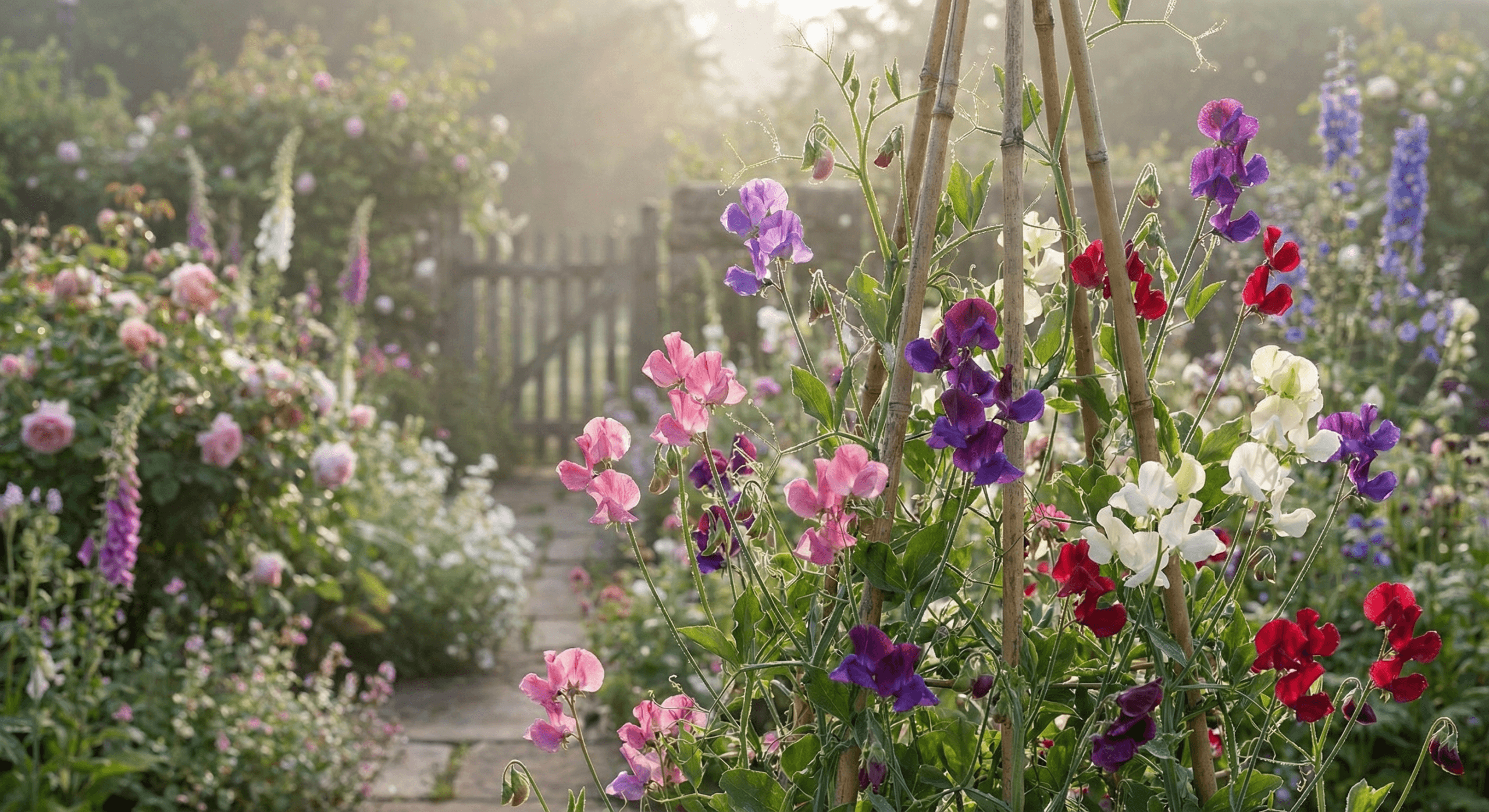
Few flowers capture the essence of a British summer quite like sweet peas. Their intoxicating fragrance, delicate ruffled petals, and endless colour combinations make them the undisputed queen of the cutting garden. Best of all, they’re remarkably easy to grow — even for complete beginners. This guide takes you through everything you need to know to grow stunning sweet peas in your UK garden.
Sweet Peas: Fragrant: Why Grow Sweet Peas?
Sweet peas (Lathyrus odoratus) are one of the most rewarding flowers you can grow. They produce an abundance of blooms from early summer through to the first frosts, and the more you cut, the more they flower. Their scent is simply unforgettable — no garden should be without them. They’re also brilliant for pollinators, attracting bees and butterflies to your garden.
What You’ll Need
- Sweet pea seeds — a mixed or single colour variety
- Root trainers — essential for deep-rooted seedlings
- Bamboo wigwams or trellis — sweet peas need something to climb
- Garden twine — for tying in growth
- High potash liquid feed — for abundant blooms
- Gardening gloves — sweet pea foliage can cause skin irritation
When to Sow
Sweet peas can be sown in autumn (September-October) for larger, earlier plants, or in spring (March-April) for a simpler approach. Autumn-sown plants overwinter in a cold frame or unheated greenhouse and produce stronger, more vigorous plants. Spring sowing is perfectly fine for beginners — you’ll just have slightly smaller plants to start with.
How to Sow
Sweet peas despise root disturbance, so always sow in deep containers. Root trainers are ideal — they’re designed specifically for deep-rooted seedlings. Fill with seed compost, sow one seed per cell about 2cm deep, and keep moist but not waterlogged. Place in a cold frame or unheated greenhouse. Seeds germinate in 10-14 days.
Planting Out
Plant sweet peas out in spring once the soil has warmed, typically April-May depending on your location. Choose a sunny or partially shaded spot with rich, well-draining soil. Sweet peas are hungry plants — dig in plenty of compost before planting. Provide a sturdy support: a wigwam of bamboo canes, a trellis, or even an obelisk. Space plants about 15-20cm apart.
Care Through the Season
Keep plants well watered, especially in dry spells. Once your sweet peas start climbing, tie in the main stems loosely to their support. Pinch out the growing tip once plants have three sets of true leaves — this encourages branching and many more flower stems. Feed weekly with a high potash liquid feed (tomato feed works well) once flowering begins.
Harvesting
Cut sweet peas regularly — every few days — to keep the flowers coming. Choose stems where the bottom two florets are open. The more you cut, the more flowers your plants will produce. Place in a vase immediately; sweet peas last 4-5 days in water. Deadhead any stems you don’t cut to prevent seed pods forming, which will reduce flowering.
Frequently Asked Questions
Do sweet peas come back every year?
Most sweet pea varieties are annuals — they grow, flower, set seed and die in one season. However, they readily self-seed, so you may find volunteers the following spring.
Are sweet peas toxic to pets?
Yes — sweet peas are toxic if ingested in large quantities, particularly the seed pods. Keep pets and children away from the plants.
Why are my sweet peas not fragrant?
Fragrance is strongest in older, open-pollinated varieties. Modern hybrids sometimes sacrifice fragrance for larger blooms and longer vase life. Choose a scented variety like ‘Old Spice’ or ‘Matucana’ for maximum fragrance.
When should I sow sweet pea seeds?
Sow in autumn (October) for best results, or in spring (March-April). Autumn-sown plants are generally stronger and flower earlier.
Ready to add the king of the cutting garden to your plot? Pick up some sweet pea seeds and get started — you won’t regret it.
Related Articles
For more help with your garden, check out these related guides:
- Best Flowers to Grow in the UK: A Beginner’s Guide
- Beginner’s Guide to Sweet Peas
- Best Plants for Pollinators
- Herb Garden Guide
Continue Reading
- 5-Step Essential Garden Tools: What Every UK Gardener Needs
- Complete Guide to Week 12 Spring Garden Jobs: May 17-23
- Complete Guide to Week 11 Spring Garden Jobs: May 10-16
- Complete Guide to Week 10 Spring Garden Jobs: May 3-9
- Complete Guide to Week 9 Spring Garden Jobs: April 26 – May 2
Frequently Asked Questions
When is the best time to do this?
The best time depends on your climate zone and what you are growing, but generally early morning or late afternoon when temperatures are cooler works best for most garden tasks.
How often should I check on my garden?
Regular attention is key — check your garden every few days during the growing season. This helps you catch problems early before they become serious.
Can beginners do this?
Absolutely! Start with a few simple tasks and build up gradually. Most garden jobs are beginner-friendly with the right guidance.
What is the most important thing to remember?
Consistency matters more than perfection. Little and often beats occasional marathon sessions. Even 10-15 minutes of daily attention yields great results.


