




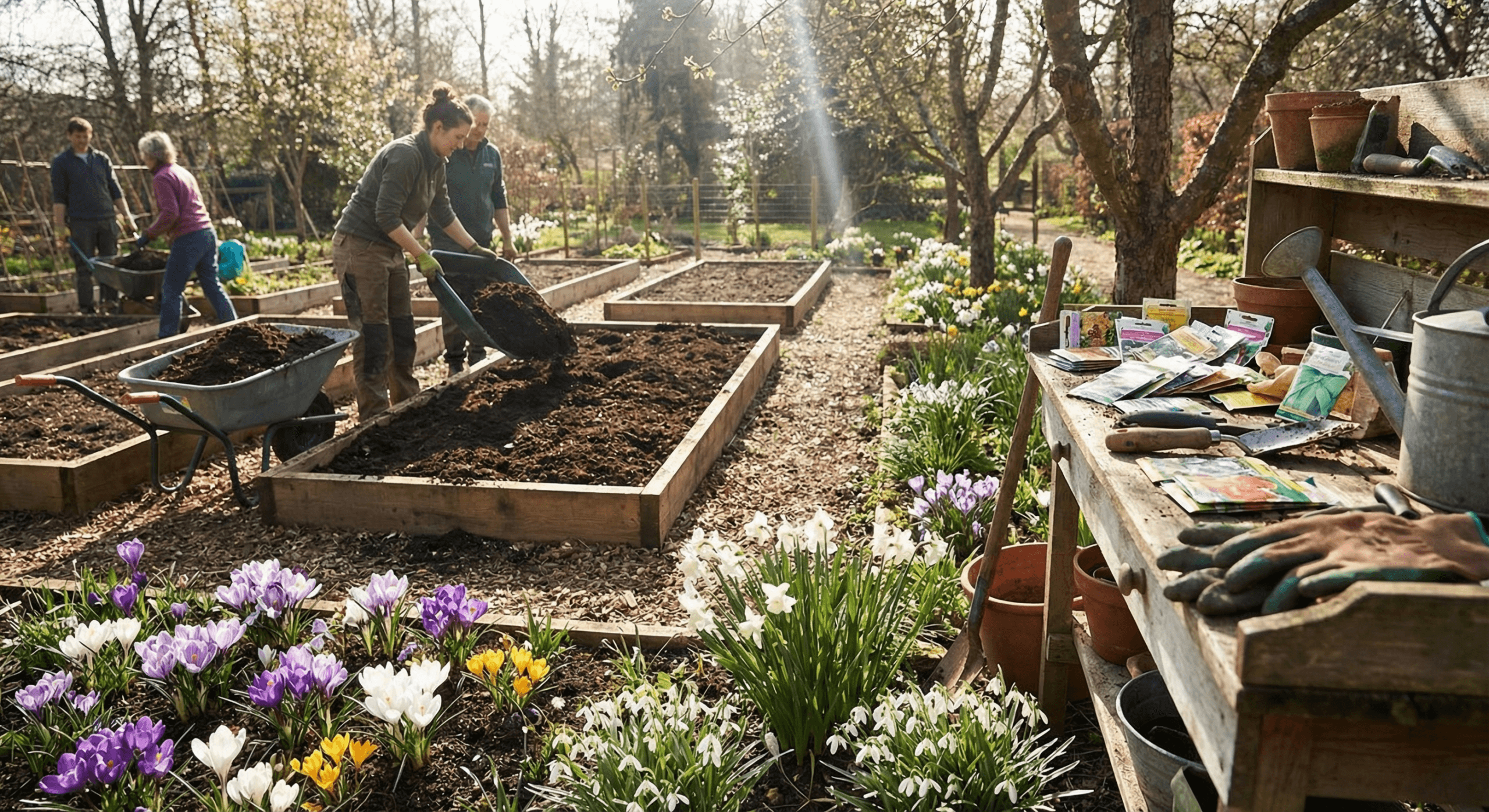
March is the month the garden wakes up — and so should you. After the quiet dormancy of winter, there’s a genuine sense of anticipation in the air as days lengthen and the first brave flowers push through. Getting your garden ready in early spring sets you up for success for the entire growing season. Here’s everything you need to do. In this comprehensive ultimate guide, we’ll cover everything you need to know.
Shop Related Products: Watering Can
For more on essential summer gardening:, see our guide.
For more on essential mulching: single, see our guide.
Related: Garden Planning 101: Mapping Out Your Garden Space Natural Pest Deterrents: Plants That Repel Pests
Looking for quality gardening tools and supplies? Browse our recommended garden products — hand-picked by the GardenWizz team.
Early Spring Prep:: Ultimate: The State of the Garden in Early Spring
March sits in that tricky in-between territory. Some days feel almost summery; others remind you that winter hasn’t entirely let go. This unpredictability is the key challenge of early spring gardening — you need to be ready to act quickly when conditions allow, but not so eager that you damage plants with premature intervention.
The golden rule: if the soil is waterlogged or frozen, stay off it. The RHS soil testing guide provides detailed advice on understanding your soil type… Working wet soil damages its structure in ways that persist for years.
Prepare Your Soil
After winter, your beds need attention before the growing season kicks into gear.
Clear winter debr.Gardeners’ World has an excellent mulching guide that covers materials and techniques. RHS mulching advice has detailed guidance on this topic..is — Remove any remaining dead foliage, fallen leaves, and old mulch from around plants.This eliminates disease hiding spots and lets light and air reach the soil. RHS soil testing guide has detailed guidance on this topic.
Fork over beds — Once soil is workable (it should crumble when you squeeze it, not stick together in a ball), gently fork over the surface to aerate it and break up any compaction. Avoid going too deep around shallow-rooted plants.
Add organic matter — Spread a 5-8cm layer of well-rotted compost or manure over beds and fork it in. According to Gardeners’ World,
is one of the most rewarding skills a gardener can develop… The
process is explained in detail by the RHS composting guide, which covers everything from starting your bin to troubleshooting common problems… This improves soil structure, adds nutrients, and boosts moisture retention.
Mulch while you can — Apply a fresh layer of mulch after feeding. Doing this in early spring while plants are still small makes it much easier to work around them.
Get Your Tools Ready — service your garden secateurs and spade for the season ahead
Early spring is the perfect time to service your tools before the busy season begins:
– Sharpen secateurs and hoes — A sharp blade makes cleaner cuts that heal faster and requires less effort
– Oil wooden handles — Rub linseed oil into dried or cracked handles
– Clean and oil metal parts — Remove rust with wire wool and wipe over with oil
– Check hose and irrigation systems — Look for cracks or leaks before you need them
– Restock essentials — Seed trays, compost, RHS composting guide has detailed guidance on this topic.labels, twine — get what you need before the rush
Start Seeds Indoors
March is prime time for starting tender vegetables and half-hardy annuals indoors:
What to sow in March:
– Tomatoes, peppers, aubergines (on a warm, bright windowsill or under grow lights)
– Leeks and onions
– Broad beans (can also go direct outdoors)
– Half-hardy annuals: cosmos, zinnias, tagetes, antirrhinums
– Herbs: Kew Gardens herb database has detailed guidance on this topic.basil, parsley, coriander
Use good quality seed compost in clean trays or modules. Label carefully (you’ll thank yourself later), and keep evenly moist. A heated propagator helps enormously for warmth-loving crops.
Pruning and Cutting Back
Deciduous Shrubs and Grasses
March is the time to cut back ornamental grasses before new growth emerges. Use shears or a hedge cutter to chop last year’s growth to around 10cm from the ground — new shoots will soon replace it.
Hard prune late-flowering shrubs like buddleia, lavatera, and hardy fuchsia, cutting to healthy outward-facing buds.
Roses
Finish rose pruning this month if you haven’t already. Remove dead, damaged, and crossing stems, and shorten healthy growth by about a third.
Early-Flowering Shrubs
Important: do NOT prune spring-flowering shrubs like forsythia, chaenomeles, or flowering currant until after they’ve bloomed — they’re already forming their flowers on last year’s growth.
Protect Against Late Frosts
March frosts can devastate new growth and early shoots. Keep horticultural fleece handy and cover tender plants on frosty nights. Pay particular attention to newly planted specimens and emerging shoots of vulnerable plants like dahlias.
Divide Perennials
Overcrowded perennials that bloomed poorly last year can be divided now. Dig up the clump, split it into sections (a sharp spade or two forks back-to-back works well), and replant the vigorous outer sections. Discard the woody centre if it’s old and tired.
Plants ideal for March division include:
– Geraniums
– Hostas
– Daylilies (Hemerocallis)
– Sedums
– Primulas
Start Mowing — Carefully
If your lawn has started growing, set your mower blades high for the first few cuts. March mowing is about tidying, not stressing the grass. Avoid mowing when the ground is very wet or frozen.
Watch for Pest Emergence
As temperatures rise, garden pests become active. Check susceptible plants regularly for:
– Aphids — Appearing on fresh shoots of roses, fuchsias, and many other plants
– Slugs and snails — Very active in damp spring weather; protect vulnerable seedlings
– Vine weevil — Check container plants for tell-tale notches in leaf edges
FAQ: Early Spring Garden Preparation
Is March too early to start planting?
For hardy plants like trees, shrubs, and most perennials, March is often fine — especially towards the end of the month. Tender plants (tomatoes, tender herbs, half-hardy annuals) should only go outside after all risk of frost, typically late May in most UK areas.
Should I feed the garden in March?
Yes — a general-purpose fertiliser applied to borders in March gives plants the nutrients they need for spring growth. Sprinkle around plants and rake into the soil surface.
What should I do about lawn moss?
March is a good time to tackle moss. Use a moss killer or a rake-out approach, then improve drainage, mow regularly, and consider overseeding bare patches once the weather warms.
Can I plant potatoes in March?
In mild areas or with protection (cloches), you can plant first early potatoes in March. Maincrop varieties are better left until April.
When should I start watering containers?
Begin regular watering when plants are actively growing — typically from mid-March onwards. Before that, occasional light watering is all that’s needed.
Final Thoughts
March is the month that rewards the organised gardener. Getting ahead now — preparing soil, servicing tools, starting seeds, pruning wisely — means you’ll spend the rest of the season tending to growth rather than playing catch-up. The garden is waking up, and there’s no better feeling than being ready for it.
For a full seasonal growing guide, read our Spring Vegetable Planting Calendar: When to Plant What. And for seed starting fundamentals, check out Seed Starting for Beginners: From Tiny Seeds to Thriving Seedlings.
Continue Reading
- 5-Step Essential Garden Tools: What Every UK Gardener Needs
- Complete Guide to Week 12 Spring Garden Jobs: May 17-23
- Complete Guide to Week 11 Spring Garden Jobs: May 10-16
- Complete Guide to Week 10 Spring Garden Jobs: May 3-9
- Complete Guide to Week 9 Spring Garden Jobs: April 26 – May 2
Frequently Asked Questions
When is the best time to do this?
The best time depends on your climate zone and what you are growing, but generally early morning or late afternoon when temperatures are cooler works best for most garden tasks.
How often should I check on my garden?
Regular attention is key — check your garden every few days during the growing season. This helps you catch problems early before they become serious.
Can beginners do this?
Absolutely! Start with a few simple tasks and build up gradually. Most garden jobs are beginner-friendly with the right guidance.
What is the most important thing to remember?
Consistency matters more than perfection. Little and often beats occasional marathon sessions. Even 10-15 minutes of daily attention yields great results.


