




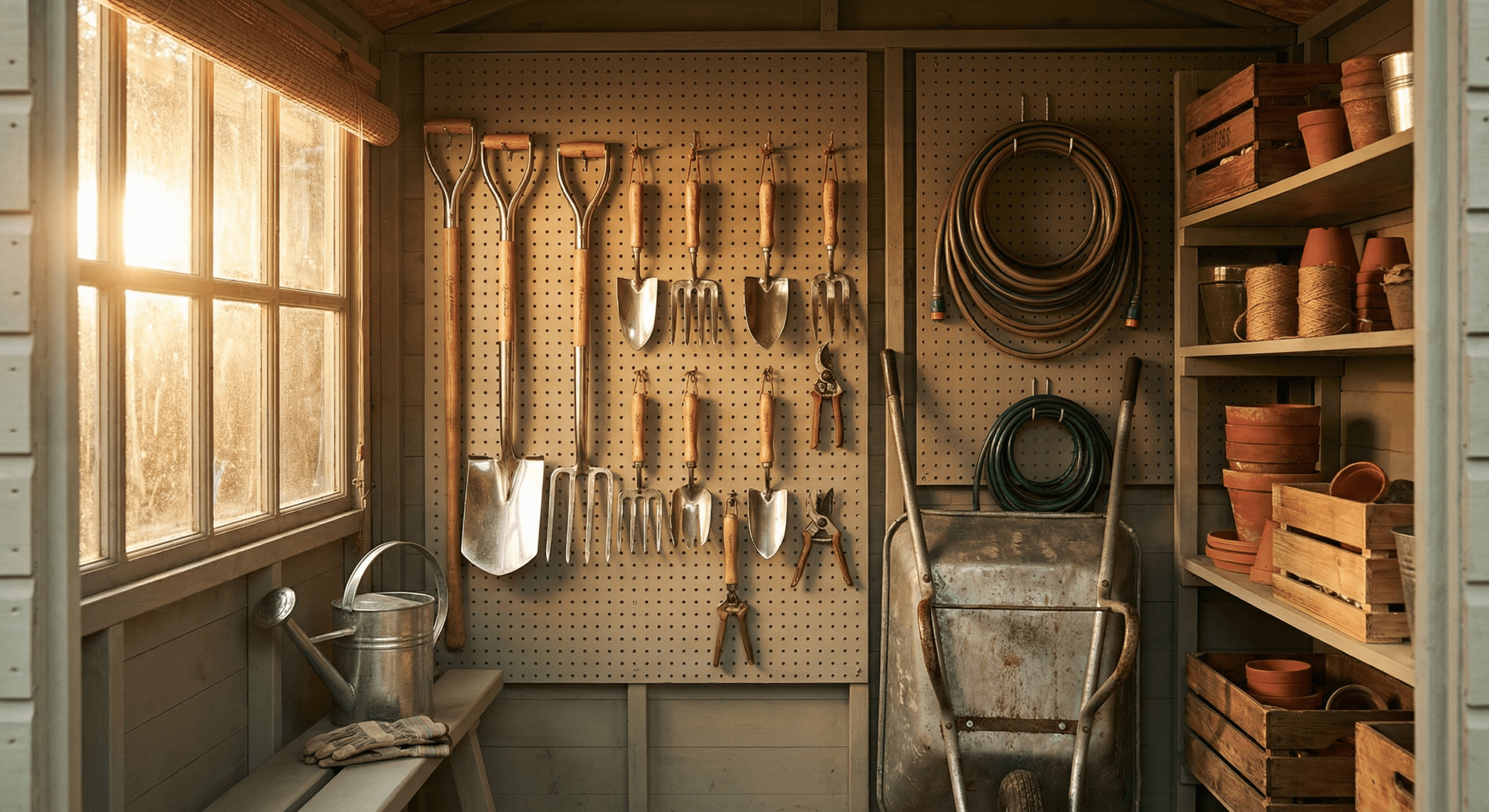
Good tools make gardening faster, easier, and more enjoyable. Poor tools make every task a struggle. The difference is not necessarily in how much you spend — it is in choosing the right tools for your needs, keeping them in good condition, and knowing how to use them properly. In this comprehensive essential guide, we’ll cover everything you need to know.
Shop Related Products: Trowel • Watering Can
For more on essential summer gardening:, see our guide.
For more on essential mulching: single, see our guide.
Related: Garden Planning 101: Mapping Out Your Garden Space Natural Pest Deterrents: Plants That Repel Pests
Looking for quality gardening tools and supplies? Browse our recommended garden products — hand-picked by the GardenWizz team.
Essential Tools: Every: The Essential Toolkit
You do not need a garage full of equipment to be a successful gardener. These core tools cover 90% of garden tasks.
Digging Tools
Garden spade — The workhorse of the garden.Look for a stainless steel head (resists rust and soil adhesion) and a handle length that means you do not have to bend too far. RHS soil testing guide has detailed guidance on this topic.The RHS soil testing guide provides detailed advice on understanding your soil type… A digging fork is equally essential for breaking up soil, aerating lawns, and turning compost. RHS composting guide has detailed guidance on this topic. According to Gardeners’ World, A is one of the most rewarding skills a gardener can develop… The A process is explained in detail by the RHS composting guide, which covers everything from starting your bin to troubleshooting common problems…
Border fork — Smaller and lighter than a digging fork, ideal for working in established borders without disturbing plants too much.
Cultivation Tools
Hand trowel — The tool you will reach for most often.A narrow blade is more versatile than a wide one — it works as a trowel and as a small dibber for planting bulbs. RHS bulbs guide has detailed guidance on this topic. Look for a comfortable handle and a stainless steel blade.
Hand fork — Essential for breaking up soil in borders and containers, removing weeds with tap roots, and mixing in fertiliser around plants.
Dutch hoe — Glide it through the soil surface to sever weed seedlings as they emerge. This is the most efficient way to control annual weeds in borders — do it weekly and barely any weeds will establish.
Draw hoe — Useful for drawing soil around potatoes, creating drills for sowing seeds, and shaping raised beds.
Pruning Tools
Secateurs (pruning shears) — You need two types:
– Bypass secateurs — Like scissors, RHS garden tools guide has detailed guidance on this topic.with blades passing each other. The best all-round choice for green stems.
– Anvil secateurs — One blade meets a flat surface. Better for dry, dead wood.
Spend what you can afford here — cheap secateurs jam, slip, and frustrate. Felco and Burgon and Ball are reliable brands.
Long-handled loppers — For branches too thick for secateurs (roughly 2-3cm diameter). Extended handles give more leverage for less effort.
Pruning saw — For larger branches. A folding saw is safest and most convenient.
Watering Tools
Watering can — Two litres is enough for containers; if you are watering large beds, a 10-litre can with a detachable rose (sprinkler head) is better. A long-spout rose reaches into hanging baskets easily.
Hose and reel — For anything larger than a courtyard garden, a hose is essential. Get a hose reel to keep it tidy. A spray gun with multiple settings (jet for cleaning, gentle for seedlings) is useful.
Cutting and Cleaning Tools
Garden shears — For trim. Gardeners’ World has an excellent mulching guide that covers materials and techniques..ming hedges, grasses, and edge trimming. Electric shears are faster but heavier; manual shears give more control.
Lawn edger — Half-moon edgers create a crisp separation between lawn and borders. This is one of the most satisfying tasks in garden maintenance.
Rake — A standard garden rake levels soil and spreads mulch. A spring-tine rake removes moss and thatch from lawns.
Beyond the Basics: Useful Additions
Once you are comfortable with the essentials, these tools prove their worth:
– Wheelbarrow — Heavy soils and compost are impossible to move efficiently without one. A traditional single-wheel barrow is more manoeuvrable; a two-wheel is more stable on uneven ground.
– Garden kneeler — A kneeling pad or lightweight folding kneeler saves your knees during border work. Some models flip to become a seat.
– Propagator — A heated propagator with a thermostat gives you reliable conditions for seed starting and cutting propagation.
– Garden twine and plant supports — Beyond tools, these are the practical essentials for keeping plants upright.
Looking After Your Tools
The best tools are worthless if they are neglected. Five minutes of care after each session keeps tools in top condition for years.
Clean after every use — Wipe soil from metal blades with a damp cloth. Dry thoroughly.
Sharpen regularly — A sharpening stone or file keeps cutting edges keen. Sharp secateurs make cleaner cuts that heal faster.
Oil metal parts — A light wipe of camellia oil or 3-in-1 oil on blades and hinges prevents rust and keeps mechanisms smooth.
Protect wooden handles — Rub linseed oil into wooden handles annually to prevent drying and cracking.
Store under cover — Tools left out in rain rust and deteriorate rapidly. A shed, garage, or even a covered storage box dramatically extends tool life.
What Not to Buy
Resist the temptation to buy from discount retailers and garden centre impulse stands. Poor quality tools bend, break, or rust within a season, make tasks harder, and end up in landfill.
Buy fewer, better tools and they will serve you for decades. A quality Dutch hoe, properly maintained, will outlast several cheap replacements.
FAQ: Essential Garden Tools
What is the most important tool for beginners?
A hand trowel is indispensable for planting, transplanting, and container work and a good pair of secateurs will get you through the most common tasks. After that, a garden fork and a Dutch hoe.
Do I need an electric or manual hedge trimmer?
For small hedges, manual shears are fine and give a cleaner cut. For hedges over 2m or long runs, electric (cordless is most convenient) saves significant time and effort.
What is better: stainless steel or carbon steel tools?
Stainless steel resists rust and cleans easily — ideal for soil tools. Carbon steel holds a sharper edge but requires more care to prevent corrosion. Both are excellent; stainless is lower maintenance.
What should I look for when buying secateurs?
Ergonomic comfort is paramount — try them in your hand before buying. Look for a replaceable blade (so you do not replace the whole tool when the edge dulls), a locking mechanism that feels secure, and a size appropriate to your hand.
Is a garden power washer worth it?
For patios, decking, and garden furniture, a power washer makes cleaning dramatically faster. A 100-150 bar model is sufficient for garden use.
What is the most overlooked tool maintenance task?
Sharpening — most gardeners never sharpen their secateurs, which means they are making crushing cuts rather than clean cuts. A monthly sharpen with a diamond file or sharpening stone makes an enormous difference.
Final Thoughts
The right tools will not make you a better gardener, but they will make every gardening task more pleasant. Invest in a few quality pieces, maintain them properly, and they will serve you for decades. The spade your grandmother used is still in a shed somewhere — that is the kind of longevity you get from choosing well.
For more on essential skills, read our guide to Composting 101. And for understanding your soil, check out Understanding Soil pH.
Continue Reading
- 5-Step Essential Garden Tools: What Every UK Gardener Needs
- Complete Guide to Week 12 Spring Garden Jobs: May 17-23
- Complete Guide to Week 11 Spring Garden Jobs: May 10-16
- Complete Guide to Week 10 Spring Garden Jobs: May 3-9
- Complete Guide to Week 9 Spring Garden Jobs: April 26 – May 2
Frequently Asked Questions
When is the best time to do this?
The best time depends on your climate zone and what you are growing, but generally early morning or late afternoon when temperatures are cooler works best for most garden tasks.
How often should I check on my garden?
Regular attention is key — check your garden every few days during the growing season. This helps you catch problems early before they become serious.
Can beginners do this?
Absolutely! Start with a few simple tasks and build up gradually. Most garden jobs are beginner-friendly with the right guidance.
What is the most important thing to remember?
Consistency matters more than perfection. Little and often beats occasional marathon sessions. Even 10-15 minutes of daily attention yields great results.


