




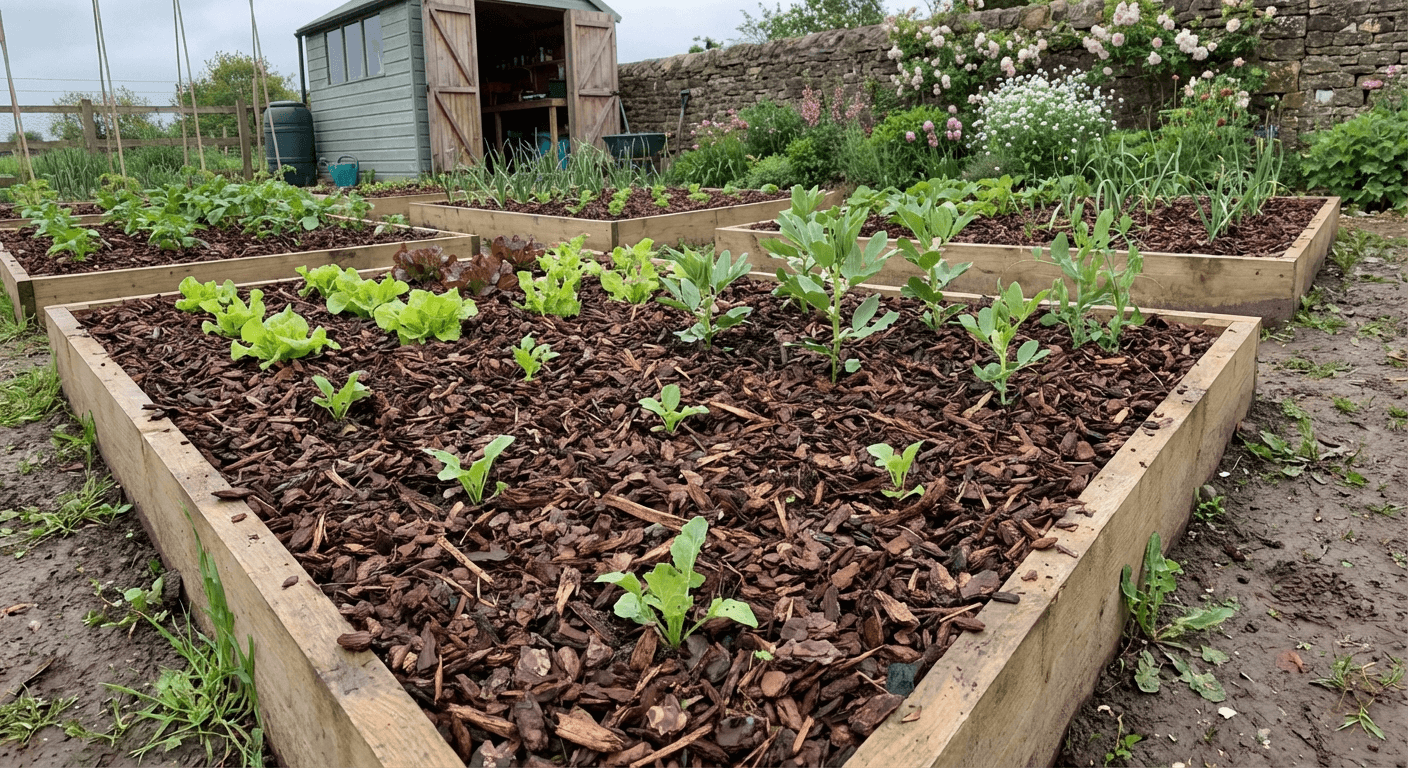
Mulch is often called the most valuable thing you can add to your garden — and for good reason. A layer of mulch over bare soil suppresses weeds, retains moisture, feeds soil life, and gradually improves soil structure. Once you start mulching, you’ll never garden without it.
Mulch: Matters Apply: What You Need
- Organic mulch — 100 litre bag of bark chips
- Landscaping fabric — weed control membrane
- Garden fork — for incorporating mulch
- Gardening gloves — protect your hands
What Is Mulch?
Mulch is any material placed over the surface of soil as a covering. Organic mulches (bark chips, compost, leaf mould) decompose slowly, feeding the soil as they go. Inorganic mulches (gravel, landscape fabric) don’t break down but suppress weeds and look decorative.
Best Organic Mulches for UK Gardens
Bark chips are the classic garden mulch — attractive, long-lasting (2-3 years), and widely available. Well-rotted compost or manure is excellent, especially on vegetable beds — it improves soil as it breaks down. Leaf mould is free if you have trees and makes a wonderful mulch for woodland and shade gardens.
When to Mulch
The best time is spring, when the soil is moist and warming up. Apply mulch to moist soil after we’veeding — never over dry soil or onto a weedy mess. A spring mulch does the most good: it suppresses summer weeds, retains moisture for the growing season, and protects soil from summer storms.
How to Apply
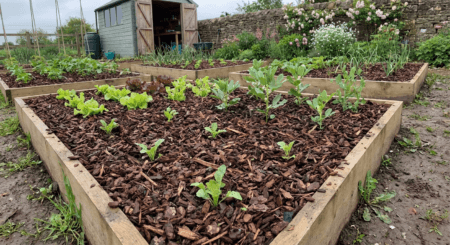
Remove perennial weeds first — don’t mulch over them. Apply in a layer 5-8cm deep over bare soil, keeping mulch away from plant stems (contact causes rotting). Around trees and shrubs, keep mulch 10cm away from the trunk. Less is more with mulch — a thin layer doesn’t suppress weeds, but too thick can cause problems.
Frequently Asked Questions
Will mulch attract slugs and snails?
Some slug species live in moist mulch. However, the benefits usually outweigh this — healthy soil life also includes predators that eat slugs. Avoid mulching around vulnerable seedlings until they’re established.
Does mulch stop perennials coming through?
Perennials will grow through mulch. For areas with persistent perennial weeds like bindweed or couch grass, landscape fabric under bark chips gives longer-term suppression.
How often should I re-mulch?
Bark chips need topping up every 2-3 years as they decompose. Compost or manure mulch can be applied annually and will gradually improve soil structure.
Can I mulch in autumn instead?
Autumn mulching is fine, especially for protecting roots of borderline-hardy plants. Apply after rain when soil is moist.
Mulching is the single best thing you can do for your soil. If you do nothing else this spring, mulch your beds — your plants will thank you for it.
Related Articles
For more help with your garden, check out these related guides:
- Garden Mulch: Why It Matters and How to Apply It
- How to Build a Simple Compost Bin
- Beginner’s Guide to Sweet Peas
- Best Plants for Pollinators
- Herb Garden Guide
Continue Reading
- 5-Step Essential Garden Tools: What Every UK Gardener Needs
- Complete Guide to Week 12 Spring Garden Jobs: May 17-23
- Complete Guide to Week 11 Spring Garden Jobs: May 10-16
- Complete Guide to Week 10 Spring Garden Jobs: May 3-9
- Complete Guide to Week 9 Spring Garden Jobs: April 26 – May 2
Frequently Asked Questions
When is the best time to do this?
The best time depends on your climate zone and what you are growing, but generally early morning or late afternoon when temperatures are cooler works best for most garden tasks.
How often should I check on my garden?
Regular attention is key — check your garden every few days during the growing season. This helps you catch problems early before they become serious.
Can beginners do this?
Absolutely! Start with a few simple tasks and build up gradually. Most garden jobs are beginner-friendly with the right guidance.
What is the most important thing to remember?
Consistency matters more than perfection. Little and often beats occasional marathon sessions. Even 10-15 minutes of daily attention yields great results.