




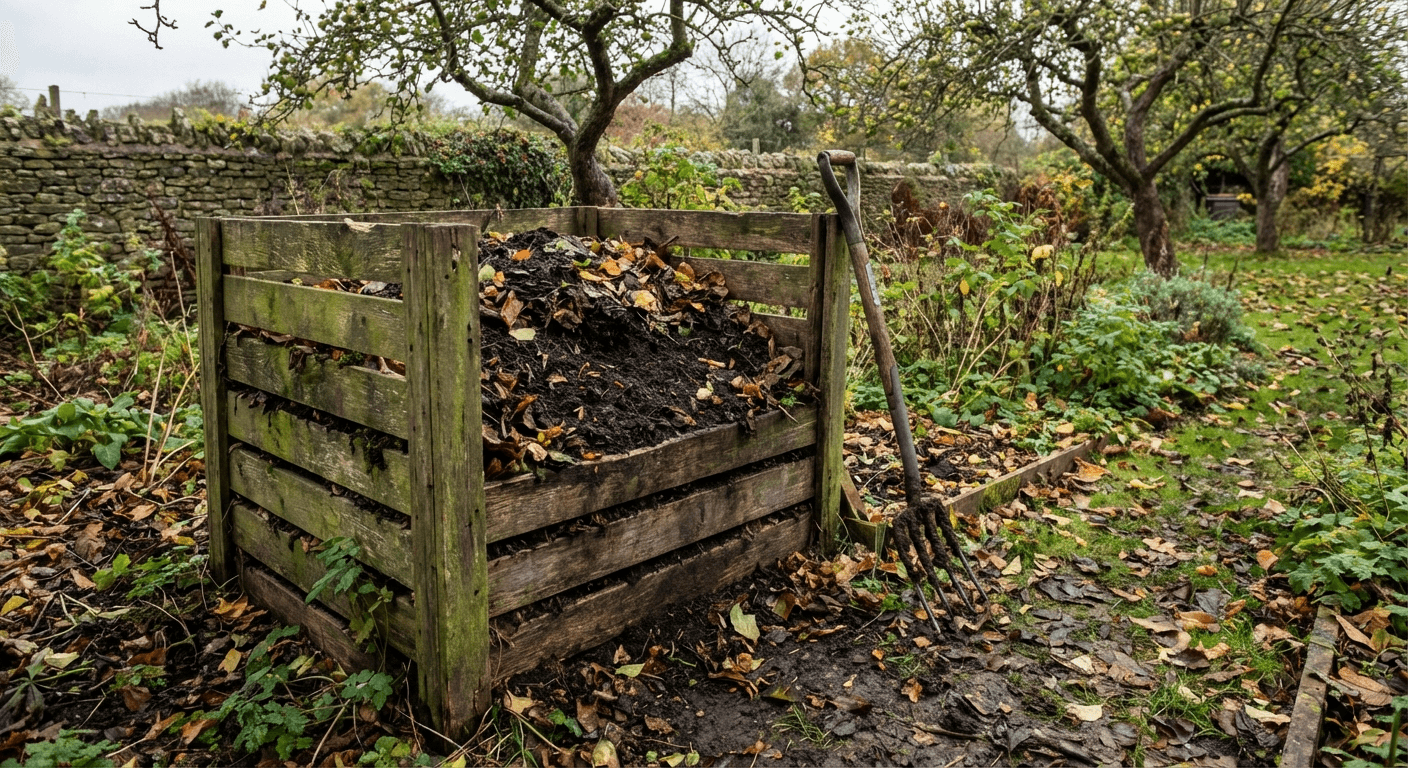
Making your own compost is one of the simplest and most rewarding things any gardener can do. You turn kitchen scraps and garden waste into rich, dark, free soil improver — and keep it out of the bin. This guide shows you how to build a simple compost bin and get started.
Build Compost: What You Need
- Compost bin — 300 litre wooden bin
- Garden fork — for turning compost
- Kitchen caddie — countertop food waste caddie
- Gardening gloves — protect your hands
Choosing a Spot
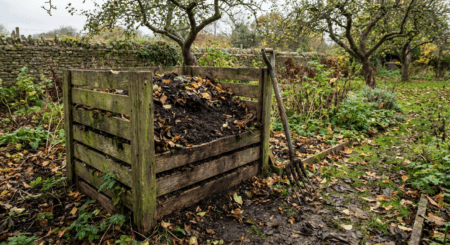
Place your compost bin directly on soil, not concrete or paving. Earthworms and other decomposers need to move freely between the compost and ground. Choose a sunny or partially shaded spot — too shaded and decomposition slows dramatically. Make it convenient to access from both the kitchen and the garden.
What to Compost
Green materials (nitrogen-rich): fruit and veg scraps, coffee grounds, fresh grass clippings, plant material. Brown materials (carbon-rich): cardboard, newspaper, dead leaves, straw, wood chip. The ideal ratio is roughly 1 part green to 3 parts brown by volume — or roughly equal weight.
Building Your First Bin
A simple wooden bin is easy to build with four posts and planks, or buy a ready-made wooden or plastic compost bin. The bin should hold at least 1 cubic metre for effective hot composting — smaller bins work but take longer. Make sure there’s a door or removable front panel for easy access when you want to turn or empty it.
Managing Your Compost
Turn or mix your compost every few weeks with a garden fork — this speeds decomposition dramatically. The compost is ready when it’s dark, crumbly, and smells earthy. In summer, a hot compost heap can break down materials in 6-8 weeks. Cold composting takes 6-12 months but requires less effort.
Frequently Asked Questions
Can I put cooked food in my compost bin?
Cooked food and meat can attract pests. Avoid them in cold compost bins. In a hot composting system, they break down safely at high temperatures.
Why does my compost smell bad?
A bad smell usually means too much green material or overwatering. Add brown material and turn the pile to restore balance.
Can I compost in winter?
Decomposition slows but doesn’t stop. Add material as usual and cover the bin to retain heat. Things speed up again in spring.
Is there a compost bin for small gardens?
Yes — tumbler composters are compact, easy to turn, and pest-resistant. A worm bin (vermicomposter) is another excellent option for small spaces.
Building a compost bin is a weekend project that will supply free soil improver for years. Good for your garden, good for the environment, good for your wallet.
Related Articles
For more help with your garden, check out these related guides:
- Garden Mulch: Why It Matters and How to Apply It
- How to Build a Simple Compost Bin
- Beginner’s Guide to Sweet Peas
- Best Plants for Pollinators
- Herb Garden Guide
Continue Reading
- 5-Step Essential Garden Tools: What Every UK Gardener Needs
- Complete Guide to Week 12 Spring Garden Jobs: May 17-23
- Complete Guide to Week 11 Spring Garden Jobs: May 10-16
- Complete Guide to Week 10 Spring Garden Jobs: May 3-9
- Complete Guide to Week 9 Spring Garden Jobs: April 26 – May 2
Frequently Asked Questions
When is the best time to do this?
The best time depends on your climate zone and what you are growing, but generally early morning or late afternoon when temperatures are cooler works best for most garden tasks.
How often should I check on my garden?
Regular attention is key — check your garden every few days during the growing season. This helps you catch problems early before they become serious.
Can beginners do this?
Absolutely! Start with a few simple tasks and build up gradually. Most garden jobs are beginner-friendly with the right guidance.
What is the most important thing to remember?
Consistency matters more than perfection. Little and often beats occasional marathon sessions. Even 10-15 minutes of daily attention yields great results.