




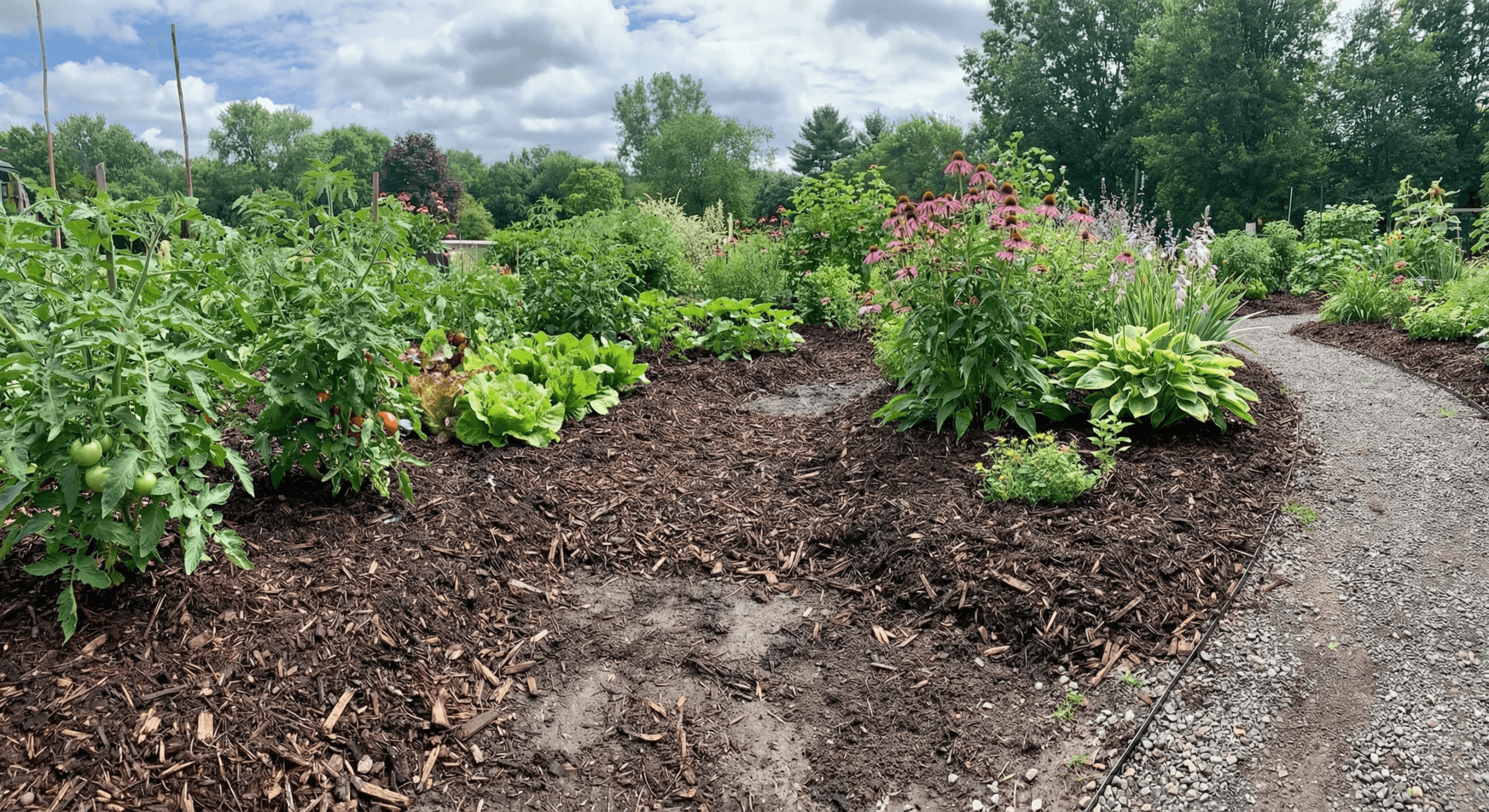
If you do only one thing to improve your garden this season, make it mulching. Mulching – covering the soil surface around plants with a layer of organic material – is arguably the single most beneficial act of garden maintenance. It suppresses weeds, retains moisture, improves soil structure, feeds earthworms, regulates soil temperature, and protects plant roots from extremes of hot and cold.
5-Step Mulch: Matters: What You’ll Need
Before you start, gather these essentials:
- Garden mulch bark chips — Decorative bark chip mulch for garden borders
- Organic compost — Quality organic compost for mulching beds
- Straw mulch — Clean straw mulch for vegetable gardens and soft fruit
- Landscape fabric — Weed-suppressing landscape fabric for borders and paths
And yet it is also one of the most overlooked. But healthy soil is the foundation of everything, and mulching is the simplest, most effective way to nurture it.
The Benefits of Mulching
Weed suppression: A 5-8cm mulch layer blocks light from weed seeds, dramatically reducing germination. Annual weeds are almost completely suppressed.
Moisture retention: Bare soil loses water rapidly through evaporation. A mulch layer acts as insulation, keeping the soil cool and moist. Research shows mulched soil retains 25% more moisture than bare soil.
Soil improvement: Organic mulches gradually break down and are incorporated into the soil by earthworms and other soil organisms, adding organic matter and nutrients to the root zone. Over years, this transforms soil structure.
Temperature regulation: Soil under mulch stays cooler in summer heat and warmer in winter, protecting shallow roots from temperature extremes.
Disease reduction: Mulch prevents soil-borne fungal spores from splashing onto plant leaves – a key factor in reducing blight in tomatoes and other soil-borne diseases.
Types of Garden Mulch
Garden compost: The most versatile and immediately beneficial mulch. It adds nutrients, improves structure, and feeds soil life. Apply a 5cm layer. Best used around established herbaceous perennials, fruit bushes, and vegetables.
Bark chips: Decorative and long-lasting (2-3 years before needing topping up). Excellent around shrubs and trees. Do not use fine bark near young seedlings as it can temporarily lock up nitrogen during decomposition.
Straw: The classic vegetable garden mulch. Apply thickly (10-15cm) around soft fruit, potatoes, and strawberries. Suppresses weeds, retains moisture, and keeps fruit clean. Straw also provides valuable habitat for predatory beetles that eat aphids and slugs.
Leaf mould: Made from decomposed autumn leaves, this is a wonderful, free mulch for woodland plants, perennials, and any moisture-loving plant. Apply 5-8cm. It has a low nutrient content but extraordinary water-holding capacity.
Cocoa shell: Attractive and effective, with a rich chocolate-brown colour. Use cautiously around dogs as it can be toxic if ingested. Apply 5cm.
When and How to Mulch
The best time to apply an organic mulch is spring, once the soil has warmed up and is moist from winter rains – typically late March to May in the UK. Applying mulch to cold, wet soil can slow warming and create conditions favourable to slugs and snails.
Before mulching, clear the area of annual weeds and water the soil if it is dry. Apply the mulch in a thick, even layer (5-8cm for most materials, 10-15cm for straw), keeping it away from direct contact with plant stems and trunks – a collar of 5cm around the stem prevents rotting.
Mulch can be applied at any time of year when conditions are right. Autumn is ideal for applying leaf mould and compost around perennials before winter sets in. The key principle is: mulched soil should never be bare.
Mulching Through the Seasons
Spring mulching is the most beneficial – apply as soils warm and plants begin active growth. Top up existing mulch rather than replacing it entirely. Autumn mulching is valuable for protecting borderline-hardy plants and improving soil structure over winter. Summer mulching should focus on water retention around thirsty crops. Winter is generally not the time to add mulch, especially on cold, waterlogged clay soils where it can exacerbate problems.
Garden mulch is one of the simplest, cheapest, and most effective improvements you can make to any garden. Once you make it a regular habit, you will notice the difference in weed levels, plant health, and soil quality almost immediately.
Frequently Asked Questions
When is the best time to do this?
The ideal time depends on your climate and the specific plants involved. Generally, early morning or late afternoon are best to avoid the heat of the day.
How often should I check on this?
Check your garden at least once a week during the growing season to catch any issues early and keep on top of tasks.
Can I do this in a container instead?
Many garden tasks can be adapted for containers. Use a good quality potting compost and ensure containers have adequate drainage holes.
What if I don’t have the right tools?
Start with the basics — a trowel, fork, gloves, and watering can will get you a long way. Add tools as you need them.
Related Articles
For more help with your garden, check out these related guides:
- Beginner’s Guide to Growing Sweet Peas
- Best Plants for Pollinators
- Herb Garden Hub
- How to Build a Raised Bed
Continue Reading
- 5-Step Essential Garden Tools: What Every UK Gardener Needs
- Complete Guide to Week 12 Spring Garden Jobs: May 17-23
- Complete Guide to Week 11 Spring Garden Jobs: May 10-16
- Complete Guide to Week 10 Spring Garden Jobs: May 3-9
- Complete Guide to Week 9 Spring Garden Jobs: April 26 – May 2
Frequently Asked Questions
When is the best time to do this?
The best time depends on your climate zone and what you are growing, but generally early morning or late afternoon when temperatures are cooler works best for most garden tasks.
How often should I check on my garden?
Regular attention is key — check your garden every few days during the growing season. This helps you catch problems early before they become serious.
Can beginners do this?
Absolutely! Start with a few simple tasks and build up gradually. Most garden jobs are beginner-friendly with the right guidance.
What is the most important thing to remember?
Consistency matters more than perfection. Little and often beats occasional marathon sessions. Even 10-15 minutes of daily attention yields great results.

