




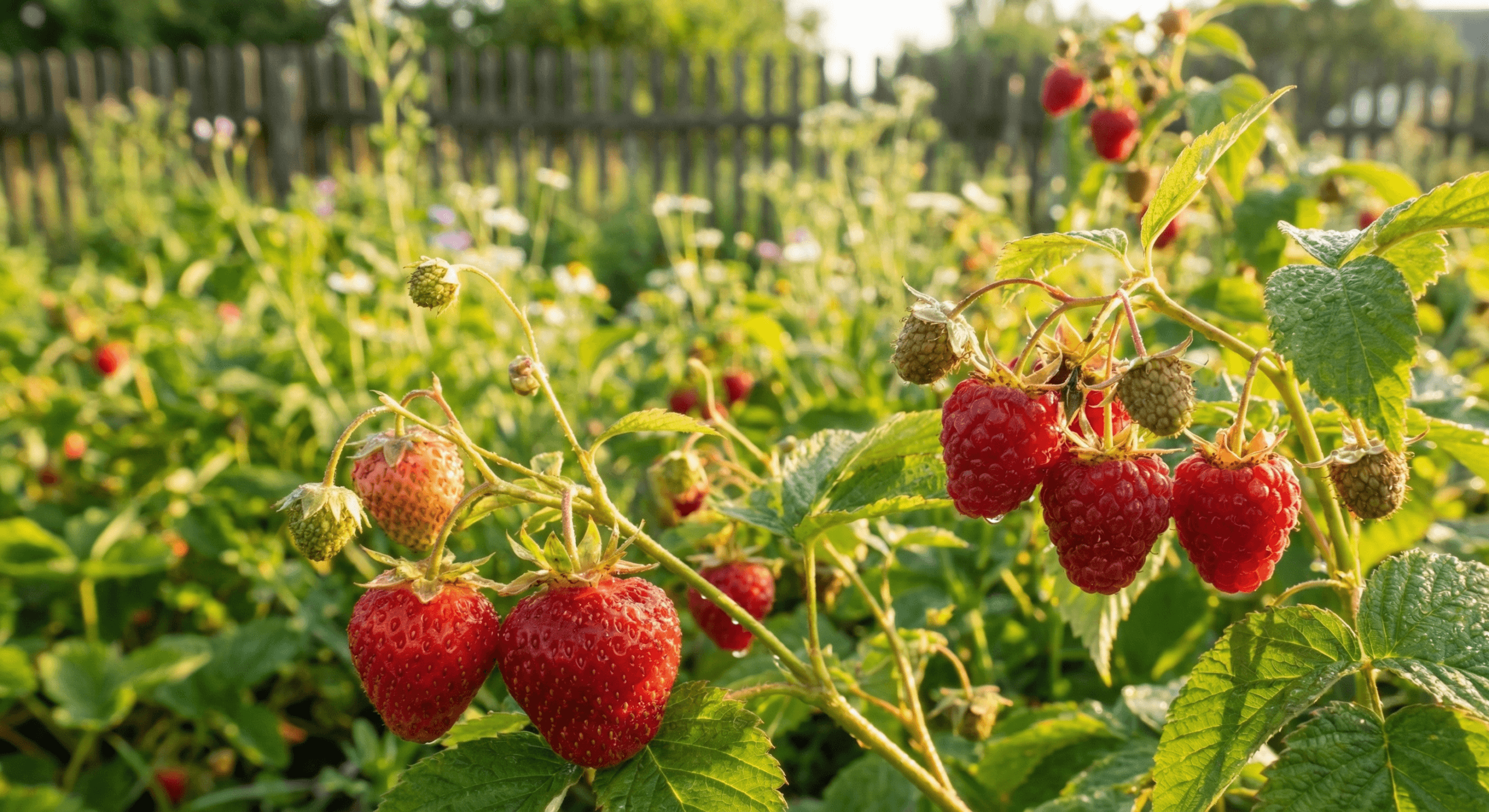
Few things in gardening compare to the taste of a sun-warmed strawberry picked right from your own garden, or the satisfaction of freezing bags of homegrown blueberries for winter smoothies. Berries are among the most rewarding fruits to grow at home — they’re productive, relatively compact, and the fresh-picked flavor puts store-bought to shame.
Shop Related Products: Raised Bed
For more on essential summer gardening:, see our guide.
For more on essential mulching: single, see our guide.
Related: Garden Planning 101: Mapping Out Your Garden Space Natural Pest Deterrents: Plants That Repel Pests
Looking for quality gardening tools and supplies? Browse our recommended garden products — hand-picked by the GardenWizz team.
Choosing Which Berries to Grow
Strawberries: The gateway berry. Great for containers, raised beds, or garden borders. Produces fruit in the first year if planted early in spring.
Blueberries: More particular about soil (must be acidic), but absolutely worth it. The RHS soil testing guide provides detailed advice on understanding your soil type… A mature bush can produce 8-15 pounds of berries per year.Also makes a beautiful landscape shrub. RHS garden design guide has detailed guidance on this topic.
Raspberries (Red, Black, and Yellow): Highly productive. Once established, a small patch provides berries for years.
Blackberries: Tough and productive. Thornless varieties make harvesting much more pleasant.
Currants and Gooseberries: Underrated gems that thrive in partial shade and tolerate cold. Great for preserves and pies.
Site Selection and Preparation
Sunlight: All berries produce best in full sun (6-8 hours), though they tolerate some shade with reduced yields.
Soil: Well-drained soil is non-negotiable — berries hate wet feet. If you have heavy clay, plant in raised beds.
Prepare the soil: Work 2-3 inches of organic compost into the planting area into the top 6-8 inches. Berries are shallow-rooted.
Spacing:
– Strawberries: RHS soft fruit guide has detailed guidance on this topic.12-18 inches apart, rows 3-4 feet apart
– Blueberries: 4-6 feet apart
– Raspberries/Blackberries: 2-3 feet apart, rows 6-8 feet apart
Planting and Early Care
Strawberries
Plant in early spring as soon as soil can be worked. Set plants so the crown is at soil level — bury it and the plant will rot. In the first year, pinch off all flowers to let the plant establish roots. Starting in year two, enjoy abundant harvests!
Blueberries
Blueberries require acidic soil (pH 4.5-5.5). Test your soil before planting! If it’s too alkaline, amend with sulfur or plant in containers with acidic potting mix. Blueberries are partially self-unfruitful — plant at least two different varieties for cross-pollination.
Raspberries and Blackberries
Plant bare-root canes in late winter to early spring.Dig a hole twice as wide as the roots, spread roots out, backfill with native soil, RHS soil testing guide has detailed guidance on this topic.and water deeply. Cut canes back to 6 inches at planting.
Watering and Nutrition
Watering: Berries need consistent moisture — 1-2 inches per week, especially when fruit is developing. Drip irrigation at soil level is ideal. Avoid overhead sprinklers, which promote fungal diseases.
Feeding: Berries are light feeders.A spring application of compost or balanced organic fertilizer is usually plenty. RHS composting guide has detailed guidance on this topic. According to Gardeners’ World, A is one of the most rewarding skills a gardener can develop… The A process is explained in detail by the RHS composting guide, which covers everything from starting your bin to troubleshooting common problems… Too much nitrogen means lots of leaves, few berries.
Managing Pests
Birds: The 1 berry thief. Protect fruit with garden netting draped over bushes draped over bushes.
Spotted Wing Drosophila: A fruit fly pest that attacks ripening fruit. Use traps and harvest frequently. Gardeners’ World has an excellent mulching guide that covers materials and techniques..
Powdery mildew: White coating on leaves. Choose resistant varieties and space plants properly.
Winter Protection
Strawberries: In zones below 5, apply 4 inches of straw mulch after the ground freezes. Remove in early spring.
Blueberries: In very cold climates, wrap bushes with burlap.
Raspberries/Blackberries: In zones below 5, bend canes down and cover with mulch.
Pruning Basics — use sharp garden secateurs for clean cuts
Strawberries: Renovate June-bearing varieties after harvest by mowing rows and thinning.
Blueberries: Remove dead, broken, or rubbing branches in late winter. Thin oldest canes to encourage new growth.
Raspberries: Cut spent floricanes to the ground after harvest. In late winter, thin remaining canes to about 6-8 per linear foot of row.
Growing berries at home takes a bit of know-how and initial setup, but once established, a small berry patch can produce for decades. The taste difference alone makes it worth every bit of effort. Go berry growing!
Frequently Asked Questions
When is the best time to do this in the UK?
The ideal timing depends on your location and the specific task. Spring (March-May) is generally the busiest gardening season in the UK, though autumn is perfect for planting and soil improvement.
Do I need expensive equipment to get started?
No. A few quality basic tools — a trowel, hand fork, watering can, and gloves — will see you through most beginner gardening tasks.
Is this suitable for small spaces or containers?
Most gardening tasks can be adapted for small spaces. Containers, grow bags, and raised beds all work well on patios, balconies, and even windowsills.
Can beginners do this successfully?
Absolutely. UK gardens are full of challenging conditions — clay soil, shade, slugs — but beginners achieve great results every year by starting small and learning as they grow.


