




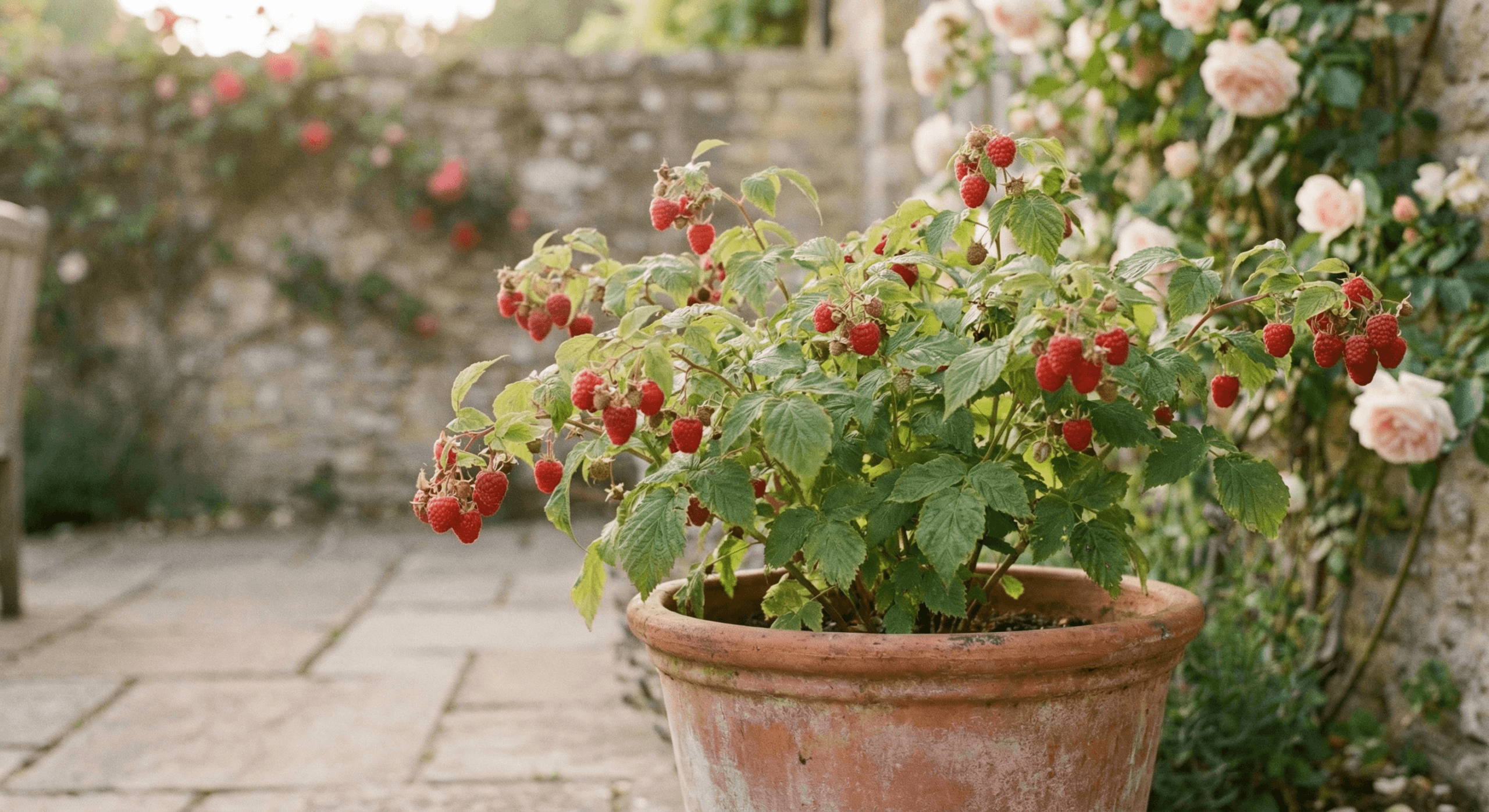
Raspberries are one of the most rewarding soft fruits you can grow at home — and you don’t need an allotment to do it. Growing raspberries in containers is a brilliant option for UK gardeners with patios, balconies, or limited outdoor space. With the right variety, a decent-sized pot, and a bit of care, you can enjoy a generous crop of sweet, sun-warmed berries straight from your own container garden.
Grow Raspberries Containers:: Why Grow Raspberries in Containers?
There are plenty of reasons to choose containers over open ground. If you rent your home, containers mean you can take your plants with you. Containers also give you total control over soil quality — raspberries like slightly acidic, free-draining compost — and they keep the plants contained rather than letting them spread via runners across your garden. Pests like aphids and raspberry beetle are easier to spot on container-grown plants, and you can move pots to follow the sun or under cover during a wet British summer.
What You’ll Need
Before you start, gather the essentials:
– **Raspberry canes** — Look for certified disease-free stock from a reputable UK supplier. Two popular options are Glen Ample (summer-fruiting) and Autumn Bliss (autumn-fruiting).
– **Large container** — At least 50cm diameter and 40cm deep. A terracotta or fabric grow bag works well.
– **Quality compost** — Use a loam-based compost such as John Innes No. 3, mixed with about 20% perlite for drainage.
– **Support stakes or a small trellis** — Bamboo canes or a mini trellis to tie in the canes as they grow.
– **General fertiliser** — Blood, fish and bone or a slow-release granular fertiliser.
– **Secateurs/shears** — For pruning. A sharp pair of bypass secateurs is essential.
Best Raspberry Varieties for Containers
Not all raspberries are equally suited to container life. Here are the best UK choices:
**Summer-fruiting:**
– **Glen Ample** — Thornless, heavy-cropping, and easy to manage. A reliable all-rounder.
– **Malling Jewel** — Compact growth, ideal for smaller pots, with excellent flavour.
**Autumn-fruiting:**
– **Autumn Bliss** — Compact and tidy, perfect for containers. Produces from August to October.
– **All Gold** — A yellow-fruited variety with the same compact habit as Autumn Bliss.
Autumn-fruiting varieties are generally easier for beginners because they fruit on the current season’s growth — pruning is simple and mistakes are forgiven.
Choosing the Right Container
Raspberries have shallow but wide root systems. A container at least 50cm wide and 40cm deep is the minimum for one cane; two or three canes can share a larger pot or grow bag. Terracotta looks beautiful but dries out faster than plastic or fabric — bear this in mind during summer. Fabric grow bags are excellent for raspberries because they promote air-pruning of roots and prevent waterlogging.
Whatever you choose, make sure there are adequate drainage holes in the base.
Planting Your Raspberries
Fill your container with John Innes No. 3 mixed with perlite, leaving about 5cm below the rim. Plant the cane at the same depth it was growing in its nursery pot — the soil mark on the stem should be just visible. Water well and place the pot in a sunny, sheltered spot. Raspberries need at least 6 hours of direct sun in summer to fruit well.
Insert your support stakes or trellis at planting time, before the roots are in the way. Tie the canes loosely as they grow.
Ongoing Care
**Watering** is critical, especially from flowering through to harvest. Containers dry out much faster than open ground — check daily in summer and never let the compost fully dry out. That said, waterlogged roots are just as harmful, so ensure excess water can escape freely.
**Feeding** from spring onwards will boost your crop. Apply a high-potash liquid feed (like a tomato fertiliser) every couple of weeks from May through August.
**Weeding** is straightforward in containers — there simply aren’t many weeds to deal with. A light mulch of bark or gravel on top of the compost helps suppress weeds and retain moisture.
Pruning
Pruning differs between summer and autumn-fruiting types:
– **Summer-fruiting:** Cut out old canes that have fruited after harvest, leaving new canes to grow for next year. Thin to 4–6 strong new canes per plant.
– **Autumn-fruiting:** Simply cut all canes back to ground level in late winter (February). New canes will grow and fruit the same year.
This difference makes autumn varieties particularly easy to manage in containers.
Harvesting
Pick raspberries when they’re fully coloured and come away from the plug (the central core) easily. The best time is early morning, once the dew has dried. Eat them fresh, freeze surplus, or make jam — homegrown raspberries rarely make it as far as the kitchen.
Frequently Asked Questions
**Can I grow raspberries in a container all year round?**
Yes. In the ground, raspberries are fully hardy in the UK and don’t need winter protection. In a container, the roots are more exposed to cold. Move pots against a sheltered wall or wrap the container in fleece during hard frosts.
**How many canes can I grow in one pot?**
One strong cane per 50cm container is ideal. In a large grow bag, 2–3 canes spaced about 30cm apart will work.
**Do I need two varieties for pollination?**
Most modern raspberry varieties are self-fertile, so a single plant will produce fruit. Planting two different varieties can extend your harvest season.
**When should I repot?**
Every 2–3 years, refresh the compost or move the plant into a slightly larger container. Raspberries don’t mind being rootbound, but compost exhausted of nutrients will reduce cropping.
Ready to Get Growing?
Growing raspberries in containers is one of the most satisfying projects for any UK gardener with a sunny patio or balcony. With minimal equipment and a little weekly attention, you can look forward to a sweet summer harvest for years to come.
Browse our full range of fruit plants and gardening supplies to get everything you need to get started today.
Frequently Asked Questions
When is the best time to gardening in the UK?
Most tasks can be done spring through autumn. Check specific plant requirements.
Do I need any special equipment?
Basic tools: spade, fork, watering can, and gloves.
Can beginners do this?
Yes! Start small and learn as you grow.
How long does it take?
Varies by task from 30 minutes to several hours.
Related Articles
For more help with your garden, check out these related guides:
- How to Grow Blackcurrants: The Complete UK Guide
- Beginner’s Guide to Sweet Peas
- Best Plants for Pollinators
- Herb Garden Guide
Continue Reading
- 5-Step Essential Garden Tools: What Every UK Gardener Needs
- Complete Guide to Week 12 Spring Garden Jobs: May 17-23
- Complete Guide to Week 11 Spring Garden Jobs: May 10-16
- Complete Guide to Week 10 Spring Garden Jobs: May 3-9
- Complete Guide to Week 9 Spring Garden Jobs: April 26 – May 2
Frequently Asked Questions
When is the best time to do this?
The best time depends on your climate zone and what you are growing, but generally early morning or late afternoon when temperatures are cooler works best for most garden tasks.
How often should I check on my garden?
Regular attention is key — check your garden every few days during the growing season. This helps you catch problems early before they become serious.
Can beginners do this?
Absolutely! Start with a few simple tasks and build up gradually. Most garden jobs are beginner-friendly with the right guidance.
What is the most important thing to remember?
Consistency matters more than perfection. Little and often beats occasional marathon sessions. Even 10-15 minutes of daily attention yields great results.


