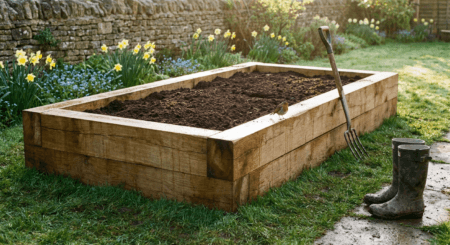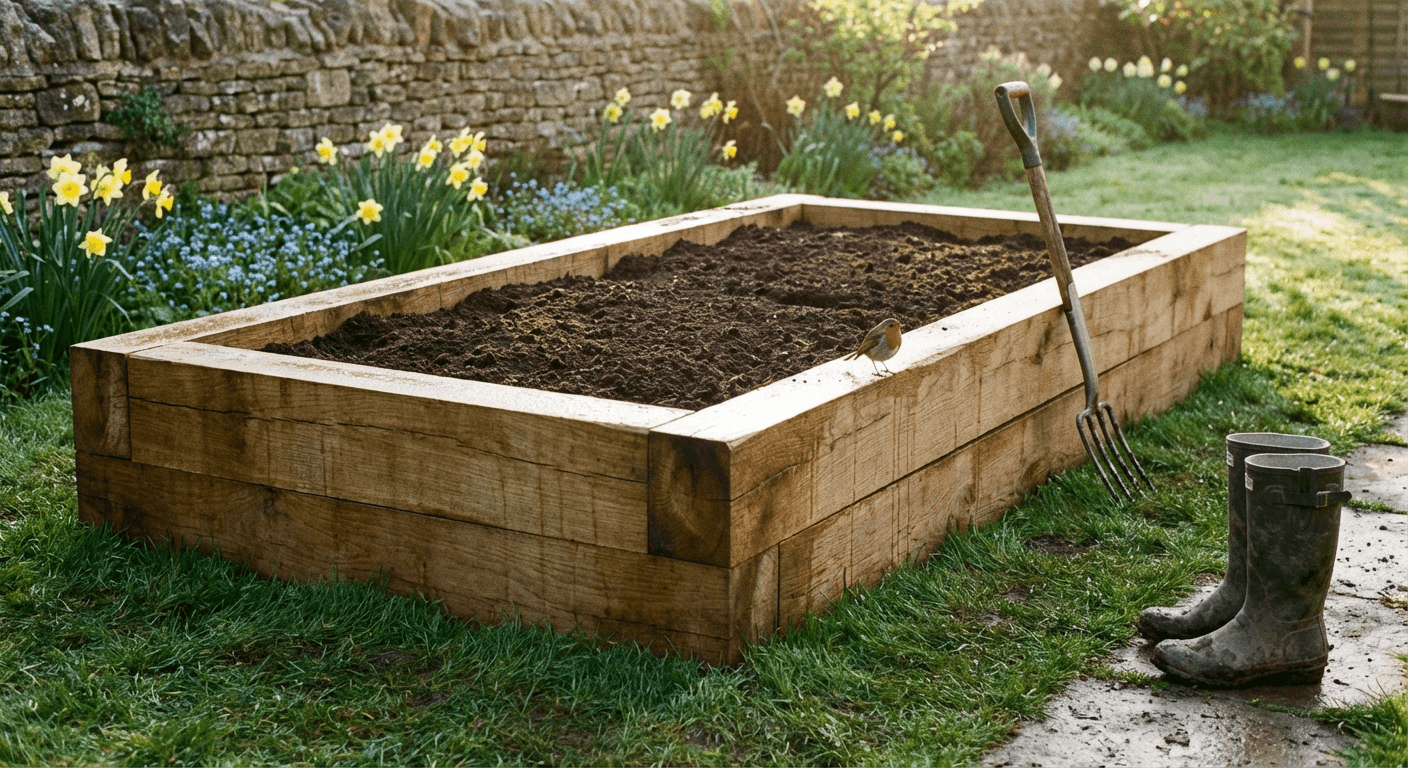
Building a raised bed is one of the best investments you can make in your garden. It gives you control over soil quality, is easier on your back, and looks brilliant when done well. This guide walks you through exactly what you need — tools and materials — and how to build it step by step.
Build Raised Bed:: What You Need
Tools for This Job
- Tape measure — for marking out accurate dimensions
- Spirit level — to ensure your frame is perfectly level
- Power drill / screwdriver — for screwing corners together (faster than nailing)
- Hand saw or circular saw — if you need to cut timber to size
- Hammer — for tapping timber into place
- Work gloves — protect your hands from rough timber
- Rubber mallet — for nudging frames square without damaging wood
Products to Buy
- Timber raised bed kit or sleepers — the frame itself; 1.2m x 2.4m is a good beginner size
- Outdoor timber screws (75mm) — at least 8 per corner for a secure join
- Landscape fabric — lines the inside to suppress weeds and retain moisture
- Raised bed compost or topsoil — 2-3 bags per 1.2m x 2.4m bed
Step 1: Choose Your Spot
Most vegetables need 6+ hours of direct sunlight, so pick the sunniest spot you have. Avoid areas where water pools after rain — raised beds need good drainage. Once you’ve chosen the spot, mark out the dimensions with string or pegs.
Step 2: Prepare the Ground
If you’re building on grass or weeds, cut the area short and lay cardboard over it — this kills the vegetation underneath over 2-3 months. Don’t skip this step or weeds will grow up through your new bed.
Step 3: Build the Frame
Follow the manufacturer’s instructions if using a kit. For sleepers, drill pilot holes first to prevent splitting, then screw corners together using two screws per post. Check with a spirit level as you go — it’s much easier to fix now than when it’s full of soil.
Step 4: Line and Fill
Line the inside with landscape fabric, tucking it into the corners. Fill with a mix of topsoil and compost — about 60% topsoil, 40% compost works well for vegetables. Leave 2-3cm at the top so water doesn’t spill over.
Frequently Asked Questions
How high should a raised bed be?
30-45cm is ideal for most vegetables. Higher is better for accessibility if you have back problems — up to 60-90cm.
Do I need to line a raised bed?
Yes — landscape fabric between the timber and soil extends the life of the wood significantly and prevents weeds coming through the sides.
What’s the best timber for raised beds?
Hardwood sleepers last longest (15-20 years). Treated softwood is cheaper but may need replacing after 8-10 years.
Can I fill a raised bed with just compost?
You can, but it’s expensive and compost alone shrinks as it decomposes. A mix of topsoil and compost is more sustainable and more affordable.
A raised bed is a weekend project that will serve your garden for years. Get the tools right and it goes together in an afternoon.
Related Articles
For more help with your garden, check out these related guides:
- Beginner’s Guide to Growing Sweet Peas
- Best Plants for Pollinators
- Herb Garden Hub
- How to Build a Raised Bed
Continue Reading
- 5-Step Essential Garden Tools: What Every UK Gardener Needs
- Complete Guide to Week 12 Spring Garden Jobs: May 17-23
- Complete Guide to Week 11 Spring Garden Jobs: May 10-16
- Complete Guide to Week 10 Spring Garden Jobs: May 3-9
- Complete Guide to Week 9 Spring Garden Jobs: April 26 – May 2
Frequently Asked Questions
When is the best time to do this?
The best time depends on your climate zone and what you are growing, but generally early morning or late afternoon when temperatures are cooler works best for most garden tasks.
How often should I check on my garden?
Regular attention is key — check your garden every few days during the growing season. This helps you catch problems early before they become serious.
Can beginners do this?
Absolutely! Start with a few simple tasks and build up gradually. Most garden jobs are beginner-friendly with the right guidance.
What is the most important thing to remember?
Consistency matters more than perfection. Little and often beats occasional marathon sessions. Even 10-15 minutes of daily attention yields great results.