




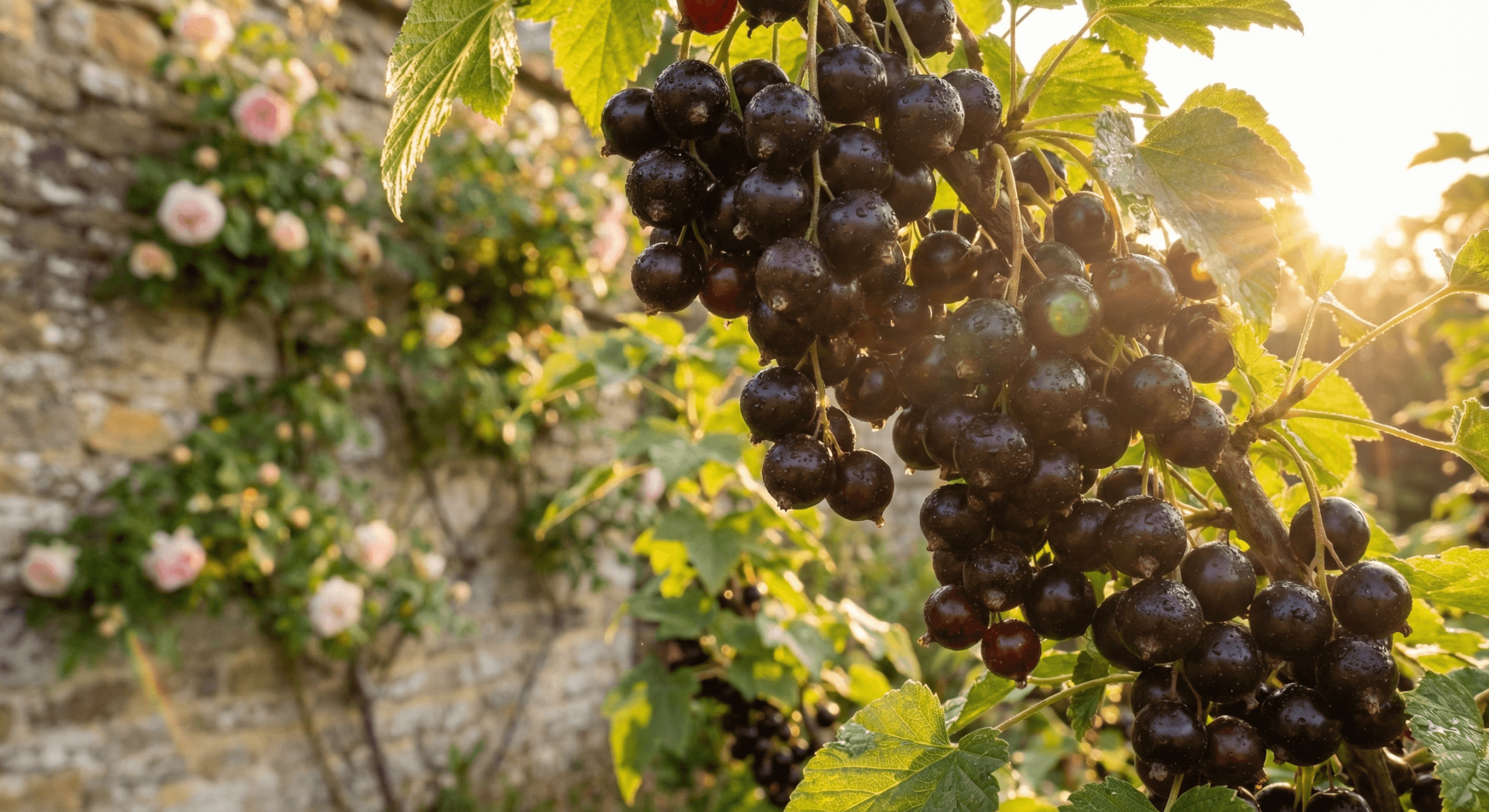
Blackcurrants are one of the most rewarding soft fruits you can grow in a UK garden. Packed with vitamin C and bursting with a deep, tangy flavour, these glossy dark berries are perfect for jams, pies, cordials, and summer puddings. Whether you have a large allotment or a modest back garden, blackcurrants are surprisingly easy to cultivate — and this guide will walk you through every step.
Grow Blackcurrants:: Why Grow Blackcurrants?
Blackcurrants (Ribes nigrum) are native to the cooler parts of Europe and are exceptionally well-suited to the British climate. They thrive in the UK’s damp springs and reliable summers, producing heavy crops of berries from July to August. A single established bush can yield up to 4.5 kg (10 lbs) of fruit per year, making them one of the most productive soft fruits for home growers.
Beyond their culinary versatility, blackcurrant bushes are attractive garden plants. They have delicate, pale-green spring flowers followed by cascades of dark berries and, come autumn, their leaves turn a warm, russet gold — giving you visual interest across three seasons.
What You’ll Need
Before you head to the garden, here are the essential tools and products to get started:
– **Blackcurrant Bushes** – Bare-root or pot-grown bushes are widely available from UK nurseries. ‘Ben Connan’ and ‘Ben Lomond’ are two of the most popular, reliable varieties for British gardens, offering excellent disease resistance and heavy yields. Buy blackcurrant bushes on Amazon UK
– **Garden Fork & Spade** – You’ll need well-draining soil, so a good garden fork is essential for breaking up compacted earth before planting. View garden forks on Amazon UK
– **Organic Mulch** – A thick layer of organic mulch around the base of bushes helps retain moisture, suppress weeds, and feed the soil as it decomposes. Browse organic mulches on Amazon UK
– **Ergonomic Pruning Shears** – Blackcurrants fruit on one- and two-year-old wood, so regular pruning is essential. Sharp, comfortable secateurs make this job much easier. Shop pruning shears on Amazon UK
– **Berry Harvesting Rake or Comb** – Makes collecting berries from clusters quick and satisfying, rather than picking each berry individually. Find berry rakes on Amazon UK
Choosing the Right Variety
The UK has an excellent range of blackcurrant varieties bred specifically for our climate. Here are some top picks:
**Ben Connan** — A compact variety ideal for smaller gardens or containers. Produces large, sweet berries with good disease resistance. Very reliable cropper.
**Ben Lomond** — The most widely grown variety in the UK. Upright growth, heavy crops, and excellent frost tolerance thanks to its late-blooming flowers.
**Big Ben** — As the name suggests, this variety produces exceptionally large berries — up to twice the size of standard blackcurrants. Great for eating fresh.
**Jonkheer Tinks** — A Dutch heirloom variety popular with home growers. Rich, intense flavour perfect for cooking and preserving.
Planting Your Blackcurrant Bush
### When to Plant
Bare-root blackcurrants should be planted between November and March, when the bushes are dormant. Container-grown plants can be planted at any time of year, though autumn and early spring are best.
### Where to Plant
Choose a sunny or partially shaded spot with well-drained but moisture-retentive soil. Blackcurrants don’t like to sit in waterlogged ground, but they do need consistent moisture to produce plump, juicy berries. A south or west-facing border is ideal, though they will tolerate light shade.
Avoid planting in a spot where you have recently grown other currants or gooseberries, as soil-borne diseases can linger.
### How to Plant
Dig a hole roughly twice the width of the root ball. Add a generous handful of well-rotted manure or garden compost to the base of the hole. Place the bush so that the old soil mark sits just below the surface — this encourages new shoots to grow from below ground level.
Backfill, firm gently, and water well. Apply a 5 cm (2 inch) mulch layer around the base, keeping it clear of the stem. Space bushes about 1.5 m (5 feet) apart.
Caring for Your Bushes
### Watering
Blackcurrants need regular watering, especially during dry spells from flowering through to harvest. A lack of water at this stage will result in small, shrunken berries. Water deeply once or twice a week rather than little and often.
### Feeding
In early spring, apply a sulphate of ammonia or a high-nitrogen fertiliser to encourage strong growth. Follow up in late spring with a potassium-rich feed (such as liquid tomato fertiliser) to support fruit development. A winter mulch of well-rotted manure will also work wonders.
### Pruning
Pruning is crucial for healthy, productive bushes. The aim is to maintain a goblet-shaped framework of 8–10 main stems, removing any weak, diseased, or crossing shoots.
After harvesting, cut out the oldest stems (they will be darker and barkier) right to the base. This frees up space for vigorous young shoots that will fruit the following year. Never remove more than a third of the bush at once.
Harvesting
Blackcurrants ripen in clusters — wait until the berries are fully black and slightly soft to the touch before picking. They don’t continue to ripen after picking, so be patient. Harvest the entire strig (the stem holding the cluster) rather than individual berries to avoid bruising.
Pick on a dry day for best storage. Fresh berries will keep in the fridge for a few days, but they truly shine when frozen, made into jam, or turned into a rich blackcurrant cordial.
Common Problems and How to Solve Them
**American Gooseberry Mildew** — A fungal disease that appears as a white, powdery coating on leaves and stems. Improve air circulation and remove affected shoots. Spray with a fungicide if necessary.
**Big Bud Mite** — Tiny mites live inside the buds, causing them to swell unnaturally. Squash affected buds or remove and destroy the worst branches.
**Birds** — Blackcurrants are irresistible to birds, particularly starlings and blackbirds. Use netting as the berries start to ripen.
**Reversion Virus** — Spread by big bud mite, this virus causes leaves to lose their characteristic shape and colour. There is no cure — remove and dispose of affected plants immediately.
Frequently Asked Questions
**Can I grow blackcurrants in a container?**
Yes! Choose a compact variety like ‘Ben Connan’ and use a large pot (at least 45 cm / 18 inches in diameter) filled with quality compost. Container-grown bushes will need more frequent watering and feeding.
**When do blackcurrants fruit?**
In the UK, blackcurrants typically fruit from early July to mid-August, depending on the variety and your location.
**Do I need two bushes for pollination?**
No — blackcurrants are self-fertile, meaning a single bush will produce fruit on its own. However, planting more than one variety can improve yields.
**Are blackcurrants good for you?**
Extraordinarily so. Blackcurrants contain four times the vitamin C of oranges, and are also rich in antioxidants, anthocyanins, and potassium. They have been shown to support eye health, immune function, and cardiovascular health.
Ready to Get Growing?
Blackcurrants are one of the easiest and most rewarding fruits you can grow in the UK. With just a little care and attention, a single bush will provide you with bags of beautiful berries year after year.
If you found this guide useful, explore more of our growing guides on GardenWizz — from growing your own tomatoes to keeping hens in your back garden.
Happy growing!
Related Articles
For more help with your garden, check out these related guides:
- How to Grow Raspberries in Containers: A Simple UK Guide
- Beginner’s Guide to Sweet Peas
- Best Plants for Pollinators
- Herb Garden Guide
Continue Reading
- 5-Step Essential Garden Tools: What Every UK Gardener Needs
- Complete Guide to Week 12 Spring Garden Jobs: May 17-23
- Complete Guide to Week 11 Spring Garden Jobs: May 10-16
- Complete Guide to Week 10 Spring Garden Jobs: May 3-9
- Complete Guide to Week 9 Spring Garden Jobs: April 26 – May 2
Frequently Asked Questions
When is the best time to do this?
The best time depends on your climate zone and what you are growing, but generally early morning or late afternoon when temperatures are cooler works best for most garden tasks.
How often should I check on my garden?
Regular attention is key — check your garden every few days during the growing season. This helps you catch problems early before they become serious.
Can beginners do this?
Absolutely! Start with a few simple tasks and build up gradually. Most garden jobs are beginner-friendly with the right guidance.
What is the most important thing to remember?
Consistency matters more than perfection. Little and often beats occasional marathon sessions. Even 10-15 minutes of daily attention yields great results.


