




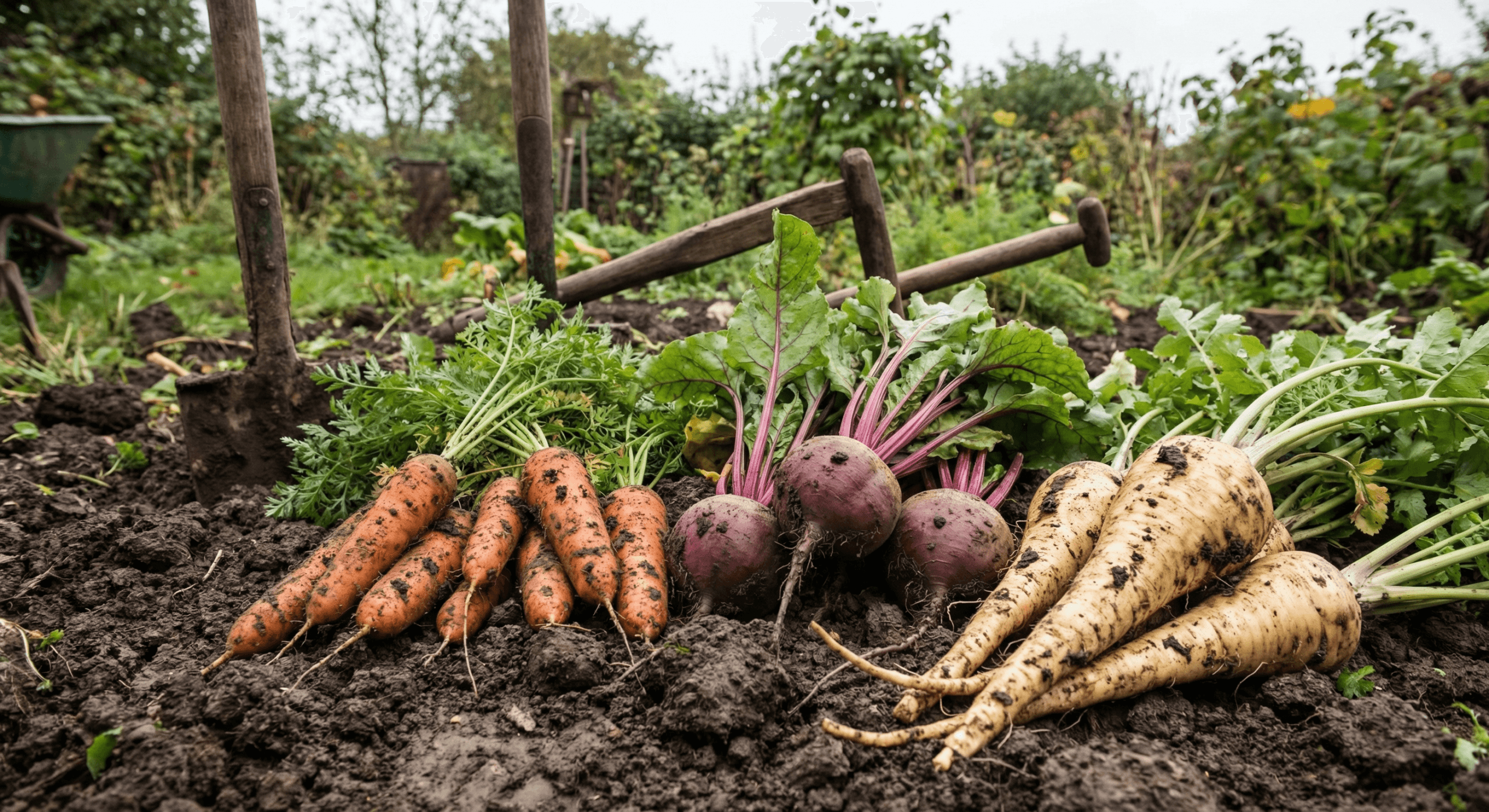
Root vegetables are the backbone of the kitchen garden. They’re forgiving, productive, and can be left in the ground to harvest over a long season. For UK beginners, they’re also one of the most rewarding groups to grow — there’s nothing quite like pulling a perfect parsnip from cold winter soil.
Grow Root Vegetables:: What You’ll Need
Before you start, gather these essentials:
- Carrot seed — Reliable carrot varieties for UK growing
- Beetroot seed — Sweet, easy-to-grow beetroot varieties
- Parsnip seed — Long-season parsnip seeds for winter harvests
- Garden fork — For lifting root vegetables without damage
- Horticultural grit — Improve drainage for straight, healthy roots
Best Root Vegetables for UK Gardens
The UK climate suits a wide range of root vegetables. Here are the best starting points for beginners:
Carrots
Carrots are the classic root vegetable but they do require a bit of care. They need deeply cultivated, stone-free, well-drained soil — if roots hit a stone or hard layer, they fork and deform. On heavy clay? Grow short or round varieties like ‘Paris Market’ or ‘Chantenay’ rather than long types. Carrot fly is the main pest — the females are attracted by the smell of bruised foliage, so thin seedlings in the evening and water before disturbing them. Or simply grow under a fine insect mesh.
Beetroot
Beetroot is one of the easiest and most reliable vegetables you can grow. Sow from April to July for a continuous harvest. Round varieties like ‘Boltardy’ are ideal for beginners — they’re bolt-resistant and uniform. Don’t crowd them: thin to 10cm apart. The leaves are also edible — young leaves can be added to salads, older ones cooked like spinach. Harvest when roots are about the size of a golf ball for the sweetest flavour.
Parsnips
Parsnips are the winter star of the root vegetable world. They take their time — sow in February or March and don’t expect to harvest until autumn or winter — but they’re worth every month of waiting. Frost improves their flavour dramatically by converting starches to sugar. Sow fresh seed each year (parsnip seed deteriorates quickly) directly into drills about 1cm deep. Keep soil moist until germinated. Be patient: parsnips are slow to emerge and can take 3-4 weeks to show.
Swedes
Swedes are a staple of Scottish and Northern Irish cooking and deserve wider appreciation. They’re essentially a cross between a cabbage and a turnip, with a milder, sweeter flavour. Sow in late spring (May-June) and harvest from November onwards. They’re hardy enough to leave in the ground through most winters and improve with frost. Watch for clubroot — rotate crops and lime acid soils if needed.
When to Sow Root Vegetables
Timing is everything with root vegetables — many are sensitive to cold and will bolt (run to seed) if sown too early:
- Parsnips: February to April — as soon as soil can be worked
- Carrots: March to July — little and often for continuous harvest
- Beetroot: April to July — succession sow every 3-4 weeks
- Swedes: May to June — too early and they’ll be woody
- Turnips: March to September — quick crop, 6-8 weeks to harvest
Soil Preparation
Root vegetables are not greedy feeders — they don’t need rich, freshly manured soil (that causes forking) but they do need good drainage and a reasonably fine tilth. For heavy soils, add horticultural grit to improve drainage and help roots develop straight and smooth. If your soil is very acidic, lime it — most root vegetables prefer a neutral to slightly alkaline soil (pH 6.5-7.5).
Avoid stony ground and don’t dig fresh compost straight into beds where you’re growing carrots — this causes forking. Instead, add compost the autumn before and let it settle.
Harvesting and Storage
Harvest on a dry day when the soil is relatively crumbly. Use a garden fork to lift roots rather than pulling — this prevents snapping. Leave carrots, parsnips, and beetroot in the ground over winter with a thick mulch of straw or compost, or lift and store in boxes of slightly damp sand in a cool, frost-free shed.
Twist off foliage rather than cutting it — cut stems bleed and the roots lose moisture faster. Handle carefully: bruised roots rot faster in storage.
Common Problems
Carrot fly: The most common carrot pest. Fine mesh covering prevents egg-laying. Minimise thinning to reduce the smell that attracts them.
Forking: Usually caused by freshly manured soil, stones, or uneven watering. Prepare beds well in advance and water consistently.
Bolt Running: Usually triggered by cold weather at sowing time or drought. Choose bolt-resistant varieties and keep soil consistently moist.
Clubroot: Affects brassica family roots (turnips, swedes). Rotate crops, lime acid soils, and avoid planting in affected ground for 5+ years.
Root vegetables are proof that patience and simple care beat complexity every time. Once your soil is right and you’re sowing at the correct time, there’s very little that can go wrong. Start with a packet of beetroot seeds — you’ll be pulling your first harvest in a few months.
Frequently Asked Questions
When is the best time to do this?
The ideal time depends on your climate and the specific plants involved. Generally, early morning or late afternoon are best to avoid the heat of the day.
How often should I check on this?
Check your garden at least once a week during the growing season to catch any issues early and keep on top of tasks.
Can I do this in a container instead?
Many garden tasks can be adapted for containers. Use a good quality potting compost and ensure containers have adequate drainage holes.
What if I don’t have the right tools?
Start with the basics — a trowel, fork, gloves, and watering can will get you a long way. Add tools as you need them.
Related Articles
For more help with your garden, check out these related guides:
Continue Reading
- 5-Step Essential Garden Tools: What Every UK Gardener Needs
- Complete Guide to Week 12 Spring Garden Jobs: May 17-23
- Complete Guide to Week 11 Spring Garden Jobs: May 10-16
- Complete Guide to Week 10 Spring Garden Jobs: May 3-9
- Complete Guide to Week 9 Spring Garden Jobs: April 26 – May 2
Frequently Asked Questions
When is the best time to do this?
The best time depends on your climate zone and what you are growing, but generally early morning or late afternoon when temperatures are cooler works best for most garden tasks.
How often should I check on my garden?
Regular attention is key — check your garden every few days during the growing season. This helps you catch problems early before they become serious.
Can beginners do this?
Absolutely! Start with a few simple tasks and build up gradually. Most garden jobs are beginner-friendly with the right guidance.
What is the most important thing to remember?
Consistency matters more than perfection. Little and often beats occasional marathon sessions. Even 10-15 minutes of daily attention yields great results.

