




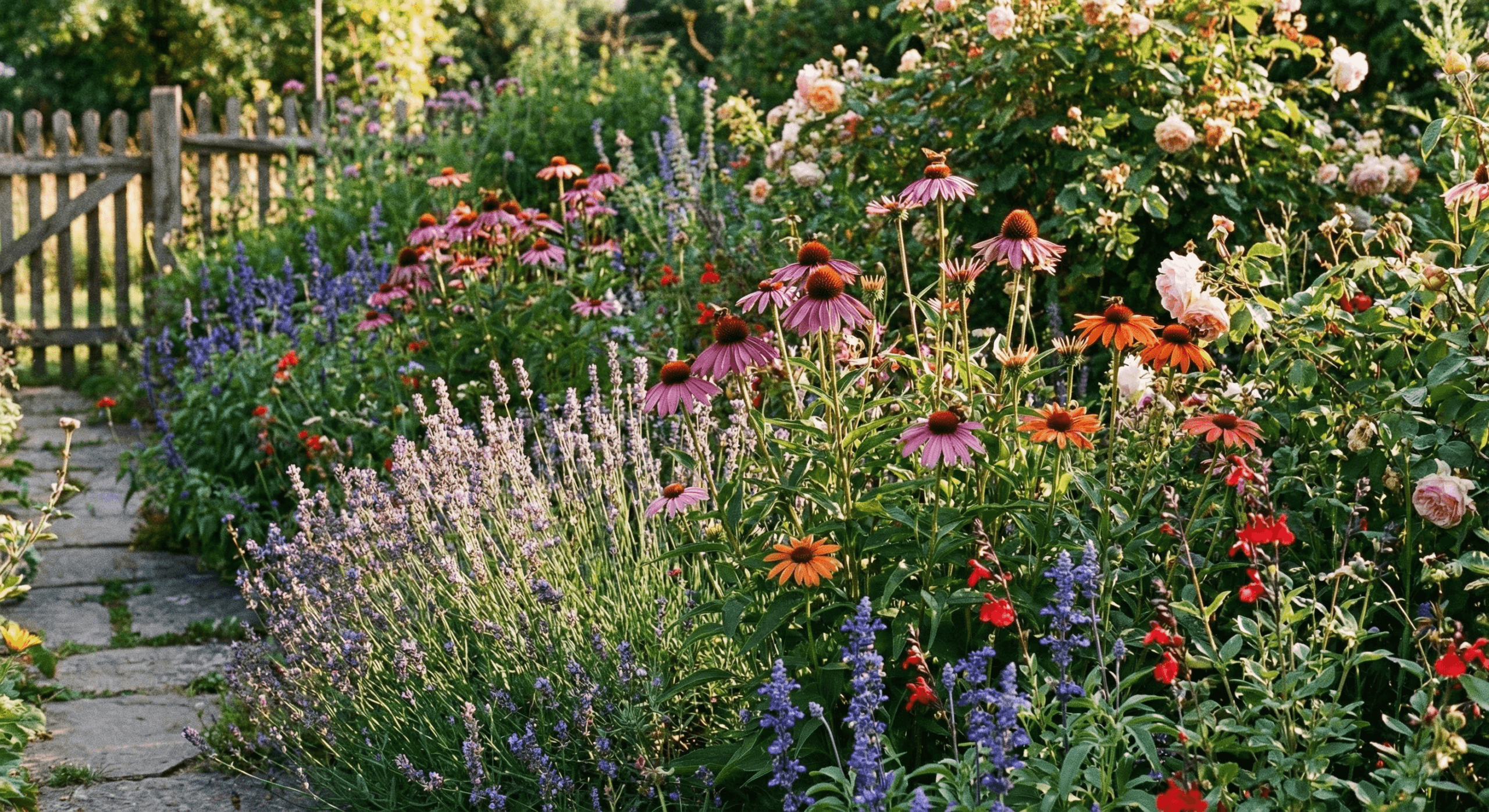
There’s something deeply satisfying about planting a perennial flower and knowing it’ll come back bigger and better every year — sometimes for decades. Perennials are the backbone of any beautiful garden, offering reliable blooms, varied textures, and seasons of interest with minimal replanting. Let’s dig into everything you need to know to grow perennials like a pro.
Shop Related Products: Watering Can
For more on essential mulching: single, see our guide.
For more on proven first-year vegetable, see our guide.
Related: Garden Planning 101: Mapping Out Your Garden Space Natural Pest Deterrents: Plants That Repel Pests
Looking for quality gardening tools and supplies? Browse our recommended garden products — hand-picked by the GardenWizz team.
Why Choose Perennials?
Perennials return year after year from the same roots, unlike annuals that complete their life cycle in one season. This means:
– One planting creates years of beauty
– Lower long-term cost per bloom
– Established root systems that improve soil and tolerate drought better
– Less soil disturbance (less tilling = healthier soil) RHS soil testing guide has detailed guidance on this topic.
When to Plant Perennials
Timing matters for perennials:
– Spring: Ideal for most perennials, giving plants a full season to establish before winter. The RHS soil testing guide provides detailed advice on understanding your soil type… Best for: hostas, daylilies, and most new nursery transplants.
– Fall: Excellent for divisions and established plants. Best for: bearded iris, peonies, and mums (fall planting gives them time to root before frost). Aim for 4-6 weeks before your first hard frost.
– Summer: Only with extra watering attention. RHS watering guidelines has detailed guidance on this topic. Best for: container-grown perennials.
Choosing the Right Perennials for Your Zone
Your USDA Hardiness Zone determines what perennials will survive winter in your area. Know your zone and choose plants accordingly — a plant rated for zones 4-8 won’t survive a zone 3 winter, no matter how well you care for it.
Top Beginner-Friendly Perennials
These are the reliable workhorses of the perennial garden:
– Coneflower (Echinacea purpurea): Native, drought-tolerant, attracts pollinators, blooms June-September. ‘Magnus’ and ‘White Swan’ are standout varieties.
– Black-eyed Susan (Rudbeckia fulgida): Bright yellow daisy-like flowers, incredibly tough, self-seeds gently.
– Daylily (Hemerocallis): Not a true lily — this tough customer blooms prolifically, comes in thousands of varieties, and adapts to almost any condition.
– Hosta: The shade garden star. RHS shade-loving plants has detailed guidance on this topic. Grown for gorgeous foliage more than flowers. ‘Blue Angel,’ ‘Sum and Substance,’ and ‘Frances Williams’ are beloved varieties.
– Peony: An heirloom favorite with enormous, fragrant blooms. Can live 100 years! Plant the “eyes” (buds) no deeper than 1-2 inches below the soil surface.
– Sedum ‘Autumn Joy’: Succulent foliage, flower heads that progress from pink to rust through fall. Thrives on neglect.
– Catmint (Nepeta): Lavender-blue flowers, gray-green foliage, deer and rabbit resistant. ‘Walker’s Low’ is a popular variety.
Soil Preparation: The Foundation of Success
Perennials are long-term investments — give them a great start:
1. Test your soil pH: Most perennials prefer 6.0-7.0. Adjust with lime (raise pH) or sulfur (lower pH) as needed.
2.Add compost: RHS composting guide has detailed guidance on this topic.Work 2-3 inches of compost into the top 8-12 inches of soil before planting. According to Gardeners’ World, Add is one of the most rewarding skills a gardener can develop… The Add process is explained in detail by the RHS composting guide, which covers everything from starting your bin to troubleshooting common problems…
3. Ensure good drainage: Perennials hate sitting in water. If your soil is heavy clay, add compost and consider raised beds.
4. Don’t over-fertilize: Too much nitrogen produces leggy plants with fewer flowers. A light topdress of compost each spring is usually enough.
Planting Depth and Spacing
This is critical: the crown (where roots meet stems) should be at soil level — not buried, not sitting above soil. Dig the planting hole twice as wide as the root ball to encourage roots to spread outward. Space plants according to their mature size, not the size you bought them at. Crowded perennials develop disease problems.
Seasonal Care
Spring
– Cut back ornamental grasses and spent perennials from last year (do this before new growth emerges).
– Apply a thin layer of compost as a light fertilizer.
– Divide overgrown perennials (3-5 years old) by cutting the root ball into sections and replanting.
– Stake tall varieties like delphiniums and hollyhocks early, before. Gardeners’ World has an excellent mulching guide that covers materials and techniques.. they need it.
Summer
– Deadhead: Remove spent flowers to encourage more blooms and extend the flowering period. Cut back to a side bud or leaf node.
– Water deeply during dry spells: 1 inch of water per week (including rainfall) is the standard.
– Mulch established perennials with garden mulch sheets each spring to suppress weeds: 2-3 inches of shredded bark or compost suppresses weeds and retains moisture.
Fall
– Cut back perennials after a hard frost (or leave standing for winter interest and wildlife — it’s a judgment call!).
– Apply extra mulch around newly planted perennials to protect them through winter.
– Divide spring and summer bloomers. Leave fall bloomers (mums, asters) alone until spring.
Winter
– Leave most perennials standing through winter — their seed heads provide food for birds and winter structure.
– After the ground freezes, apply a 4-inch mulch of shredded leaves or straw over newly planted perennials.
Dividing Perennials
When your perennials start dying out in the center, produce smaller blooms, or flop open, it’s time to divide. Spring and fall are the best times for most. Dig up the whole clump, cut or pull it apart into sections (each with roots and foliage), and replant immediately at the same depth. Water well and keep moist until established.
Pest and Disease Management
Healthy perennials in the right spot resist most problems. But watch for:
– Powdery mildew: White coating on leaves, especially in humid weather with poor air circulation. Prevent by spacing plants properly and watering at the base.
– Aphids: Spray off with a strong stream of water or treat with insecticidal soap.
– Slugs: Beer traps or iron phosphate baits for organic slug control.
Perennials reward patience. The first year they sleep (establishing roots), the second year they creep (start to grow and spread), and the third year they leap (truly mature and show their full glory). Stick with them — the best is yet to come!
Frequently Asked Questions
When is the best time to grow flowers in the UK?
Sow annuals in spring (March-May). Plant perennials in spring or autumn.
Do I need any special equipment?
Seed trays, compost, and a sunny spot in the garden.
Can beginners do this?
Yes! Many flowers are very easy to grow from seed.
How long does it take?
Annuals flower in 8-12 weeks. Perennials may take a full season.


